Booking.com vs Hotels.com
Booking.com and Hotels.com both let you compare accommodation prices, read guest reviews and book stays worldwide, but they suit slightly different types of travelers.
When travelers search for hotels online, two names that often appear are Booking.com and Hotels.com. Both platforms allow users to compare accommodation prices, read guest reviews, check availability, and book stays worldwide. However, they serve slightly different types of travelers.
Booking.com is one of the largest online travel agencies (OTAs) globally and is part of Booking Holdings. It started as a hotel booking platform in Europe and has expanded into flights, rental cars, airport taxis, and vacation rentals.
Hotels.com is owned by Expedia Group and focuses primarily on hotel and accommodation bookings. It is especially popular among travelers looking for hotel deals, rewards, and simple accommodation searches.
Quick answer: Booking.com usually has a larger global inventory, more property types, and stronger international coverage. Hotels.com is attractive for travelers who mainly book hotels and want a straightforward rewards program through Expedia Group’s ecosystem.
The better choice depends on where you travel, how often you book hotels, and whether you value the widest selection or a simpler hotel-focused experience.
Inventory and Global Reach
Booking.com vs Hotels.com: Which Has More Hotels?
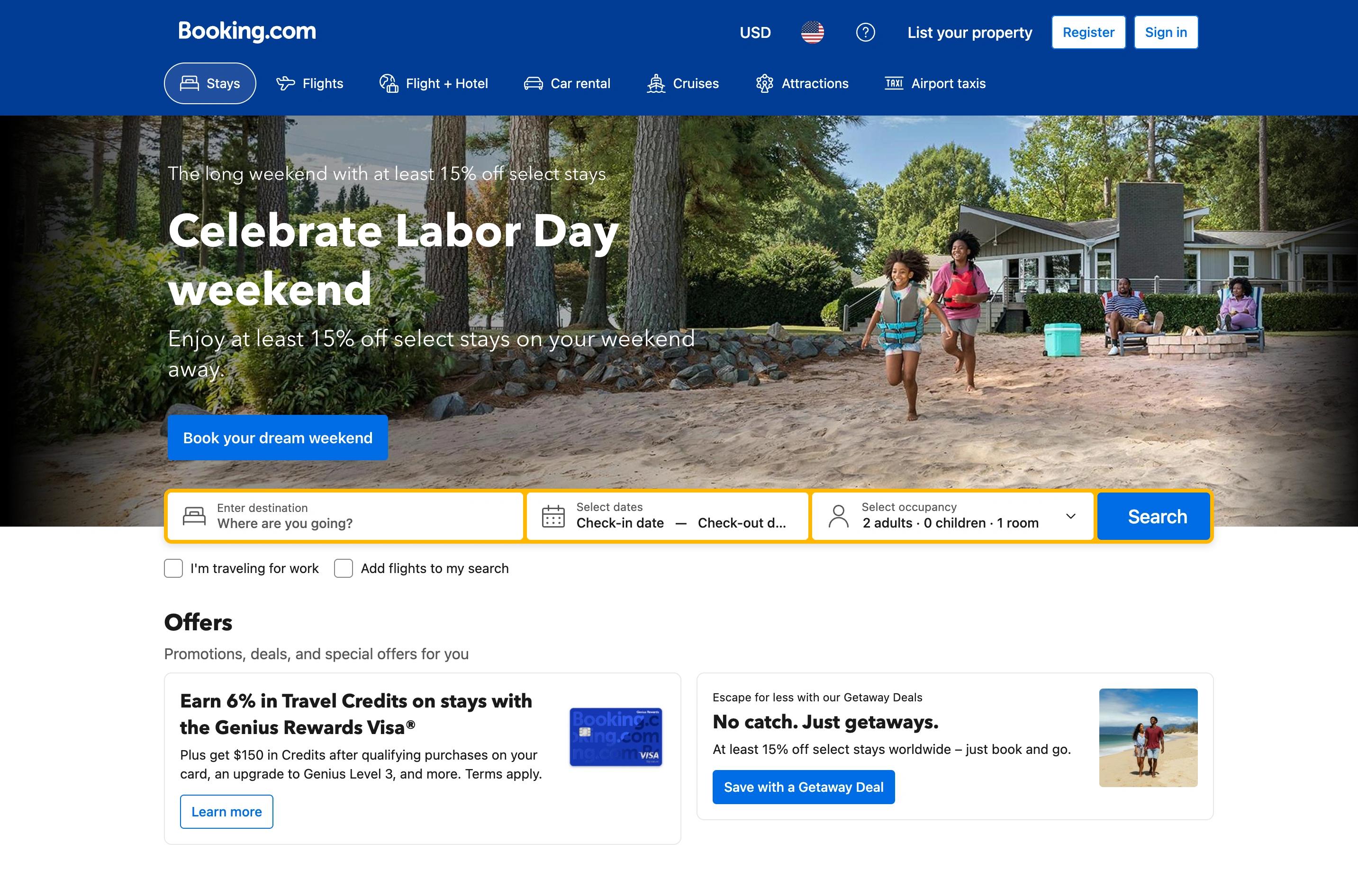
Booking.com has one of the largest accommodation inventories in the travel industry, offering millions of properties worldwide. Its platform includes hotels, resorts, apartments, hostels, guesthouses, villas, vacation homes, and unique stays.
Hotels.com focuses more specifically on hotels and traditional accommodations. While its inventory is extensive, it generally does not match Booking.com ’s range of apartments, guesthouses, and alternative accommodations.
Regional Strength
Booking.com has strong coverage across Europe and Asia. It is widely used in countries where independent hotels, boutique properties, and smaller accommodations are common.
For destinations such as:
Europe
Southeast Asia
Japan
India
Middle East
Booking.com often provides more choices, especially outside major hotel chains.
Hotels.com has strong recognition in North America because of Expedia Group’s large presence in the United States and Canada. It is commonly used by travelers looking for branded hotels, business stays, and domestic trips.
Pricing and Fee Transparency
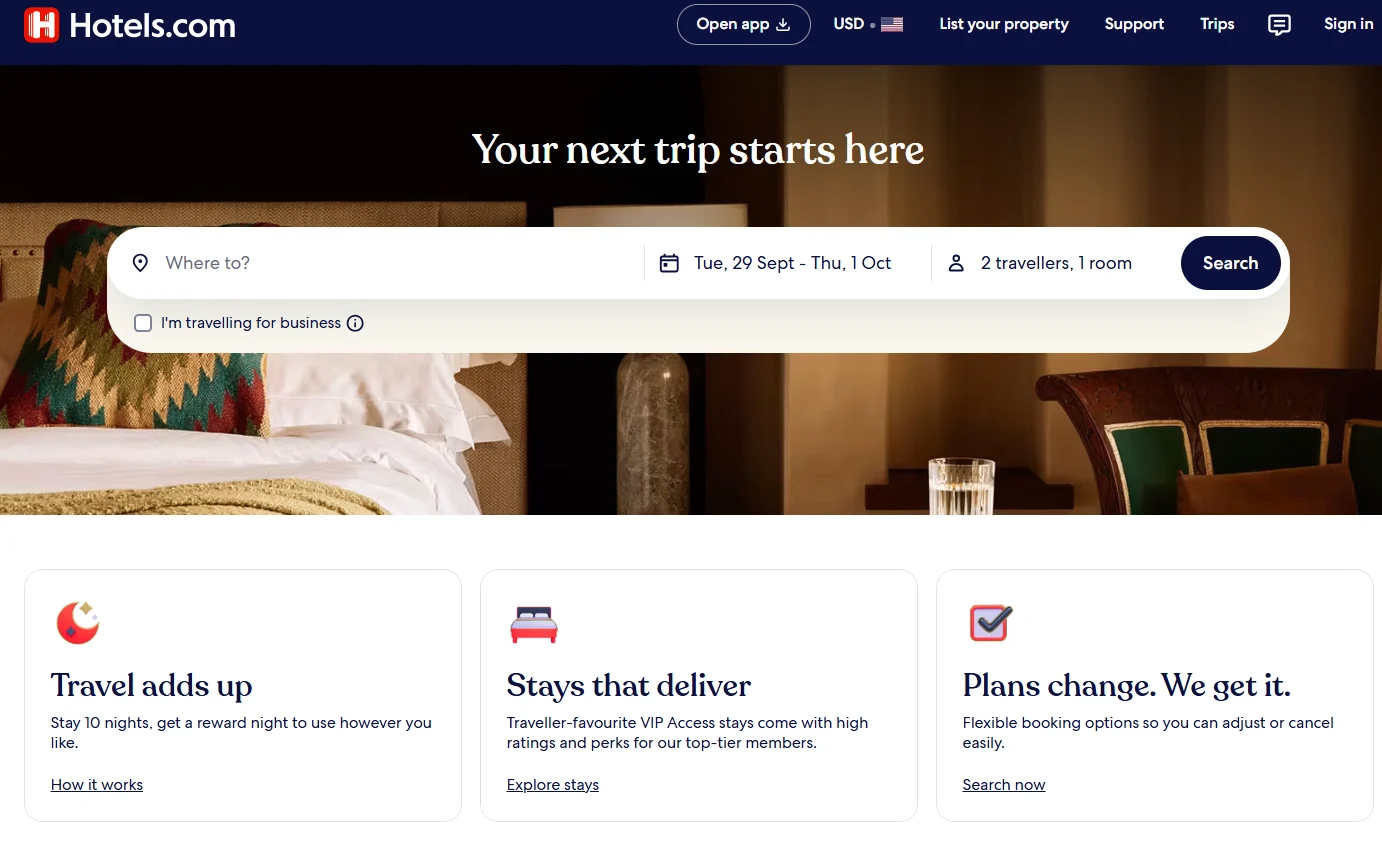
Price is one of the biggest factors when choosing a hotel booking platform. Both Booking.com and Hotels.com display competitive rates, but the final price can vary depending on taxes, currency settings, membership discounts, and cancellation rules.
Display Price vs Final Price
Booking platforms usually show a nightly room rate first. The final amount may include:
Taxes
Service fees
Resort fees
Cleaning fees
Local government charges
Booking.com often displays pricing details clearly during the booking process. Users can usually see whether taxes are included before payment.
Hotels.com also provides a breakdown of pricing before checkout. However, some travelers report differences between initial search prices and final checkout prices depending on location and property policies.
Discounts and Price Guarantees
Booking.com offers:
Genius member discounts
Limited-time deals
Mobile-only discounts
Property-specific promotions
Hotels.com provides:
Member pricing
App discounts
Rewards through its loyalty program
Expedia Group promotions
Both platforms regularly advertise competitive pricing, but hotel rates can change frequently because OTAs use dynamic pricing.
Pricing Comparison
Pricing Feature Booking.com Hotels.com Member discounts Genius discounts Member prices Mobile app deals Yes Pay later options Common Available Price comparison StrongTransparent taxes Usually clear Usually clear
Pricing winner: It depends on the hotel. Travelers should compare the same property, dates, room type, and cancellation terms before booking.
User Interface and Booking Experience
Booking.com Experience
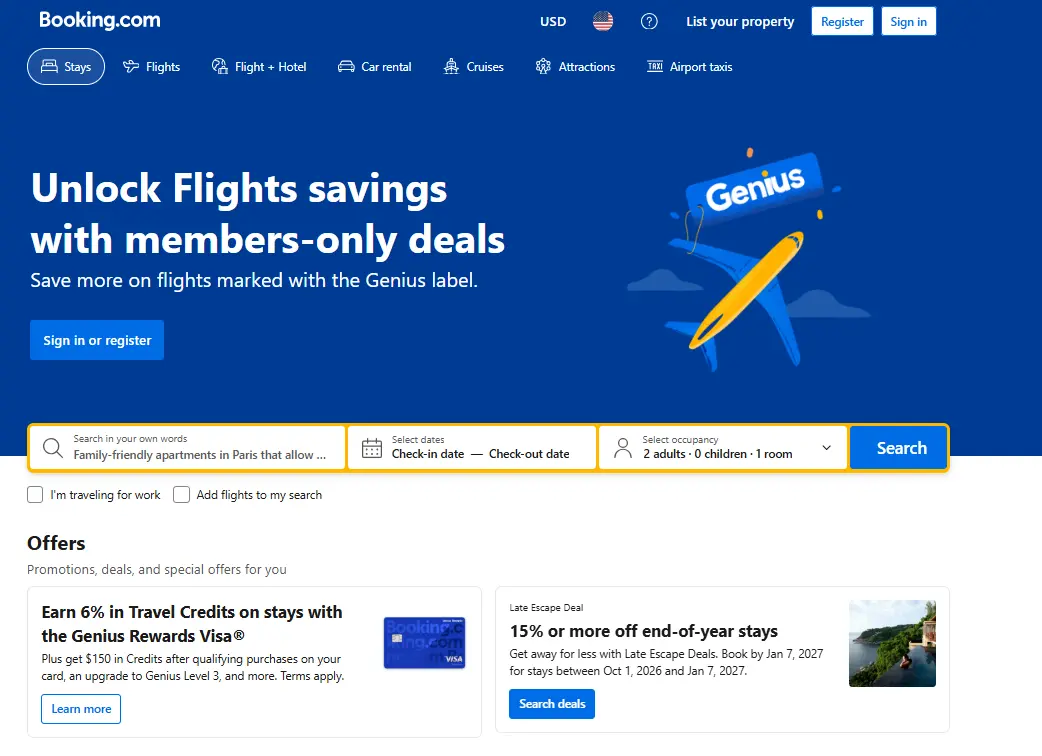
Booking.com provides one of the most detailed hotel search experiences available.
Useful features include:
Advanced filters
Map-based searching
Guest rating filters
Property type filters
Distance from attractions
Review categories
Flexible date searches
The platform is designed for travelers who want many choices and detailed comparisons.
The mobile app is also highly developed, offering:
Digital booking management
Property messaging
Offline reservation details
Travel recommendations
Hotels.com Experience
Hotels.com offers a simpler booking experience focused mainly on hotels.
The platform provides:
Easy search
Hotel photos
Guest reviews
Location maps
Flexible filtering
Its interface can feel less overwhelming for users who only want to find a hotel quickly.
Loyalty Programs: Booking.com Genius vs Hotels.com Rewards
Booking.com Genius Program
Booking.com’s loyalty program is called Genius.
It has multiple levels:
Genius Level 1
Available after completing a small number of stays.
Benefits may include:
10% discount at participating properties
Member-only rates
Genius Level 2
Requires more completed stays within a qualifying period.
Benefits may include:
10% to 15% discounts
Free breakfast at selected properties
Room upgrades at selected hotels
Genius Level 3
Higher-level travelers can receive:
Larger discounts at participating properties
Priority benefits at selected hotels
Additional perks
The main advantage of Genius is that discounts are applied directly during hotel searches.
Hotels.com Rewards Program
Hotels.com previously operated a traditional stamp-based rewards program. The platform has transitioned into the Expedia Group loyalty ecosystem with member benefits available through its account system.
Benefits generally include:
Member-only hotel prices
Access to Expedia Group offers
App-exclusive deals
Rewards-related benefits depending on market availability
Hotels.com works well for travelers who already use Expedia Group services.
Loyalty Program Comparison
Cancellation and Refund Policies
Cancellation policies depend mostly on the hotel, not only the booking platform.
Both Booking.com and Hotels.com show cancellation rules before payment. Travelers should always check:
Free cancellation deadline
Refund amount
No-show penalties
Payment timing
Booking.com Cancellation
Booking.com generally provides a clear “Manage Booking” section where users can:
Cancel reservations
Change dates
Contact properties
Request assistance
Many properties offer free cancellation until a specific date.
Hotels.com Cancellation
Hotels.com also allows users to manage bookings online. Since it operates under Expedia Group, customer support can help with booking issues, but refunds often depend on hotel policies.
For complicated cases such as:
Hotel closures
Overbooking
Incorrect charges
the platform may coordinate with the property.
Cancellation winner: Both are similar. The actual hotel policy matters more than the OTA.
Bundling and Extra Services
Modern travelers often want more than hotel bookings.
Booking.com Additional Services
Booking.com offers:
Flights
Rental cars
Airport taxis
Attractions
Its strength remains accommodation, but it has expanded into a broader travel marketplace.
Hotels.com Additional Services
Hotels.com benefits from Expedia Group’s wider ecosystem.
Travelers can access:
Hotels
Vacation packages
Flights through Expedia platforms
Car rentals
For users who frequently book complete vacations, Expedia Group services can provide more bundled options.
Customer Support and Trust
Both Booking.com and Hotels.com are established travel companies used by millions of travelers worldwide.
Common customer complaints across OTAs usually involve:
Refund delays
Property cancellations
Incorrect hotel descriptions
Communication issues with properties
Booking.com receives strong recognition for its large international customer base and property messaging system.
Hotels.com benefits from Expedia Group’s global infrastructure and customer support network.
Travelers should always:
Read recent reviews
Confirm cancellation rules
Save booking confirmations
Contact the property directly for special requests
Booking.com Pros and Cons
Pros
Huge global accommodation inventory
Excellent international coverage
Strong apartment and vacation rental selection
Detailed filters and reviews
Flexible payment options
Strong mobile app
Genius discounts
Cons
Large number of choices can feel overwhelming
Property quality can vary
Hotels.com Pros and Cons
Pros
Simple hotel-focused search experience
Strong North American presence
Good selection of branded hotels
Expedia Group ecosystem benefits
Easy booking management
Member discounts
Cons
Smaller alternative accommodation selection
Loyalty benefits may vary by market
Final Verdict: Who Should Use Which?
Best for Budget Travelers
Booking.com is often better for budget travelers because it offers more hostels, guesthouses, apartments, and smaller properties.
Best for Luxury Travelers
Both platforms offer luxury hotels, but Booking.com may provide more boutique and independent luxury stays worldwide.
Best for Business Travelers
Hotels.com can be convenient for travelers who prefer traditional hotels and simple booking.
Best for Solo Travelers
Booking.com usually offers more variety, especially for flexible and independent travel.
Best for Families
Booking.com’s apartment and vacation home selection can be useful for families needing larger accommodations.
Overall Comparison
Booking.com is the stronger choice for travelers who want maximum selection, international coverage, and flexible accommodation options.
Hotels.com is a good option for travelers who prefer a straightforward hotel booking experience, especially those already using Expedia Group services.
The smartest approach is to compare both platforms for the exact hotel, dates, and cancellation terms before making a final booking.
Some links on this page are affiliate links. If you book through one we may earn a commission, at no extra cost to you. It never affects our ratings, our rankings, or the price you pay.