How to book cheap flights: the habits that actually move the price
Most advice about cheap flights is folklore. Here is what actually changes the number on the ticket: how fare buckets work, which five levers you control, and the search routine that finds the lower fare without living inside a booking site.
There is more folklore about airfare than about almost any other consumer purchase. Clear your cookies. Book on a Tuesday. Use a VPN and buy from a poorer country. Most of it survives because airfare is volatile enough that any ritual will appear to work about half the time.
The short version, before the detail: you cannot outsmart an airline's pricing system, but you can be a different customer to it. Fares are set by demand for a specific seat on a specific departure, so the reliable savings come from changing what you are asking for — the dates, the airport, the routing, the fare type — rather than from the moment or manner in which you ask.
This guide covers the mechanics first, because knowing why a price moves tells you which of your own choices are worth changing. Then it covers a search routine you can run in about fifteen minutes.
Why the same seat sells at four different prices
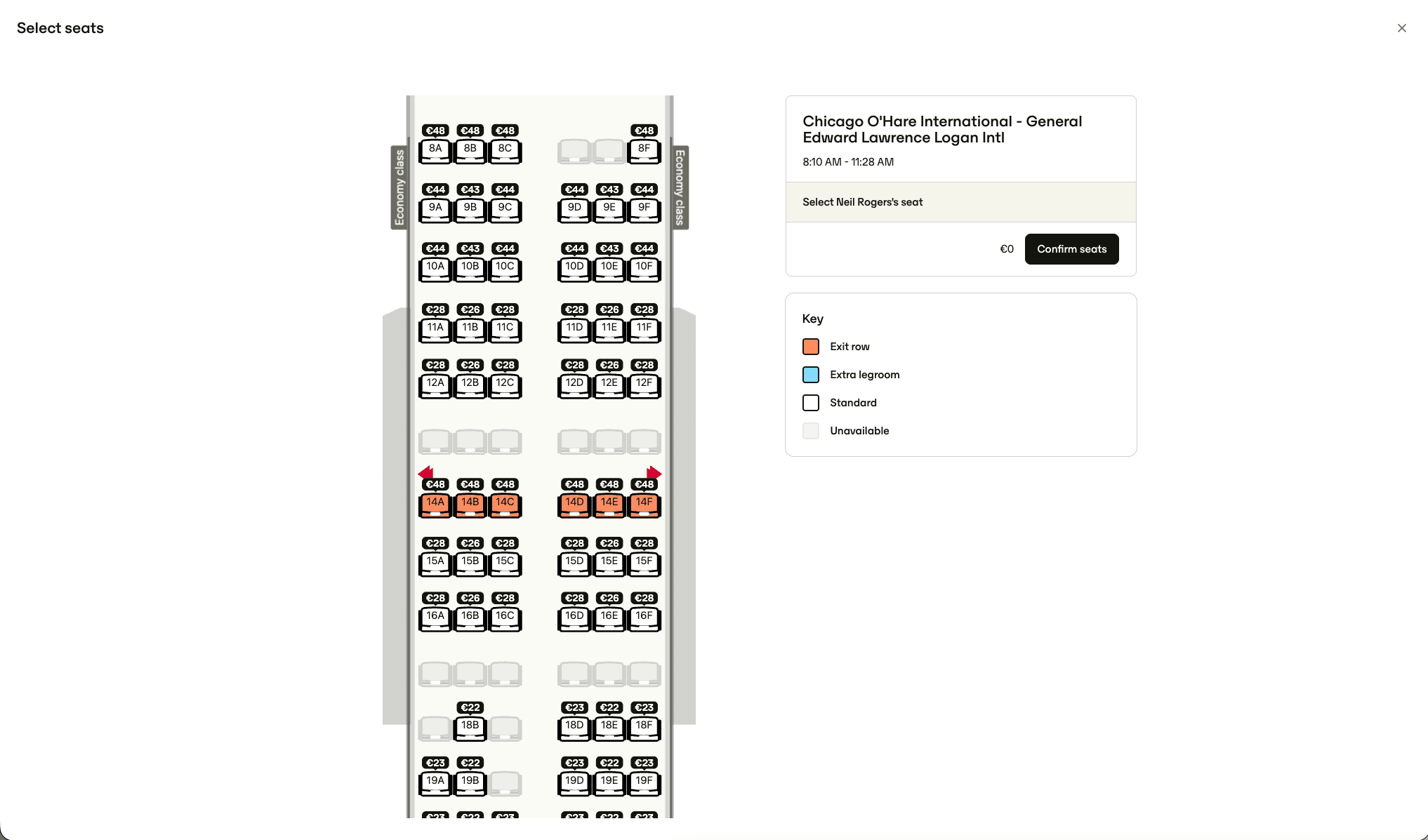
An aircraft cabin is not one product. It is divided into fare buckets — booking classes, in airline language — each holding a slice of the seats at a different price. Economy on a long-haul aircraft may have a dozen of them. The cheapest buckets are small, and they are released and withdrawn by a revenue management system that is watching how quickly that specific flight is filling relative to how it filled last year.
Three consequences follow, and they explain most of what you see when you search.
The price is per departure, not per route. Tuesday's flight and Thursday's flight are separate inventories with separate demand curves. A route is never "cheap" or "expensive"; a departure is.
Prices ratchet upward in steps, not smoothly. When a bucket empties, the next fare becomes the lowest available. That is why a fare can jump by a large amount overnight and then sit still for a fortnight.
Prices can fall. If a departure is selling behind forecast, the system releases cheaper inventory again. This is why the advice to book the instant you see any fare is wrong as often as it is right.
Nothing in that mechanism responds to your browser, your cookies or the day of the week you happen to be shopping. It responds to how many people want that departure. Which is the useful part: the levers that work are the ones that move you to a departure fewer people want.
The five levers that actually change your fare
In rough order of how much money they move:
Dates. Shifting a departure by one or two days is usually the single largest saving available, because it moves you to a different inventory. Midweek departures and returns are typically cheaper than Friday and Sunday ones on leisure routes, and the effect is strongest around school holidays.
Airports. A metropolitan area with two or three airports gives you two or three separate markets. Include all of them in the search, then subtract the cost and time of the ground transport before deciding.
Routing. A connection is nearly always cheaper than a nonstop on the same day, sometimes dramatically, because the airline is competing for your business against the nonstop. What you pay for it is time and risk.
Fare brand. The cheapest fare shown is frequently a hand-baggage-only or basic fare with no seat selection and no changes. That may be perfectly fine. It is only a saving if you actually need nothing it removes.
Booking window. Real, but weaker and noisier than the four above, and covered properly in our piece on how far in advance to book flights.
Notice what is not on that list: anything to do with how or when you search. That is the whole argument of this guide.
Search flexibly first, then narrow

The mistake most people make is searching the itinerary they have already decided on. A search for one exact pair of dates returns one number, and that number contains no information about whether it is good.
Start wide instead.
Use a calendar or price-graph view. Google Flights, Skyscanner and Kayak all show a month of departure dates with prices attached. Thirty seconds in that view tells you what the route costs at its cheapest, its most expensive, and where your dates sit between the two. That is the baseline everything else is judged against, and without it you cannot tell a deal from a headline.
Search whole months, or everywhere, when the trip allows it. If the destination is fixed but the dates are not, search the month. If the dates are fixed but the destination is not, the "Explore" and "Everywhere" style searches will price an entire map at once. This is the only search mode that reliably produces the genuinely low fares people post screenshots of.
Include nearby airports at both ends. Most search engines will do this if you ask, and many will not unless you do.
Check one-way prices separately on short-haul. On low-cost carriers, two one-ways cost the same as a return, and they let you mix airlines. On long-haul legacy carriers the opposite is usually true — a one-way can cost most of a return. We go through when to split a ticket in multi-city, one-way and open-jaw flights.
Search like a metasearch, buy like a passenger
Metasearch engines — Google Flights, Skyscanner, Kayak, Momondo — do not sell you anything. They index fares from airlines and online travel agencies and hand you off. They are the right tool for finding the price and the wrong tool for deciding where to buy it.
Where you buy matters more than most comparison content admits:
Buying direct from the airline means one party holds your booking. When a flight is cancelled or retimed, you can be rebooked by the airline's own staff, at the airport, immediately.
Buying through an online travel agency can be cheaper, sometimes by a worthwhile margin, and is often the only way to combine two airlines on one ticket. The cost is a second party in the chain: refunds, involuntary changes and schedule disruptions have to be handled by the agency, and the airline will frequently decline to touch a ticket it did not issue.
The gap is usually small. If an agency saves you a small amount on a long-haul ticket, the insurance value of booking direct is generally worth more.
That trade-off is the same one we examine for accommodation in our booking-site comparisons, and the conclusion transfers: the cheapest seller and the best seller are not always the same, and the difference shows up only when something goes wrong.
Read what the fare excludes before you compare it
A fare is a bundle, and the cheapest bundle is cheapest because things have been taken out of it. Comparing two prices without comparing two bundles is not comparing anything.
Before you treat a fare as the winner, check:
Cabin baggage. Whether a full-size cabin bag is included, and the exact dimensions, which vary by airline and are enforced very differently. Our guide to carry-on rules by airline lists them with the policy pages they came from.
Checked baggage, and whether adding it at booking is cheaper than adding it later. It nearly always is, and at the airport it is punitive.
Seat selection, which on a basic fare may cost more than the fare difference to a bundled ticket.
Change and cancellation terms. Many carriers dropped change fees on standard fares and kept them on basic ones. A non-changeable fare on dates you are unsure about is a bet, not a saving.
The final total at checkout, including payment-method surcharges and any currency conversion. The hidden fees that inflate a booking are mostly disclosed — just late.
Let alerts do the waiting
The single highest-value habit in cheap flights is not searching harder. It is setting a price alert and then not thinking about it.
Google Flights will track a route or a set of dates and email you when the price moves. Airlines will email their own sales. Deal-alert services publish fares that are far below the route's normal level, which is a different and more interesting signal — we cover how to use those, and what they cost you in flexibility, in mistake fares and flexible-date flights.
Set the alert as soon as the trip is a possibility, not when it is a plan. The tactic works because it converts a decision that has to be made at a specific moment into one that can be made whenever a good fare turns up.
Tactics that are oversold
We publish only what we can explain the mechanism for, so here is the other side of the ledger.
Incognito mode and clearing cookies. Fares are quoted from an inventory system that does not know or care who you are. Repeated searches do not raise your price. The belief persists because prices genuinely do move between searches, for reasons that have nothing to do with you.
VPNs and foreign points of sale. Airlines do price differently by point of sale — this is real. But the ticket must usually be paid for with a card and billing address that match, some fares carry residency conditions, and you inherit the consumer-protection regime of the country you bought in. It occasionally works, and it is not a routine.
"Always book on a Tuesday." A genuine artefact of how fares were filed decades ago, and no longer true. The day you fly still matters. The day you buy essentially does not. The full explanation is in the best day and time to book flights.
Hidden-city ticketing. Booking a connecting itinerary you intend to abandon at the connection point. It sometimes works and it breaches most airlines' conditions of carriage: the return leg is cancelled automatically, checked bags go to the final destination, and frequent-flyer accounts have been closed over it. We do not recommend it, and you should know the downside before anyone sells it to you as a hack.
A fifteen-minute routine that works
Price the route in a month view first, with flexible dates and nearby airports included. Note the cheapest fare available anywhere in the window — that is your baseline.
Note your own constraints honestly. Which dates genuinely cannot move? Everything else is negotiable, and negotiable is where the money is.
Compare the nonstop against the best one-stop, and put a number on the extra hours. Sometimes the connection is worth it. Sometimes it saves very little for a great deal of aggravation.
Check whether two one-ways beat the return, particularly on short-haul or when the two directions suit different airlines.
Open the winning itinerary on the airline's own site and price the same thing there, including bags and seats.
Compare final totals, not headline fares.
If the fare is at or below your baseline, book it. If it is well above, set an alert and wait — a fare above the route's own norm is not a fare you have to accept today.
If you are within a jurisdiction that gives you a cooling-off period — the United States requires a 24-hour free cancellation or hold on most tickets bought at least seven days before departure — use it to check the booking properly rather than as a reason to rush.
What you are actually paying for
A quoted fare is three things stacked together, and knowing which is which tells you where a saving is even possible.
The base fare is the part the airline controls and the part that moves with demand. Carrier-imposed surcharges — the line often shown as YQ or YR — are set by the airline too, and they matter mainly because they follow you onto reward tickets, which is why some "free" points redemptions arrive with a substantial cash bill attached.
Government taxes and airport charges are fixed by where you depart from, not by the airline, and they can differ enormously between two airports a short train ride apart. Departure taxes on premium cabins in particular are high in some countries and trivial in the neighbouring one.
The practical upshot: on a route where taxes dominate, shopping harder achieves very little, and the only real lever is the departure point. On a route where base fare dominates, flexibility is worth a great deal. A single glance at the fare breakdown at checkout tells you which situation you are in.
Where points fit, briefly
Paying cash is not the only way to price a seat, and for expensive itineraries it is often the worse one. Transferable credit-card points, airline sales and the occasional well-timed redemption can put you in a seat whose cash price you would never pay — most obviously at the front of the aircraft, which we cover in how to find cheap business-class flights.
Two cautions. Points have no fixed value, so a redemption is only good measured against the cash fare for the same seat on the same day. And award availability is its own inventory, released and withdrawn like any other, which means the flexibility rules in this guide apply to it just as much.
Common questions
Is there one booking site that is always cheapest?
No, and any site claiming otherwise is selling something. Inventory and fare access differ by market, route and week. What is stable is the method: find the fare on metasearch, then decide separately whether the small saving from an agency is worth the extra party in the chain.
Do flight prices really drop at the last minute?
Occasionally, on leisure routes with unsold capacity, and almost never on routes with business demand. The distribution is skewed: a small chance of a large saving against a large chance of a much higher fare. We cover when it is a reasonable bet in how to find last-minute flight deals.
Are budget airlines actually cheaper?
Once a cabin bag, a seat and a checked bag are added, frequently not — and the difference narrows further if you value the ability to change. Price the trip you are actually taking, with the bags you are actually carrying, and the comparison usually becomes obvious.
How much can flexibility really save?
Enough that it dominates every other lever. On a typical leisure route, the spread between the cheapest and most expensive departure in the same month is routinely a multiple, not a percentage. If any part of your trip can move, that is where you should look first.
Should I book as soon as I see a good price?
Book when the fare is good relative to the route's own baseline, which you can only know if you established one. "Good" in the abstract is not a number.
The habit worth keeping
If you take one thing from this: establish the baseline before you shop. Almost every bad airfare decision — panic-booking a high fare, or waiting on a genuinely good one until it disappears — comes from not knowing what the route normally costs.
Everything else in this guide is a way of making your search wide enough that the baseline is visible. Our cheap flights guides go deeper on individual routes and booking windows, and our editorial policy explains why we publish mechanisms rather than tips.
Some links on this page are affiliate links. If you book through one we may earn a commission, at no extra cost to you. It never affects our ratings, our rankings, or the price you pay.