How to Prepare for an Early Morning Flight
An early morning flight can be one of the most convenient ways to travel. You may reach your destination with most of the day still available, airports can feel calmer during the earliest hours, and an early departure may fit perfectly with a connecting itinerary.
An early morning flight can be one of the most convenient ways to travel. You may reach your destination with most of the day still available, airports can feel calmer during the earliest hours, and an early departure may fit perfectly with a connecting itinerary.
The difficult part is getting yourself to the aircraft.
A 6:00 a.m. departure does not mean waking up at 5:00 a.m. You need to work backward from boarding, airport procedures, transportation time, and your airline's requirements. For some trips, that can mean leaving home while most of the city is still asleep.
Good preparation the night before makes the biggest difference. Instead of searching for your passport at 3:30 a.m. or discovering that transportation is unavailable, you can wake up, get ready, and leave.
Here's how to prepare for an early morning flight without turning departure day into a stressful race against the clock.
Why Early Morning Flights Require Extra Planning

The actual airport process is not necessarily different just because your flight leaves early. The challenge is that many normal parts of your routine happen at unusual hours.
Public transportation may not have started.
Hotel breakfast may be unavailable.
Airport counters may have different opening times.
Rides can be harder to arrange in some locations.
You are also more likely to be tired and forget something.
That makes advance preparation particularly valuable. Ideally, almost every important decision should already be made before you go to bed.
Step 1: Confirm Your Flight the Day Before
Start by checking your reservation.
Confirm:
Departure airport
Departure terminal
Flight number
Scheduled departure time
Operating airline
Baggage allowance
Seat assignment
Current flight status
Pay particular attention to the airport.
Cities with multiple airports can create expensive mistakes when passengers assume their flight leaves from the airport they normally use.
If you are on a codeshare, also identify the operating airline because that can affect where you check in.
Step 2: Work Backward From Departure Time
Do not decide when to leave home based solely on the scheduled departure.
You need enough time for everything that happens before takeoff.
Think backward through:
Boarding.
Getting to the gate.
Security.
Immigration where applicable.
Baggage drop.
Check in if required.
Finding the correct terminal.
Traveling to the airport.
Airlines and airports have different check in, baggage acceptance, security, and boarding requirements, so avoid relying on one universal arrival rule.
Check the requirements applicable to your flight.
Step 3: Know When Boarding Starts and Closes
One of the most important things to remember is that departure time is not boarding time.
Your flight might depart at 6:30 a.m., but boarding will begin earlier and the gate can close before the scheduled departure.
If you arrive at the gate at 6:29, you should not expect to board simply because the aircraft has not departed yet.
Check your boarding pass and airline instructions for the relevant timing.
Your real target should be arriving at the gate comfortably before boarding closes, not arriving at the airport shortly before departure.
Step 4: Plan Your Airport Transportation in Advance
Transportation is one of the biggest risks with very early flights.
The train or bus you normally use to reach the airport may not operate at 3:00 or 4:00 a.m.
Check transportation before the evening of your trip.
Consider:
First train or bus time.
Taxi availability.
Rideshare availability.
Hotel transfer.
Airport shuttle.
Private transfer.
Driving and parking.
Drop off by someone you know.
If you depend on public transportation, confirm that the first service gives you enough time rather than assuming it does.
Step 5: Consider Prebooking Your Ride
If taxis or private transfers can be reserved in advance, an early morning flight is a good occasion to consider doing so.
But remember that a reservation does not eliminate every possible delay.
Give yourself a reasonable buffer.
If your planned airport arrival requires leaving at 3:45 a.m., arranging pickup for exactly the latest possible departure time gives you little room for a late driver, road closure, or other problem.
Build some flexibility into the schedule.
Step 6: Check for Overnight Road or Transport Disruptions
Road conditions can be surprisingly different during the night.
Traffic may be lighter, but overnight construction, road closures, airport access changes, or reduced transportation schedules can create problems.
Check the planned route the evening before.
If you are relying on rail or buses, make sure overnight maintenance has not changed the schedule.
Knowing your backup option is also useful.
Step 7: Check In Online When Available
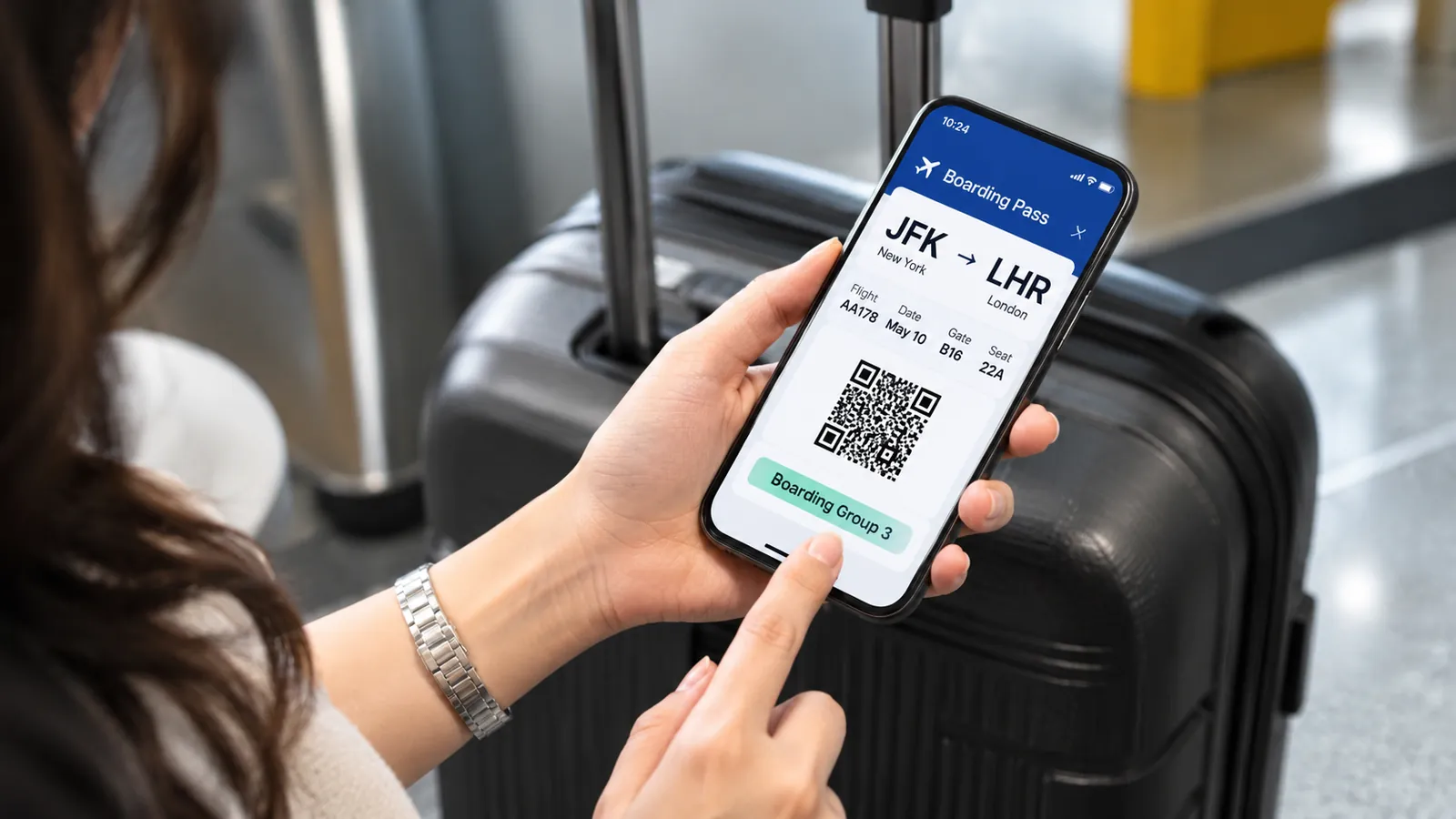
Online check in can simplify an early departure.
When eligible, complete it before going to bed rather than leaving it until morning.
Confirm:
Passenger information.
Seat assignment.
Baggage details.
Boarding pass availability.
Travel document information where requested.
Save your boarding pass somewhere easy to access.
If you use a digital boarding pass, keeping an offline copy or screenshot can be useful in case your mobile connection is poor at the airport.
Remember that some passengers may still need document verification or airport check in depending on the route and circumstances.
Step 8: Pack Completely the Night Before
Do not plan to finish packing at 4:00 a.m.
Tired travelers are more likely to forget important items.
Ideally, your main bag should be fully packed before you go to sleep.
Keep only the items you still need overnight outside the bag.
These might include:
Phone.
Charger.
Medication.
Toothbrush.
Travel clothes.
Passport or identification.
Then place those items somewhere obvious so they can be packed quickly in the morning.
Step 9: Prepare Your Travel Documents
Put all essential documents together before bed.
Depending on the journey, you may need:
Passport.
Identification.
Boarding pass.
Visa or applicable travel authorization.
Accommodation information.
Onward travel details.
Other destination documents.
Do not bury your passport at the bottom of your suitcase.
Keep important documents in an accessible and secure location that you can reach easily at check in, security, immigration, and boarding.
Step 10: Check Your Baggage Allowance

Discovering an overweight suitcase during an early morning airport rush is an unnecessary complication.
Check your airline and fare's baggage allowance the day before.
Review:
Cabin bag dimensions.
Cabin bag weight.
Personal item rules.
Checked baggage weight.
Number of checked bags.
Restricted items.
If possible, weigh your checked luggage before leaving.
Move items between bags while you are still at home rather than trying to reorganize your suitcase at an airport counter.
Step 11: Organize Your Security Items
Security requirements vary by airport and jurisdiction, but preparing your belongings can make the process easier.
Keep items that may need to be presented or removed somewhere accessible.
Do not pack something you expect to need at security underneath several layers of clothing and electronics.
Also check restrictions for liquids, batteries, and other regulated items applicable to your journey.
The goal is to avoid repacking your entire carry on at the checkpoint while half asleep.
Step 12: Charge Everything Before Bed
Your phone is especially important on an early travel day.
It may contain:
Boarding passes.
Transportation details.
Hotel reservations.
Messages.
Maps.
Payment options.
Airline notifications.
Charge it fully before sleeping.
Also charge your headphones, tablet, laptop, smartwatch, and any permitted portable charging equipment you plan to use.
Do not rely on finding a free airport outlet before boarding.
Step 13: Choose Your Clothes the Night Before
Set out your entire travel outfit.
This sounds like a small detail, but it removes another decision from an already early morning.
Choose comfortable clothing appropriate for the weather at your departure point and destination.
If the temperatures are very different, use layers.
Keep your shoes, jacket, wallet, and other essentials together.
When your alarm goes off, you should be able to get dressed without searching through luggage.
Step 14: Plan Breakfast in Advance
Your normal breakfast routine may not work at 3:30 a.m.
Your hotel restaurant could be closed, airport restaurants may not all be operating yet, and local cafés may not have opened.
Decide what you will do before going to bed.
Options include eating something simple before leaving, carrying suitable snacks, or planning to eat after security if you have confirmed that food will be available.
If your flight includes breakfast, decide whether you are comfortable waiting until onboard.
For longer journeys, carrying a suitable backup snack can still be useful.
Step 15: Prioritize Sleep the Night Before
One of the biggest disadvantages of an early flight is reduced sleep.
If you normally sleep at midnight but need to wake at 3:00 a.m., maintaining your normal bedtime gives you very little rest.
Where practical, move your evening routine earlier.
Finish packing early.
Eat earlier.
Reduce unnecessary tasks.
Set your alarms.
Then give yourself the best opportunity to sleep.
Trying to "stay awake until the flight" can leave you exhausted before the journey has even started.
Early Morning Flight Preparation Timeline
Here is a practical example for a hypothetical 6:30 a.m. flight. Actual timing must be adjusted to your airline and airport requirements.
| Time | Task |
|---|---|
| Previous afternoon | Finish most packing |
| Previous evening | Check flight and transportation |
| Before bed | Complete eligible online check in |
| Before bed | Charge devices and prepare documents |
| Before bed | Set clothes and final items out |
| Early morning | Wake up and get ready |
| Planned departure | Leave with transportation buffer |
| Airport arrival | Complete required airport procedures |
| Before boarding | Reach the gate comfortably early |
| 6:30 a.m. | Scheduled departure |
The important principle is to work backward from the flight rather than copying a universal timetable.
Common Mistakes With Early Morning Flights
A major mistake is treating departure time as the time you need to reach the airport.
Another is assuming public transportation operates normally overnight.
Travelers also create unnecessary stress by packing, checking in, or searching for documents after waking up.
Do not assume an early airport will be empty either.
Finally, avoid sacrificing virtually all your sleep just to save a small amount on airfare unless the schedule genuinely works for your trip.
Frequently Asked Questions
How early should I wake up for a morning flight?
Work backward from the airport arrival time you need, then add transportation and preparation time. There is no universal wake up time.
Should I check in the night before?
When online check in is available and appropriate for your booking, completing it beforehand can simplify your morning.
What if public transportation has not started?
Arrange another option such as a taxi, transfer, shuttle, or drive to the airport. Confirm availability before departure day.
Should I eat before an early flight?
It depends on your routine and flight. If airport food may be unavailable, having something beforehand or carrying suitable snacks can be useful.
Are airports quieter early in the morning?
Sometimes, but not always. Multiple early departures can create busy check in and security periods.
Is an airport hotel worth it?
It can be worthwhile when the airport is far away, transportation is unreliable overnight, or getting there from home would significantly reduce your sleep.
Should I sleep on an early morning flight?
If you are tired and the flight timing allows it, sleeping onboard may help. However, getting reasonable sleep before departure is still preferable when possible.
Final Thoughts
Preparing for an early morning flight is mostly about doing tomorrow morning's work tonight.
Confirm your flight, understand your airport timing, arrange transportation, check in when eligible, finish packing, organize documents, charge your devices, and prepare your clothes before going to bed.
Then prioritize sleep.
When the alarm rings, your morning should require very few decisions.
Most importantly, work backward from the time you need to be at the gate rather than from the scheduled departure time. Include enough room for transportation, baggage, security, immigration where applicable, and unexpected delays.
With the important details handled the night before, even a painfully early departure can become a manageable start to your trip rather than a stressful race to the airport.
Some links on this page are affiliate links. If you book through one we may earn a commission, at no extra cost to you. It never affects our ratings, our rankings, or the price you pay.