If Your Flight Is Delayed, Can You Get Compensation?
If your flight is delayed, can you get compensation? Sometimes. It depends on which passenger rights rules cover your journey, how late you reach your final destination and why the delay happened.
Sometimes. The answer depends on where your journey falls under passenger rights rules, how late you reach your final destination, and why the delay happened. In some places, a qualifying delay brings a fixed cash payment. Elsewhere, your strongest claim may be for meals, a hotel, a refund if you decide not to travel, or reimbursement for documented expenses.
The first distinction matters: compensation is a payment for the disruption; a refund returns money paid for travel you do not take; and airport assistance helps you while you wait. You may qualify for one, several, or none of these. Here is how to work out what to ask for and how to make a claim.
Can You Get Paid for a Delayed Flight?
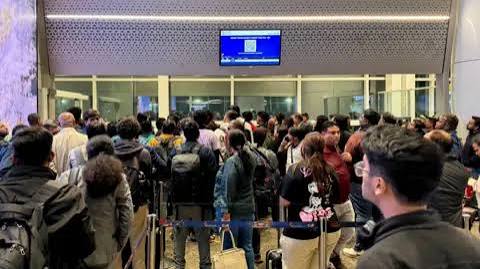
There is no worldwide rule that pays every passenger after a set number of hours. A three hour delay may qualify for fixed compensation on an eligible European flight, while the same delay on a US domestic itinerary generally does not create a federal right to cash compensation.
Check your arrival time, not just the departure board. European, UK, and Canadian fixed compensation rules generally focus on how late you reach your final destination. A flight that leaves four hours late but makes up enough time in the air may fall below the compensation threshold. On a protected connecting itinerary, the relevant destination is generally the endpoint on that booking.
The cause matters too. Severe weather or an air traffic restriction can affect a cash claim differently from an issue within the airline’s control. Even where fixed compensation is unavailable, you should still check the rules for food, accommodation, rebooking, and refunds.
Flight Delay Rights at a Glance
These are summaries, not interchangeable rules. Routes, operating airlines, reasons for delay, and the choice to continue travelling can change the outcome. The amounts and thresholds come from the relevant passenger rights authorities.
European Union Flight Delay Compensation
EU passenger rights can cover flights departing from an EU airport on any airline, as well as flights arriving in the EU from outside it when operated by an EU airline. If you arrive at your final destination at least three hours late, you may receive fixed compensation unless the airline can show that extraordinary circumstances caused the delay and could not have been avoided with reasonable measures.
The amount is based largely on flight distance:
That long distance distinction is easy to miss. A passenger who arrives three hours and twenty minutes late on an eligible long flight should not assume the payment is €600. The EU’s passenger rights guidance lists €300 for the three to under four hour band.
A missed connection may also qualify if the flights are on one reservation and the delay pushes arrival at the final destination beyond the applicable threshold. If you bought separate tickets, do not assume the first airline must cover the entire journey.
What if the Airline Blames the Weather?
Ask for the specific reason, rather than accepting a broad description such as “operational disruption.” EU guidance says the airline must substantiate an extraordinary circumstances defence. Whether that defence succeeds depends on what happened and the measures the carrier could reasonably have taken.
The right to assistance is a separate question. If you are stuck at the airport, ask about refreshments, communication, and accommodation where the applicable waiting time and conditions are met. Keep reasonable receipts if the airline cannot arrange the help it owes you.
UK Flight Delay Compensation
UK rules have a similar focus on arrival delay and cause, but the payments are in pounds. The UK Civil Aviation Authority says an eligible passenger arriving more than three hours late may claim £220 for a flight under 1,500 km or £350 for a flight between 1,500 and 3,500 km.
For a flight over 3,500 km, the amount is £260 when arrival is between three and four hours late and £520 when it is more than four hours late. Extraordinary circumstances can prevent a compensation award. The payment is a fixed amount; it is not calculated as a percentage of your ticket price.
If your UK protected flight is delayed at least five hours and the journey no longer works for you, you can choose not to travel and request a refund for the unused flights on the booking. Make that choice deliberately: taking the delayed or replacement flight is a different option from abandoning the trip.
Canada: Compensation Depends on Control and Airline Size
Canada’s Air Passenger Protection Regulations use three arrival delay bands. To qualify for fixed compensation, the disruption must be fully within the airline’s control and not required for safety. You must also meet conditions including being informed 14 days or less before the original departure, arriving at least three hours late, and filing a written claim within one year.
The airline’s size is identified in its tariff. If compensation is due, the airline must offer a monetary form of payment. A voucher is an alternative only under specified conditions, including disclosure of the cash amount and your written choice to take the alternative.
If your itinerary is also covered by another country’s passenger rights rules, check both systems before choosing your claim. Canadian guidance says you cannot collect duplicate inconvenience compensation for the same disruption under two jurisdictions.
United States: A Refund Is Different From Compensation
For a US domestic itinerary, a delay does not generally trigger mandatory cash compensation under federal rules. Some airlines make customer service commitments for disruptions within their control, so check the carrier’s published policy and ask its staff what it will provide. Meals, hotels, or a voucher may be available under that policy even when federal law does not require a fixed delay payment.
A significant delay can, however, give you a refund if you choose not to travel. US Department of Transportation rules define a significant late arrival as three hours or more on a domestic itinerary or six hours or more on an international itinerary, compared with the original schedule. If you take the significantly delayed flight or accept an alternative flight, the DOT refund rule does not give you a refund of that used ticket.
Picture two passengers on a US domestic flight now scheduled to arrive four hours late. One takes the flight and asks the airline about meal assistance under its policy. The other decides the trip no longer serves its purpose and declines the delayed flight and rebooking. The second passenger has a refund question; neither should assume the four hour delay alone guarantees a federal cash compensation payment.
For an international itinerary, keep receipts for actual losses as well. The DOT notes that passengers may be able to seek reimbursement for expenses arising from delay under Article 19 of the Montreal Convention, subject to its conditions. This is a claim for provable damage, not an automatic payment simply for waiting.
India: What Can You Ask for During a Delay?
India’s DGCA rules distinguish the length of a flight from the length of its departure delay. For passengers who checked in on time, specified facilities become due when the expected delay reaches two hours for flights with a block time up to two and a half hours, three hours for flights with a block time over two and a half up to five hours, or four hours for longer flights. The cited facilities include meals and refreshments.
When a domestic flight is expected to be delayed by more than six hours, the DGCA provision requires the airline to offer a choice of an alternative flight within six hours or a full ticket refund. Longer or certain overnight delays can trigger hotel accommodation provisions, subject to the rule’s conditions and extraordinary circumstances exception. Be wary of articles claiming that every Indian flight delay automatically pays a fixed ₹5,000 or ₹10,000 award. The DGCA delay provisions cited here set out facilities and choices for long delays; they do not establish a blanket fixed cash payment for every delayed departure. Check the current DGCA rule and your airline’s terms for your precise situation.
How to Claim Flight Delay Compensation
1. Save the original itinerary. Keep your booking confirmation, ticket number, boarding pass, and the original scheduled arrival time. If you have a connection, retain the booking showing that both flights are on the same reservation.
2. Record what actually happened. Screenshot airline notifications and departure board updates. Write down the actual arrival time at your final destination, and ask the airline for the reason for the delay in writing.
3. Ask for help while you wait. Request meals, accommodation, transport to a hotel, or rebooking when the applicable rules or airline policy provide them. If you pay for necessities yourself, keep itemised receipts and make reasonable purchases.
4. Decide whether you still want to travel. A refund for a significant delay often depends on declining the delayed flight and alternatives. Before accepting a voucher, check whether you have a right to a monetary refund or payment.
5. File directly with the operating airline. Use its compensation or customer relations form. State your flight number, date, booking reference, scheduled and actual arrival times, and the remedy you seek. Attach evidence and keep a copy of the submission.
6. Escalate if the response does not address your claim. Use the relevant passenger rights authority or dispute process after contacting the airline. In Canada, file the written compensation request within one year; the airline has 30 days to pay or explain its refusal. UK passengers can consider the applicable dispute route after the airline’s final response or eight weeks without a response.
A short claim is often stronger than a long account of the inconvenience. State the rule you believe applies, the measurable delay, and the payment or reimbursement requested. If the airline cites circumstances outside its control, ask it to identify the event and explain how it affected your flight.
Pro Tips for Delayed Flight Claims
Check the operating carrier. The airline whose aircraft operated the flight may differ from the name on your booking. Direct the claim to the carrier identified by the applicable rule.
Keep expense claims separate. A fixed compensation claim and a request to reimburse meals or accommodation may require different forms and evidence.
Save the reason as it changes. An initial weather delay may be followed by another issue. Screenshots and written updates help establish the sequence.
Know your final destination. On a single protected booking, a missed connection can make the final arrival delay much longer than the first flight’s delay.
Claim directly before paying a third party. Airline claim forms let you submit the request yourself. Read any service fee before appointing someone else to do it.
Frequently Asked Questions
Does a two hour flight delay qualify for compensation?
Usually, two hours alone does not establish a fixed cash claim under the EU, UK, or Canadian delay bands described above. It may trigger care or assistance, depending on your route, flight distance, and local rules. In India, some flights reach the meals and refreshments threshold at a two hour expected departure delay.
Can I get compensation if the delay was caused by bad weather?
It depends on the applicable system and the facts. EU and UK fixed compensation may be unavailable where the airline establishes extraordinary circumstances. Canada’s fixed inconvenience payment requires the disruption to be fully within the airline’s control and not required for safety. Still ask about rebooking, care, and refund options.
Can I get both a refund and compensation?
Possibly, but they serve different purposes and have different conditions. A refund addresses travel you do not take, while compensation addresses a qualifying disruption. Do not assume you can take a significantly delayed US flight and then obtain a full DOT ticket refund; the DOT says taking it removes that refund entitlement.
What if the delay makes me miss a connecting flight?
If the flights are on one booking, tell the airline immediately and ask it to get you to the final destination. Under applicable EU or UK rules, compensation can depend on how late you arrive there, rather than how late you reach the connection airport. Separate tickets create a more difficult position, so check each booking’s terms.
Will the airline pay for my hotel and meals?
It may have to provide care under the applicable passenger rights rules, or it may offer it under its own policy. Ask the airline to arrange what you need before paying yourself. If you must pay, keep receipts for reasonable expenses; a receipt supports a claim but does not by itself guarantee reimbursement.
How long do I have to claim?
Deadlines depend on the jurisdiction and claim type. Canada requires a written fixed compensation claim within one year of the delay or cancellation. Elsewhere, check the applicable limitation period promptly and submit to the airline as soon as you have your arrival details and receipts.
Does travel insurance pay for a delay too?
It may, if your policy covers the delay length and the expenses or benefits you claim. Read the policy’s waiting period, exclusions, and proof requirements. Tell the insurer about any payment from the airline so you do not seek reimbursement twice for the same expense.
Verdict: What Should You Do Now?
Start with three facts: your route, your delay at the final destination, and the reason the airline gives. Those facts tell you whether to pursue fixed compensation, assistance, a refund, or documented expenses. Save the evidence, ask for help during the disruption, and file a clear written claim with the airline once your actual arrival time is known.
Do not let the word “compensation” narrow your request. Even when a delay does not qualify for a cash award, a meal, a hotel, a suitable alternative flight, or a refund for an abandoned journey may be the remedy that matters most.
Some links on this page are affiliate links. If you book through one we may earn a commission, at no extra cost to you. It never affects our ratings, our rankings, or the price you pay.