Vietnam Airlines vs Thai Airways
When planning an international trip through Asia, Vietnam Airlines and Thai Airways are two established full-service carriers worth comparing.
Introduction
When planning an international trip through Asia, Vietnam Airlines and Thai Airways are two established full-service carriers worth comparing. Both operate extensive networks from their respective Southeast Asian hubs, but they serve somewhat different geographic strengths and airline alliances.
Vietnam Airlines is Vietnam's flag carrier and a member of the SkyTeam alliance. Its network is particularly relevant for travelers connecting through Hanoi, Ho Chi Minh City and other Vietnamese cities, with services extending across Asia-Pacific and to Europe. Vietnam Airlines' official network currently promotes more than 230 destinations through its own flights and network connections.
Thai Airways is Thailand's flag carrier and a Star Alliance member. Bangkok's Suvarnabhumi Airport functions as its principal international hub, giving THAI strong connectivity between Southeast Asia, South Asia, East Asia, Europe and other long-haul markets. Its current destination listings include cities across Asia-Pacific, Europe and Africa.
TL;DR: Neither airline is universally cheaper or better. Vietnam Airlines can be particularly relevant for Vietnam-focused itineraries and SkyTeam travelers, while Thai Airways is especially useful for Bangkok connections and Star Alliance frequent flyers. The actual winner on price depends heavily on route, travel date, fare class, baggage requirements and connection pattern.
Inventory and Global Reach
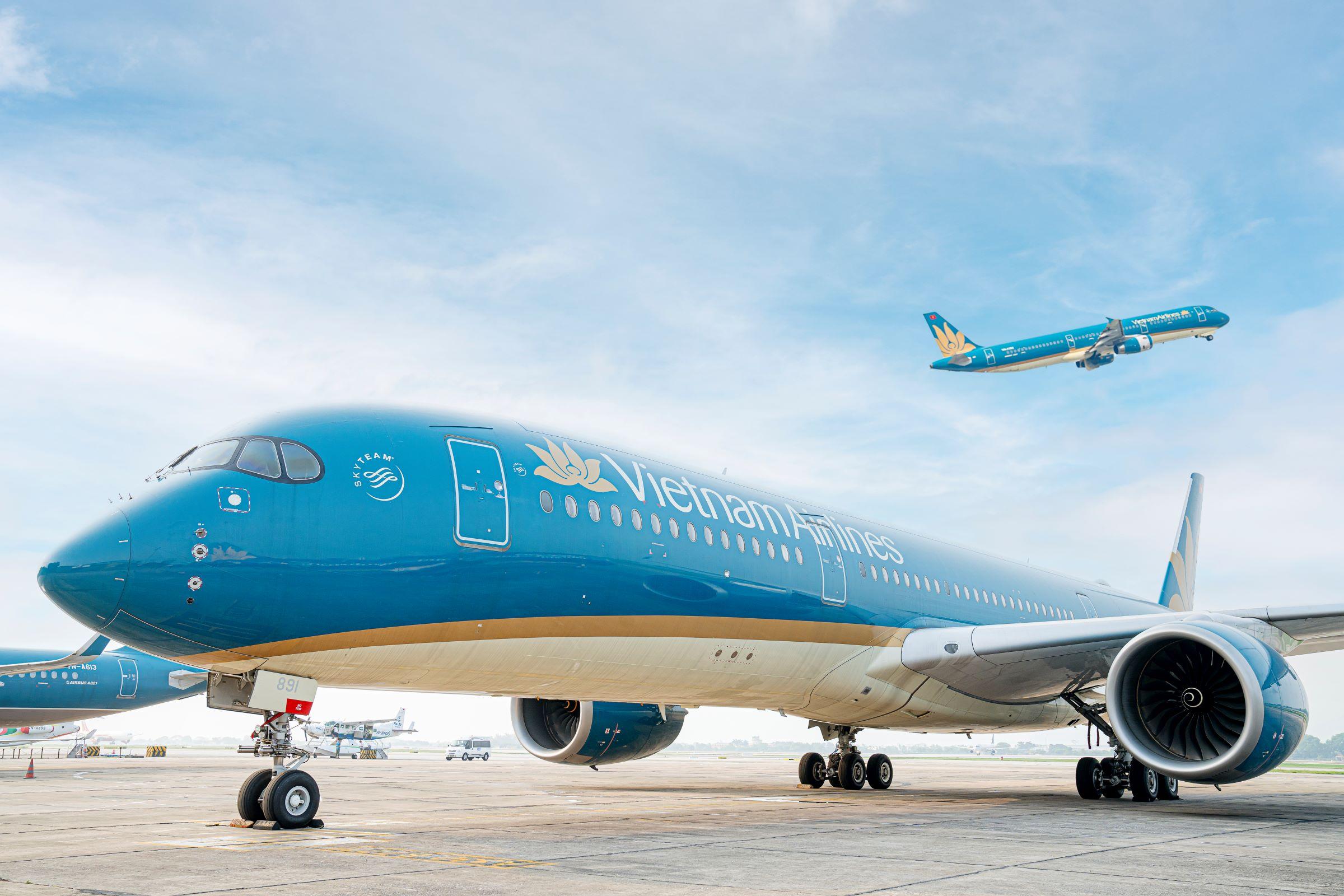
Because these are airlines rather than OTAs, “inventory” means flight seats and schedules, not hotels, hostels or vacation rentals.
Vietnam Airlines has a strong Southeast Asian network centered on Vietnam. Its published destinations include major Vietnamese cities plus numerous destinations across China, Japan, South Korea, India, Southeast Asia and Australia. Its network also includes European destinations and long-haul markets.
Thai Airways has a different geographic advantage: Bangkok is one of the region's major international connecting points. THAI's current destination network includes Australia, China, India, Japan, Southeast Asia, Europe and destinations in Africa.
Independent route data illustrates the difference in network structure: one current database lists approximately 193 routes and 88 destinations for Thai Airways versus approximately 197 routes and 53 destinations for Vietnam Airlines. These figures depend on methodology and can change with seasonal schedules, so they should not be treated as permanent airline statistics.
Regional comparison
For a trip to or from Vietnam, Vietnam Airlines can offer a very natural routing structure. For an itinerary involving Bangkok or Thailand, Thai Airways has an obvious hub advantage.
Pricing and Fee Transparency
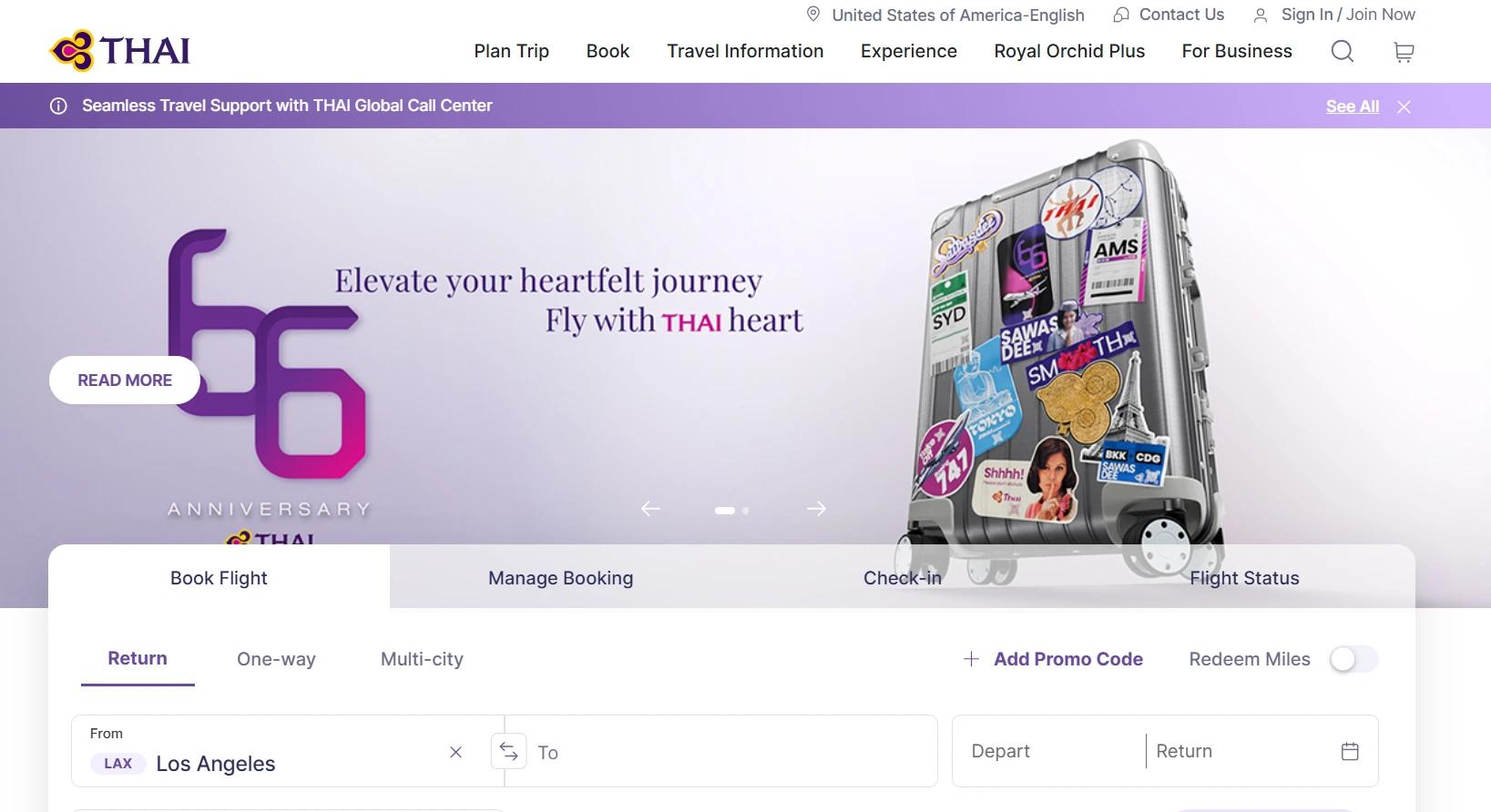
Airline pricing is fundamentally different from hotel-OTA pricing.
Neither Vietnam Airlines nor Thai Airways operates a conventional OTA model in which hundreds of hotels compete on one platform. Instead, customers choose among available fare families, booking classes, cabin classes and optional services.
The most important distinction is therefore:
Displayed airfare ≠ necessarily the same thing as the total cost of the trip.
Taxes and mandatory charges may be incorporated into the displayed fare depending on the market and booking channel, while optional costs can include seat selection, excess baggage, upgrades and other ancillary services.
Thai Airways explicitly states that its online tickets include applicable fares, taxes and surcharges and that electronic tickets are charged in the applicable local currency.
Thai's destination pages also currently display fares as inclusive of tax and surcharges, although availability is subject to change.
Vietnam Airlines similarly provides fare rules and refund conditions during the purchasing process. Its guidance specifically tells passengers to review the fare conditions and refund fees when selecting a fare.
What travelers should compare
When comparing the two airlines, don't simply search:
“Which ticket is cheaper?”
Instead compare:
Base fare
Taxes and mandatory charges
Checked baggage allowance
Cabin baggage allowance
Seat-selection fees
Change fees
Refundability
Connection time
Cabin class
Frequent-flyer benefits
For example, a slightly more expensive ticket can potentially become cheaper overall if it includes checked baggage that a competing fare does not.
Best Price Guarantee?
This is another area where the original OTA comparison doesn't translate directly.
Neither airline should be treated as having a Booking.com-style hotel Best Price Guarantee as a central product feature. Airline fares fluctuate according to inventory, demand, fare class, currency and travel date.
The sensible strategy is to compare the airline's direct fare against reputable flight-search channels, then examine the final fare conditions before paying.
User Interface and Booking Experience
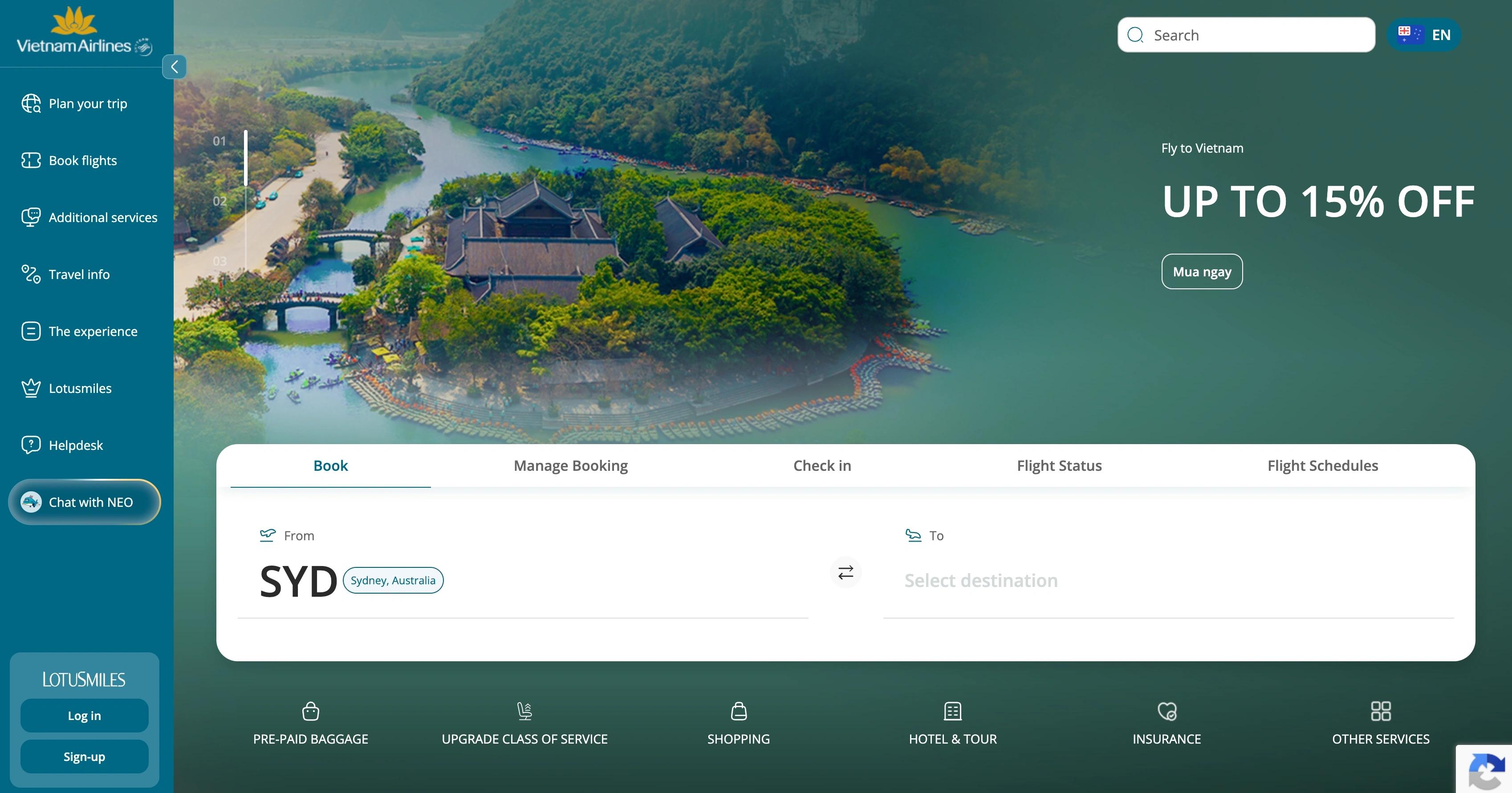
Both airlines provide direct online booking and mobile applications.
Vietnam Airlines allows passengers to book and manage flights online and provides a dedicated mobile app. Its Manage Booking system supports functions including cancellation, refunds and ticket changes.
Thai Airways likewise promotes its mobile application as a way to book, manage, track and modify trips.
Vietnam Airlines
The booking process is useful for travelers who want to:
Search flights
Select fare options
Manage existing reservations
Request eligible refunds
Exchange tickets
Purchase ancillary services
Its Manage Booking area requires details such as the reservation code/e-ticket number and passenger surname.
Thai Airways
THAI provides online booking, mobile booking and a Manage My Booking function. Its FAQ documentation also confirms that passengers can access electronic receipts through Manage My Booking.
Neither platform should be judged using OTA criteria such as “hotel map view” or “property filters.” For airlines, the more useful interface criteria are fare comparison, schedule clarity, connection information, seat selection, baggage information and post-booking management.
Loyalty Programs: Lotusmiles vs Royal Orchid Plus
This is one of the most meaningful differences between the airlines.
Vietnam Airlines — Lotusmiles
Vietnam Airlines operates Lotusmiles, its frequent-flyer program. The program has more than six million members according to Vietnam Airlines' partnership information, while its 2025 annual report reported approximately 7.2 million members at year-end 2025.
Members can earn miles from eligible Vietnam Airlines flights and partner airlines. Lotusmiles also has partnerships extending beyond aviation, including hotels and other services.
Higher-tier benefits can include:
Priority check-in
Priority boarding
Additional baggage
Lounge access
Priority services
Mileage rewards
Vietnam Airlines also states that eligible high-tier Lotusmiles members can receive SkyTeam Elite Plus benefits, including SkyPriority services across the SkyTeam network.
Importantly, this is not primarily a simple percentage-discount program. The value comes from earning and redeeming miles plus status benefits.
Thai Airways — Royal Orchid Plus
Thai Airways' loyalty program is Royal Orchid Plus (ROP).
It allows members to earn miles from THAI flights, Star Alliance flights and participating non-airline partners. Members can also earn through spending with selected credit cards, hotels, car rentals and other partners.
A particularly interesting 2026 development is ROP Smart Miles Pay, which allows eligible members to pay for THAI tickets using a combination of cash and miles. The minimum mileage component starts at 500 miles, although terms and route availability apply.
This makes Royal Orchid Plus particularly relevant to travelers who already accumulate Star Alliance miles.
Loyalty comparison
Neither program can accurately be reduced to “X% discount versus Y% discount.” Their principal benefits are miles, status recognition, lounge access, priority services and redemption opportunities.
For a traveler already committed to SkyTeam, Lotusmiles has an ecosystem advantage. For someone collecting Star Alliance benefits, Royal Orchid Plus may fit more naturally.
Cancellation and Refund Policies
This is an area where travelers should pay close attention to the fare rules, because buying a ticket from either airline does not automatically mean it is fully refundable.
Vietnam Airlines
Vietnam Airlines allows eligible passengers to initiate refunds through Manage Booking when tickets were purchased through its website or app.
The airline states that refunds are governed by the fare conditions and that eligible online refunds can be processed through Manage Booking. It says the refund is sent to the card-issuing bank within 15 working days after the refund operation is completed, while the actual arrival time depends on the bank.
Vietnam Airlines also provides a separate booking-cancellation function. Cancellation without refund and cancellation involving a refund are treated as different processes.
Tickets purchased through travel agencies generally require the passenger to contact the original vendor for assistance.
Thai Airways
Thai Airways states that refunds can be made through its ticketing offices and that applicable refund fees may apply. Refunds are generally credited back to the original credit/debit card, subject to the applicable conditions.
Thai also warns that passengers who fail to show up without advising the airline can have onward reservations cancelled. Routing changes may require contacting a THAI office or travel agent.
Practical rule
Before purchasing either airline:
Open the fare conditions.
Check whether the ticket is refundable.
Check the cancellation fee.
Check the change fee.
Check baggage allowance.
Confirm who must process a refund if an agency issued the ticket.
Bundling and Extra Services
This is another major difference from OTA platforms.
Neither airline is designed primarily as a “one-stop-shop” for hotels, flights, rental cars and airport transfers in the way a large OTA might be.
Their main ecosystem revolves around:
Flights
Seat selection
Baggage
Special services
Loyalty programs
Partner services
Thai Airways has a particularly broad payment ecosystem, including cards, selected digital wallets and Cash + Miles.
Thai also currently offers selected installment-payment promotions in particular markets. For example, eligible Thai-issued cardholders can find 0% installment promotions under specific 2026 terms.
Vietnam Airlines offers ancillary mileage earning on eligible services such as advance seat purchases and prepaid baggage.
For a genuine flight + hotel + car rental + transfer package, travelers will generally need a separate travel platform or book those services independently.
Customer Support and Trust
Customer-support reputation is difficult to summarize with one number because online reviews are self-selected and can disproportionately reflect negative experiences.
As of September 2026, Trustpilot shows a 1.8/5 TrustScore for Vietnam Airlines based on 497 reviews, while Thai Airways' Trustpilot page shows approximately 1.5/5 based on more than 1,000 reviews. Trustpilot itself warns that these reviews may not be representative because the companies have not recently invited customers to review.
Therefore, these figures should not be interpreted as a scientific measurement of the average passenger experience.
Vietnam Airlines provides 24/7 contact-center support in Vietnam and internationally, email support and a virtual assistant.
Thai Airways operates Thailand and overseas contact-center networks, with the airline describing its global support as available 24 hours. It also provides worldwide offices and FAQ resources.
Final Verdict: Who Should Use Vietnam Airlines or Thai Airways?
There isn't a single universal winner between Vietnam Airlines and Thai Airways. The better choice depends primarily on route, connection, fare conditions and loyalty-program preferences.
Budget travelers
Compare the complete fare, not just the first price displayed. Include baggage, seat selection and change/refund conditions before deciding.
Vietnam-focused travelers
Vietnam Airlines is naturally relevant when your itinerary begins, ends or connects extensively through Vietnam. Its domestic and international Vietnam network makes it particularly useful for Vietnam-centered journeys.
Thailand-focused travelers
Thai Airways is particularly relevant when Bangkok is an important part of the itinerary, with its network built around Suvarnabhumi Airport and extensive international connections.
Business travelers
Look closely at schedule frequency, connection time, cabin availability, flexibility and lounge/status benefits rather than simply choosing the lowest fare.
Solo travelers
The deciding factors may be schedule, total price, baggage and cancellation flexibility. A slightly different fare can make a significant difference if plans change.
Some links on this page are affiliate links. If you book through one we may earn a commission, at no extra cost to you. It never affects our ratings, our rankings, or the price you pay.