5 Best Travel Booking Websites for Flights, Hotels, and Complete Trips
Finding a low fare is easy. Finding a low fare with sensible baggage rules, a workable cancellation policy, and someone to contact when plans go wrong is harder.
Finding a low fare is easy. Finding a low fare with sensible baggage rules, a workable cancellation policy, and someone to contact when plans go wrong is harder. The best travel booking websites help you compare real options without hiding the details that can turn a bargain into an expensive mistake.
No single website wins every search. This guide explains where each platform works best, what to check before paying, and when to book directly with the airline or hotel.
Quick Comparison of the Best Travel Booking Sites
| Website | Best for | What you can search or book | Main strength | Main drawback |
|---|---|---|---|---|
| Booking.com | Hotels and flexible stays | Hotels, apartments, flights, cars, attractions | Huge accommodation choice and useful filters | Property terms can vary widely |
| Expedia | Complete vacations | Flights, stays, cars, packages, activities | Convenient trip management and package options | Changes may involve both Expedia and the supplier |
| Agoda | Hotels in Asia | Hotels, homes, flights, activities, transfers | Strong Asian inventory and mobile/member offers | Taxes and conditions require careful checking |
| Trip.com | International and multi-part trips | Flights, hotels, trains, cars, attractions | Broad transport coverage, including trains | Support quality can depend on the supplier and route |
| Skyscanner | Flight comparison and inspiration | Flights, hotels, car hire | Flexible date, destination, and route discovery | It often sends you else where to complete the booking. |
1. Booking.com: Best Overall for Accommodation
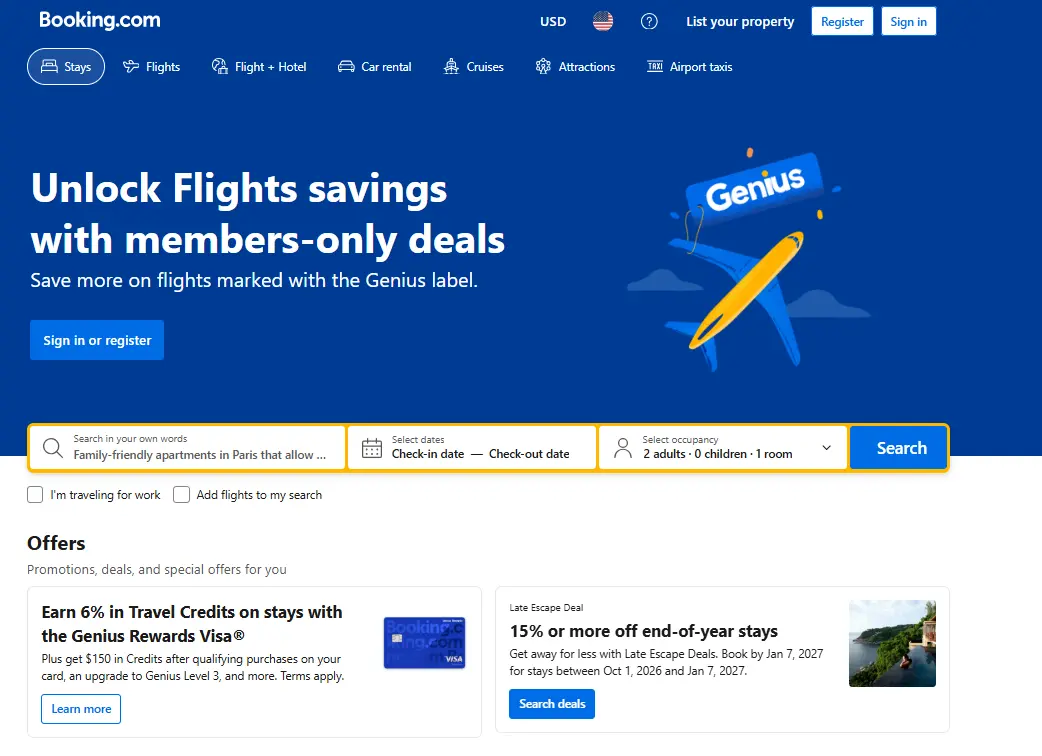
Booking.com remains one of the easiest places to compare hotels, hostels, apartments, resorts, villas, and guesthouses. Its real advantage is not simply the number of listings. The filters make it practical to narrow a large city down by neighborhood, review score, property type, meal plan, accessibility features, parking, and cancellation terms.
The platform also lists flights, rental cars, taxis, and attractions. Even so, accommodation is where it feels most complete.
Why Booking.com works well
Detailed accommodation filters save time in destinations with thousands of properties.
Guest reviews can be filtered and checked for recent comments about noise, cleanliness, location, and Wi-Fi.
Many properties offer free cancellation or pay-at-property rates, though these are not guaranteed on every listing.
The map view helps you judge distance from stations, beaches, or business districts.
Pros
Excellent range of traditional hotels and independent properties
Clear comparison between room types and meal plans
Strong mobile experience and useful booking management tools
Good choice for travelers who value flexible hotel rates
Cons
Two rooms at the same property can have very different refund rules
Best for: Travelers who want plenty of accommodation choices, especially in Europe and popular tourist cities.
2. Expedia: Best for Vacation Packages
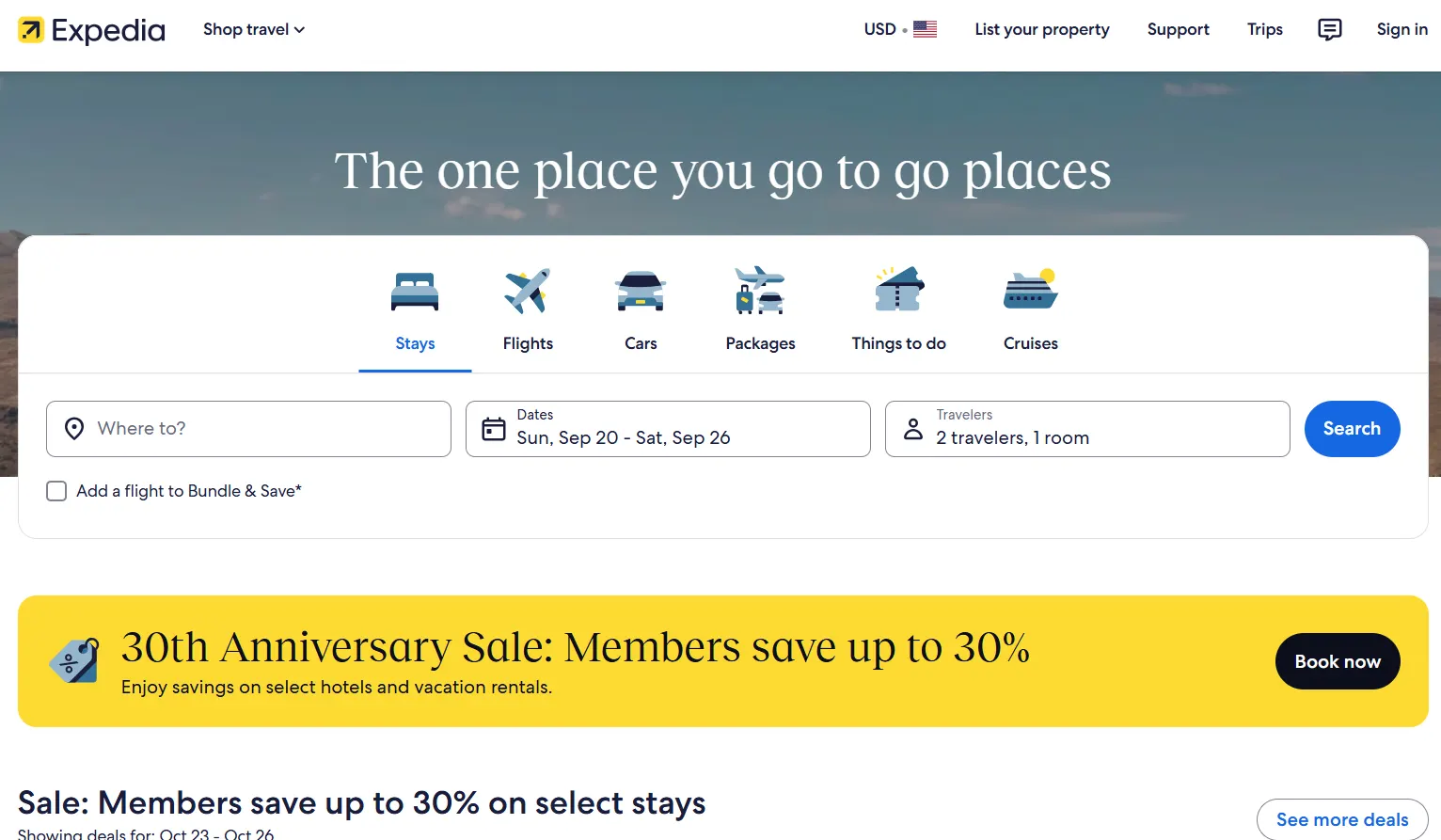
Expedia is built for travelers who want flights, hotels, cars, and activities in one place. Its package search is the main reason to use it. Combining a flight and hotel can cost less than buying each separately, but always compare the final totals.
After booking, your itinerary, confirmations, and many change options sit under one account. One Key provides member pricing and rewards on eligible bookings, subject to regional terms.
Why Expedia works well
You can compare flight-and-hotel packages without opening several websites.
The platform covers stays, flights, cars, packages, and things to do.
Member-only hotel rates may reduce the displayed price on eligible properties.
The app keeps different parts of a vacation under a single trip record.
Pros
Strong option for family vacations and city breaks
Package discounts can offer real value
Wide selection of hotels, flights, cars, and activities
Convenient if you prefer one travel account
Cons
Package cancellation rules may differ for each component
Best for: Travelers booking a flight and hotel together, or anyone who values having a full itinerary in one app.
3. Agoda: Best for Hotels in Asia
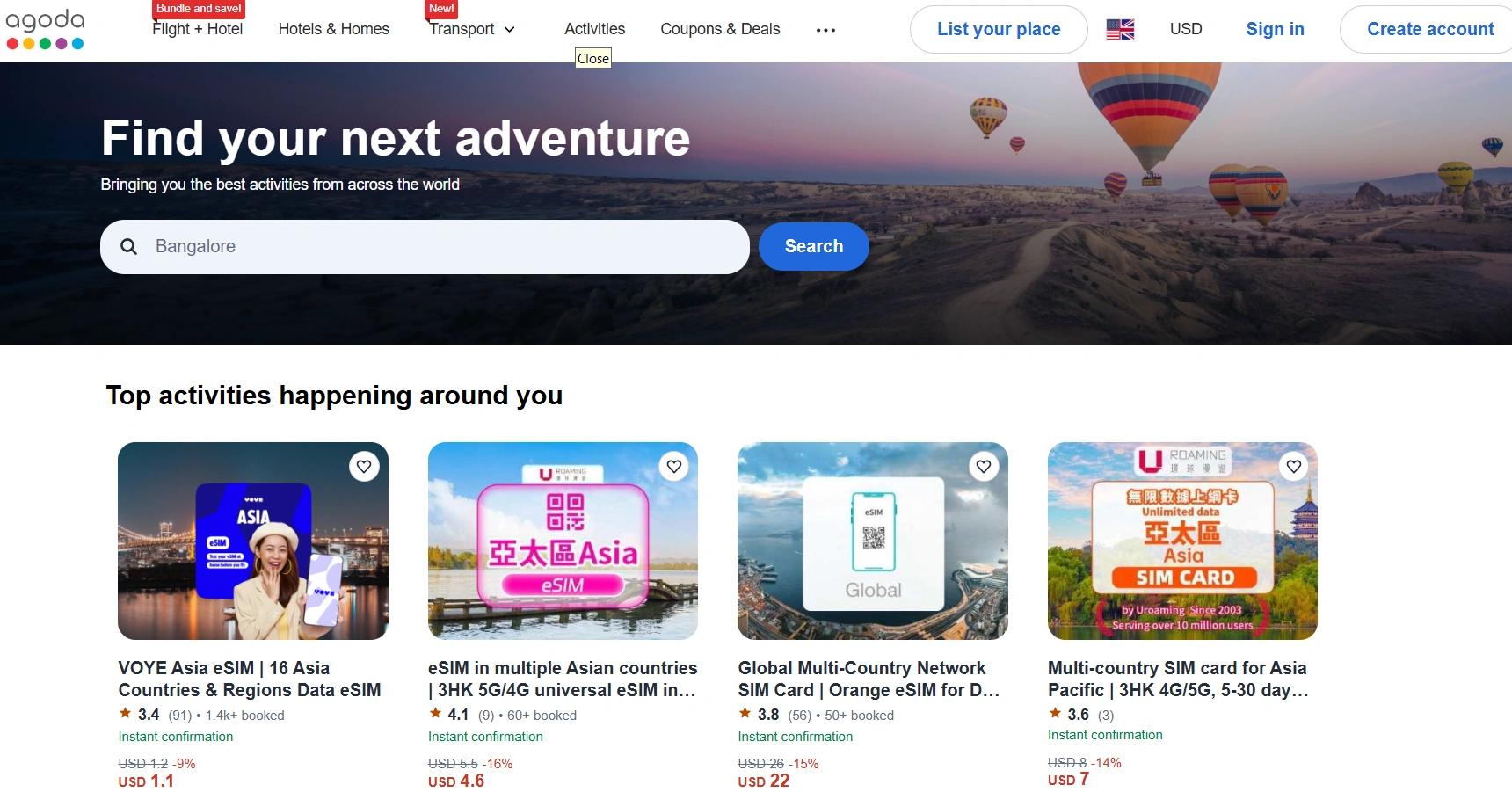
Agoda is global but particularly useful in Thailand, Vietnam, Malaysia, Indonesia, Japan, and South Korea. It lists major chains alongside local hotels, apartments, guesthouses, and resorts.
Prices can differ for signed-in users, app users, and prepaid rates. Agoda also offers flights, activities, transfers, and flight-plus-hotel searches in supported markets.
Why Agoda works well
Strong selection of budget and mid-range accommodation in Asia
Frequent mobile, member, and limited-time offers
Useful filters for location, facilities, property type, and review score
Options can include hotels, private homes, airport transfers, and activities
Pros
Often competitive for Asian hotels and resorts
Good coverage beyond major international hotel brands
Easy price comparison across room and payment types
Helpful for last-minute accommodation searches
Cons
The cheapest rate may have strict cancellation conditions
Best for: Travelers visiting Asia who want to compare local properties with international hotels.
4. Trip.com: Best for International Transport and Rail
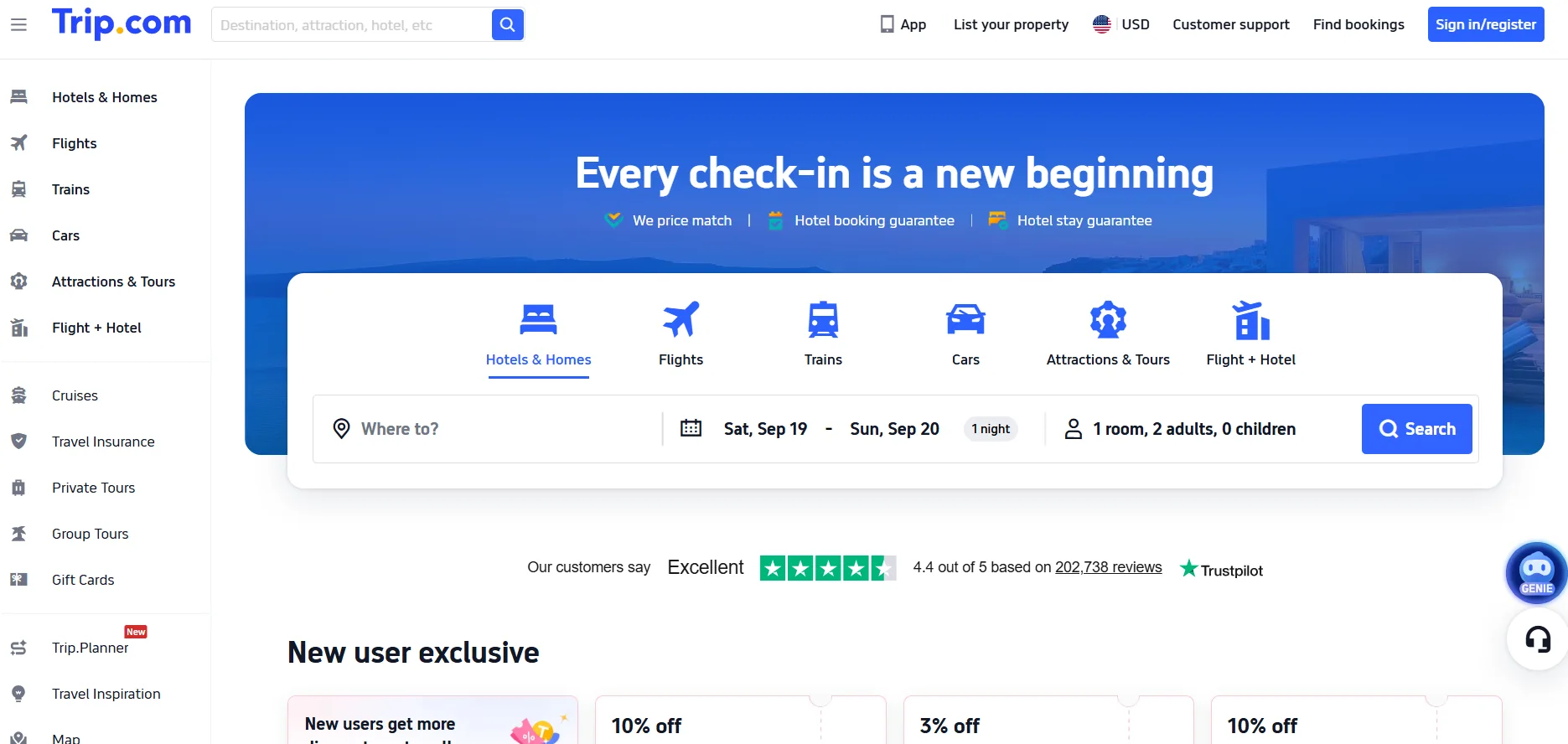
Trip.com combines flights and hotels with trains, cars, transfers, and attractions. Rail booking is an important difference, making it useful for trips involving both flights and ground transport.
Its flight search covers major airlines and regional carriers. Open the detailed rules before paying: a basic fare without checked baggage may cost more than a higher fare that includes it.
Why Trip.com works well
Broad coverage for flights, hotels, and train tickets
Useful for complex international itineraries
App-based trip management and status information
Loyalty features and member offers on eligible reservations
Pros
Convenient for trips involving planes and trains
Competitive international flight and hotel options
Supports many currencies, languages, and destinations
Can keep different transport bookings together
Cons
Changes are still controlled by the underlying airline or operator rules
Best for: International travelers, especially those planning a trip that combines flights, hotels, and rail travel.
5. Skyscanner: Best for Comparing Cheap Flights
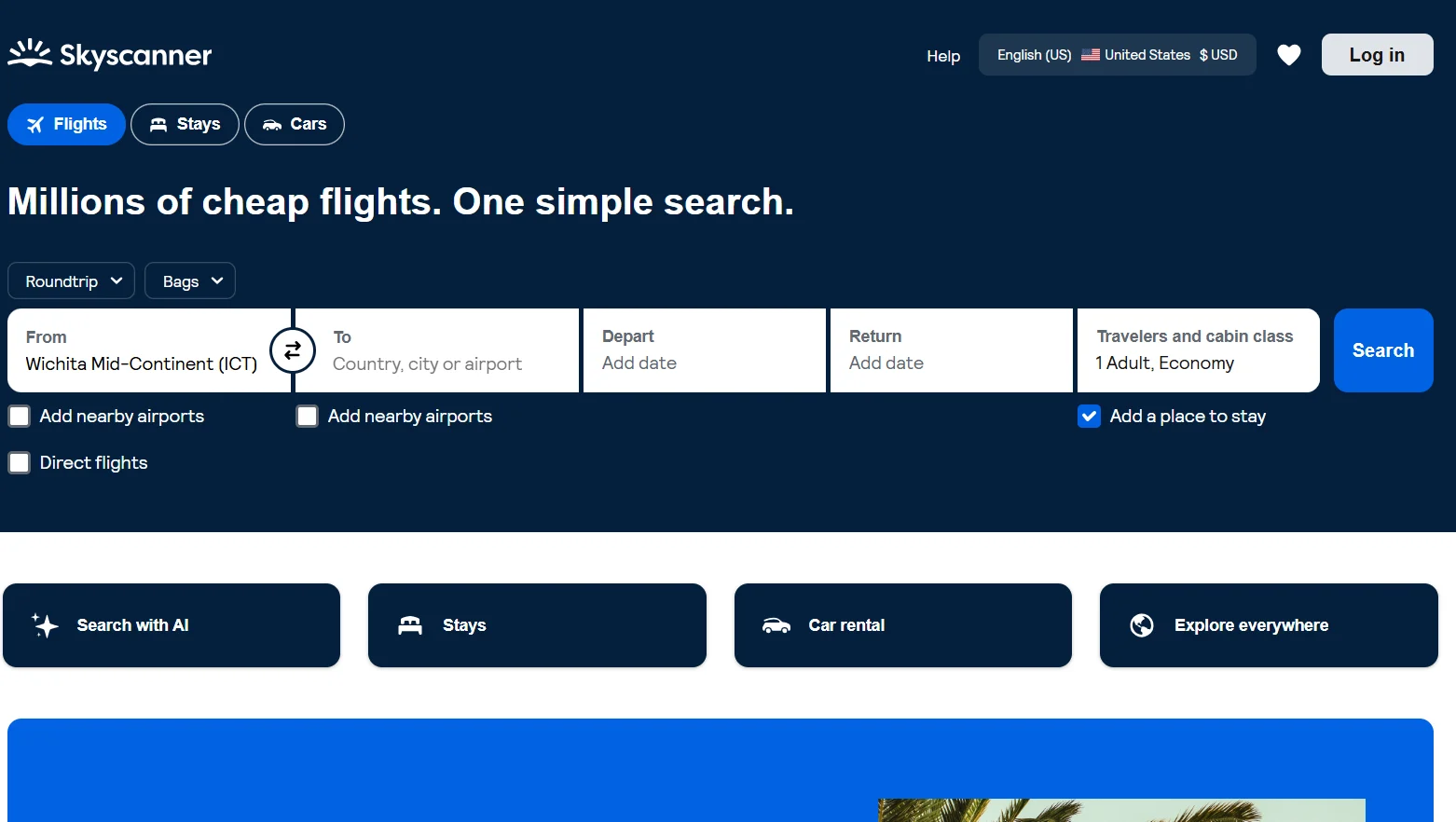
Skyscanner is primarily a comparison tool. It searches airlines and travel agencies, then usually directs you to a provider to pay. That provider, not Skyscanner, may handle your reservation.
You can compare a whole month, search nearby airports, or explore destinations when you know where you will depart but not where you want to go.
Why Skyscanner works well
Whole-month searches reveal cheaper departure and return dates.
Nearby-airport options can uncover lower fares.
Broad destination discovery helps flexible travelers compare countries and cities.
Price alerts can help you watch a route before booking.
Pros
Excellent first stop for flight research
Fast comparison across many airlines and agencies
Strong flexible-date and destination tools
Also compares hotels and rental cars
Cons
Skyscanner may not be the company handling your reservation
Best for: Flexible travelers, bargain hunters, and anyone who wants to understand the market before choosing where to book.
How to Book Travel Online Without Costly Mistakes
Step 1: Start with a broad comparison
Search on at least two platforms. Check flexible dates and nearby airports for flights. Use the hotel map so a cheap room does not create high daily transport costs.
Step 2: Compare the total, not the headline price
Add checked bags, seat selection, resort fees, taxes, payment charges, breakfast, and local transport. Compare like with like: a refundable room should not be measured against a non-refundable room as if they are identical.
Step 3: Open the cancellation and change rules
Do not rely on a “flexible” label alone. Note the exact cancellation deadline, time zone, refund method, no-show rule, and any change fee. Take a screenshot or save the terms shown at checkout.
Step 4: Check the direct price
Price the same dates, room or cabin, baggage, and cancellation terms on the supplier’s official site. If the direct price is close, booking direct can make disruption handling simpler.
Step 5: Verify every name and date
Names must match travel documents. Check airport codes and overnight arrival dates carefully; correcting a ticket can be difficult or expensive.
Step 6: Confirm with the supplier
After booking, locate the airline confirmation code or hotel reference. Confirm the reservation on the supplier’s website when possible. Contact the property directly for important requests such as an accessible room, late arrival, or airport pickup.
Pro Tips and Insider Secrets
Search while signed out and signed in. Member or app prices can be lower, but compare the final total and terms.
Use comparison sites for discovery, then check direct. This combines broad market visibility with a simpler service route when prices are similar.
Read recent negative reviews first. They quickly reveal construction noise, poor air-conditioning, location issues, or recurring cleanliness problems.
Avoid separate tickets on tight connections. If the first flight is late, the second airline may have no duty to rebook you.
Set price alerts instead of refreshing daily. This is useful when your trip is months away and dates are fixed.
Pay by a method with dispute protection. Rules vary by country and card issuer, so understand the protection before relying on it.
Keep offline copies. Save confirmations, receipts, insurance details, and cancellation terms where you can access them without internet service.
Frequently Asked Questions
Which travel booking website is the best overall?
Booking.com is the strongest all-round choice for accommodation, while Expedia works better for vacation packages. For flights, start with Skyscanner, then compare the selected fare with the airline’s official website.
Is it cheaper to book through a travel website or directly?
Either can be cheaper. Third-party sites may offer package, member, or app discounts, while airlines and hotels sometimes reserve special rates or benefits for direct customers. Always compare the final price with matching conditions.
Are travel booking websites safe?
Established platforms are generally legitimate, but the terms matter. Confirm that you are on the correct domain, use a secure payment method, read supplier details, and avoid unfamiliar agencies with unclear contact information or unusually poor reviews.
What happens if an airline cancels a flight booked through a third party?
The airline controls the flight, but the booking agency may need to process changes or refunds. This can add another step. Check both the airline notice and your booking platform account, and keep records of all communication.
Which website is best for cheap international flights?
Skyscanner is excellent for finding routes and flexible dates, while Trip.com can be competitive on international itineraries. The best result changes by route, so compare both and check the airline directly.
Which booking site is best for Asia?
Agoda is a strong choice for hotels across Asia because it lists many local and international properties. Trip.com is also useful when the journey includes regional flights or rail tickets.
Should I choose a non-refundable booking to save money?
Only if your dates are firm and the saving justifies the risk. Illness, visa delays, schedule changes, and family emergencies can make a non-refundable rate costly. A flexible rate is often worth paying for on expensive or distant trips.
Final Verdict
The best travel booking website depends on what you are buying. Choose Booking.com for accommodation choice, Expedia for packages, Agoda for Asian hotels, Trip.com for international transport and rail, and Skyscanner for flexible flight comparison.
The smartest approach is to use these sites together. Search broadly, compare the complete cost, read the rules, and check the supplier’s direct offer before paying. That extra five minutes can protect both your budget and your trip.
Some links on this page are affiliate links. If you book through one we may earn a commission, at no extra cost to you. It never affects our ratings, our rankings, or the price you pay.