How to Find Hotels With a Kitchen
Knowing how to find hotels with a kitchen can make your trip more comfortable and help you control food costs.
Knowing how to find hotels with a kitchen can make your trip more comfortable and help you control food costs. Whether you want to prepare family meals, follow a specific diet, or avoid eating out every day, the key is finding a room with the cooking facilities you actually need.
That sounds straightforward, but hotel descriptions can be surprisingly vague. A “kitchenette” might include a stovetop and cookware, or it might offer little more than a microwave and small refrigerator.
This guide explains where to search, how to compare kitchen facilities, and what to confirm before booking. A few careful checks can prevent you from arriving with groceries and discovering there is nowhere to cook them.
What Counts as a Hotel With a Kitchen?
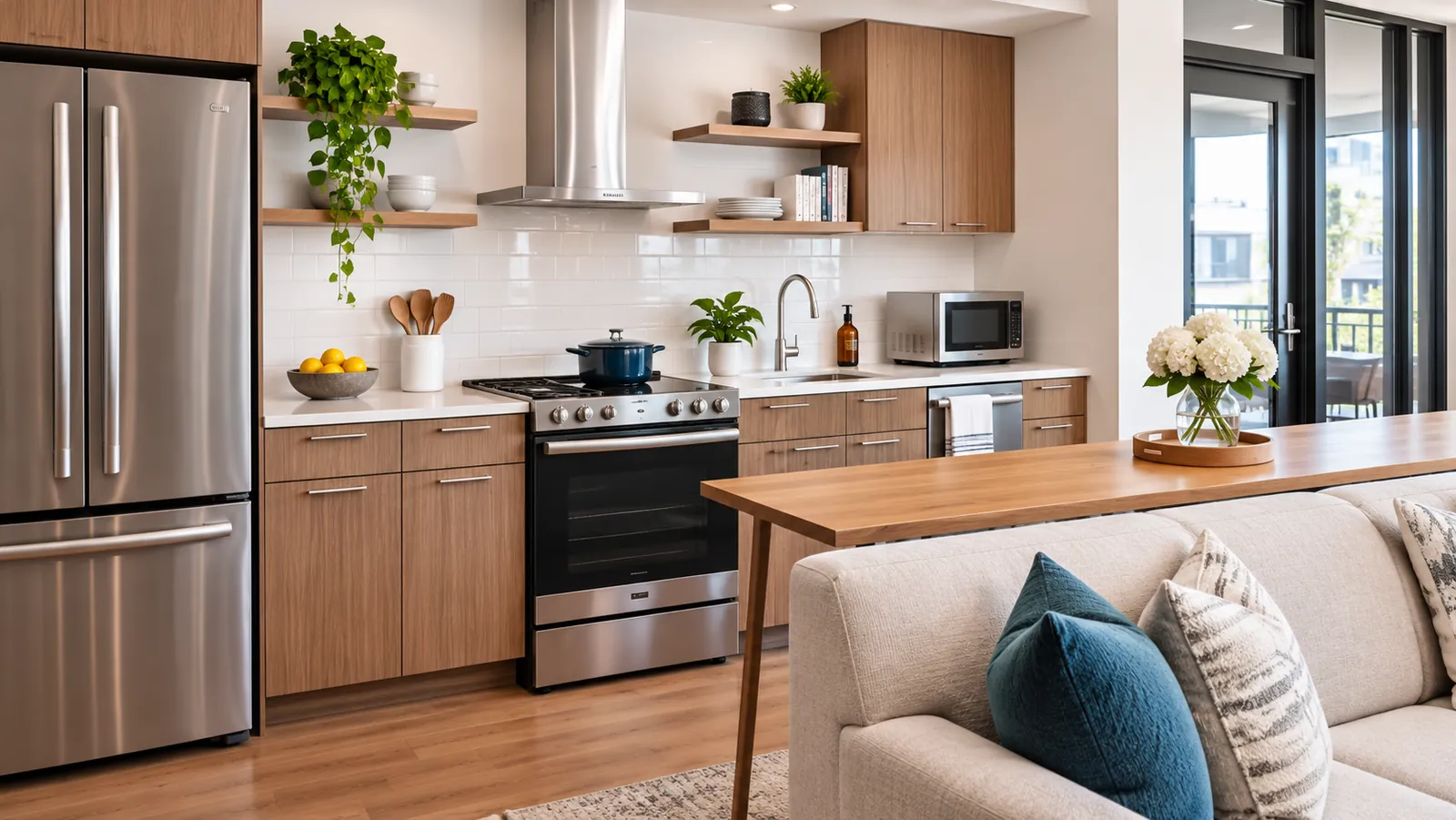
A hotel with a kitchen provides cooking facilities either inside your accommodation or in a shared area. However, the word “kitchen” does not guarantee a particular set of appliances.
Before searching, decide whether you need to cook complete meals or simply store food and reheat leftovers.
Full Kitchen
A full kitchen generally offers a refrigerator, sink, cooking surface, microwave, and some storage or preparation space. Cookware, plates, and utensils may also be provided.
Do not assume a full kitchen includes an oven. A hotel can describe its kitchen as fully equipped while offering a stovetop and microwave without a conventional oven.
Kitchenette
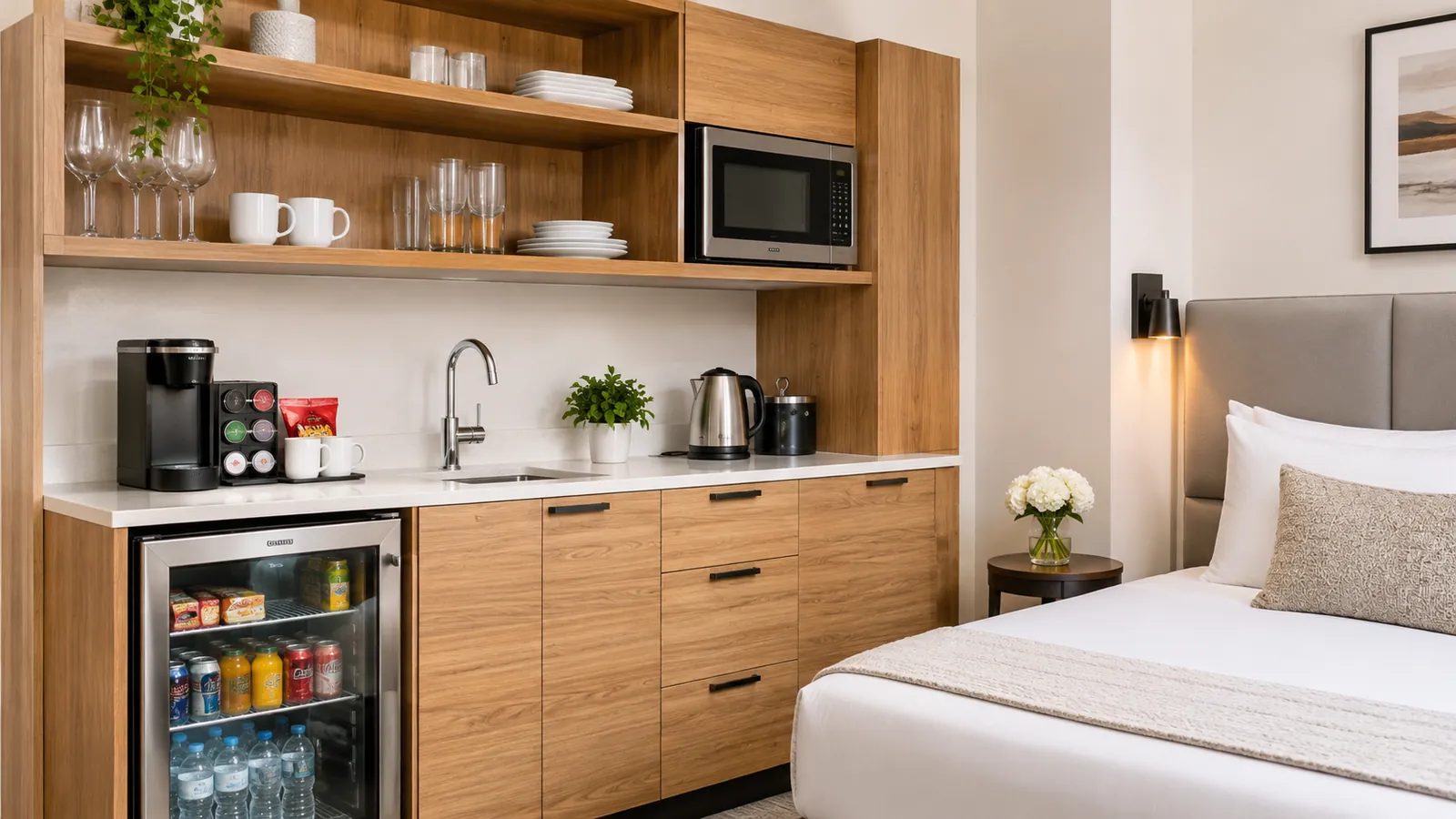
A kitchenette is usually a smaller cooking area within the room. Depending on the property, it may contain a compact refrigerator, microwave, sink, and one or two cooking burners.
Some kitchenettes support everyday cooking perfectly well. Others are mainly suitable for breakfasts, snacks, and reheating prepared meals.
Shared Kitchen
A shared kitchen is used by multiple guests rather than belonging to one room. You may find this arrangement in hostels, guesthouses, and some budget accommodation.
It can be economical, but you will need to check opening hours, food storage arrangements, and whether cooking equipment is available when you need it.
Basic Refreshment Area
A room with a kettle, coffee maker, minibar, or microwave does not necessarily have a kitchen. These facilities may be enough for drinks and snacks, but they should not be treated as evidence that you can cook.
Search for specific appliances rather than relying on a broad amenity label.
Which Types of Accommodation Should You Search?
Your chances improve when you start with accommodation designed for longer stays or independent living.
Extended Stay Hotels
Extended stay hotels are a useful starting point because their rooms often support everyday routines, including preparing meals.
For example, Homewood Suites describes its suite kitchens as including a full size refrigerator, dishwasher, microwave, and stovetop. Always confirm the facilities at your chosen property before booking.
Aparthotels and Serviced Apartments
Aparthotels combine apartment style accommodation with hotel services. Serviced apartments may provide separate living areas, larger kitchens, and laundry facilities.
The level of service varies. Check reception hours, housekeeping frequency, and arrival arrangements alongside the kitchen equipment.
Hotels With Selected Kitchen Suites
Some conventional hotels offer kitchens only in certain studios, apartments, or suites. Their standard rooms may have no cooking facilities at all.
This makes the exact room category especially important. A kitchen mentioned on the general property page may not be included in the cheapest room.
Holiday Apartments and Vacation Rentals
Private rentals can offer more extensive cooking facilities, particularly for families or groups.
However, compare cleaning charges, deposits, check in requirements, and cancellation conditions. A lower nightly rate does not automatically mean a lower total cost.
Kitchen Types Compared
Use this table to identify which setup suits your plans. These are typical arrangements, so verify the individual listing.
| Accommodation setup | Typical facilities | Best suited to | Main detail to verify |
|---|---|---|---|
| Full private kitchen | Refrigerator, sink, stovetop, microwave, cookware | Regular cooking and longer stays | Whether an oven and essential utensils are included |
| Private kitchenette | Smaller refrigerator, microwave, sink, sometimes burners | Simple meals and short stays | Whether there is an actual cooking surface |
| Shared guest kitchen | Communal appliances, preparation space, shared storage | Budget travelers comfortable sharing | Access hours, cleanliness, and equipment availability |
| Room with microwave and refrigerator | Food storage and reheating facilities | Leftovers, snacks, and ready meals | Whether these appliances are in your booked room |
| Serviced apartment | Apartment kitchen, sometimes additional appliances | Families, groups, and extended trips | Equipment inventory and housekeeping arrangements |
How to Find Hotels With a Kitchen Step by Step

1. Decide What You Want to Cook
Start with your meals rather than the hotel’s terminology. Preparing cereal and sandwiches requires much less equipment than cooking rice, vegetables, and evening meals.
Write down your essential facilities. For many travelers, the priorities are:
A refrigerator with enough space for groceries.
A stovetop or approved cooking appliance.
A sink and usable preparation surface.
Pots, pans, plates, and cutlery.
A table or comfortable place to eat.
If baking matters, add an oven explicitly. If you need frozen food storage, ask about the freezer rather than assuming the refrigerator has one.
2. Search With Several Relevant Terms
Search your destination using phrases such as “hotels with kitchens,” “hotel kitchenette,” “extended stay hotel,” “aparthotel,” and “serviced apartment.”
Try “self catering accommodation” as well. Different properties and destinations use different descriptions, so one search phrase can miss suitable options.
Enter your actual dates and guest numbers early. A property may have kitchen rooms, but none available for your group or travel dates.
3. Apply Kitchen Filters Carefully
When a booking platform offers kitchen or kitchenette filters, use them to narrow the results.
Treat the filter as a starting point. Depending on the listing, it may identify a private kitchen, a shared facility, or kitchens available only in selected room categories.
Open each promising property and read the room details. A search result is not a guarantee that every room includes a kitchen.
4. Check the Exact Room Category
Look for wording such as “studio with kitchenette,” “one bedroom apartment with kitchen,” or “suite with cooking facilities.”
Compare the room description with the rate you are about to select. Similar room names can conceal meaningful differences in appliances, layout, or occupancy.
Also check the bed arrangement. A kitchen suite that accommodates four people may use a sofa bed rather than providing two separate bedrooms.
5. Inspect Room Photos
Photos help reveal whether the kitchen is genuinely practical. Look for the stovetop, refrigerator, sink, microwave, preparation area, and dining space.
Check whether the photos belong to your room category or simply appear in the general hotel gallery. A photograph of the property’s largest apartment does not establish what a smaller studio contains.
If the pictures are unclear, ask for a recent photograph or an equipment list for your selected room.
6. Search Recent Reviews for Kitchen Details
Look for mentions of “kitchen,” “cooking,” “stove,” “fridge,” “cookware,” and “utensils.”
Useful reviews describe practical details: missing pans, limited counter space, noisy refrigerators, or appliances that were not working. A general comment about a spacious room tells you much less.
Give more weight to repeated, recent observations than to one isolated complaint. Check whether reviewers stayed in the same room category you are considering.
7. Contact the Property Before Paying
If cooking is essential, request written confirmation from the hotel or accommodation manager.
Be specific: “Does the studio I am booking include a private kitchen with a stovetop, refrigerator, sink, frying pan, saucepan, plates, and cutlery?”
Also ask whether kitchen equipment is supplied automatically or must be requested. Some properties provide particular appliances or utensils separately.
Keep the reply with your booking confirmation. It gives you a clear record of what was described.
8. Review the Booking Conditions
Before payment, check cancellation terms, deposits, cleaning expectations, and any kitchen related charges.
Find out whether you must wash dishes, remove rubbish, or leave appliances clean before departure. Ask how any extra cleaning charge is assessed.
If an essential kitchen feature remains uncertain, consider a cancellable rate while you resolve it.
What to Confirm Before Booking
The most useful kitchen questions concern usability rather than appearance.
| Item | What to ask | Why it matters |
|---|---|---|
| Cooking surface | Is there a stovetop, and how many burners does it have? | Determines which meals you can prepare |
| Refrigerator | Is it a minibar, compact fridge, or larger refrigerator? | Affects grocery storage |
| Freezer | Is there a usable freezer compartment? | Important for frozen food |
| Cookware | Are saucepans, frying pans, and matching lids supplied? | Prevents unexpected purchases |
| Utensils | Are knives, a chopping board, and cooking utensils included? | Makes food preparation practical |
| Cleaning supplies | Are dish soap, a sponge, and dishwasher detergent provided? | Avoids buying basic supplies |
| Kitchen access | Is the kitchen private and available throughout the stay? | Prevents confusion over shared access |
| Dining area | How many people can sit and eat comfortably? | Particularly important for families |
For dietary needs, ask additional questions. A kitchen used by previous guests should not be assumed free of allergens, and supplied equipment may require cleaning before use.
How to Decide Whether a Kitchen Room Is Worth the Price
A kitchen can reduce spending, but only if you use it enough to offset any room premium.
Compare the total accommodation cost plus realistic food spending. Include groceries, transport to shops, delivery charges, and ingredients you may leave behind.
For example, imagine a kitchen room costs $25 more per night. If cooking saves your group $40 per day after groceries, the kitchen could reduce overall spending by $15 daily.
That is an illustration rather than a typical saving. Restaurant prices, group size, destination, and cooking habits will change the result.
A kitchen may also provide value beyond money. Preparing familiar meals can make travel easier with young children, specific food preferences, or an extended work schedule.
However, if your itinerary keeps you out from morning until late evening, a refrigerator and microwave may be sufficient.
Check the Location for Grocery Shopping
A well equipped kitchen is less convenient if buying food requires a long taxi journey.
Look for nearby supermarkets, produce shops, and practical walking routes. Check opening hours against your arrival time, especially if you land late.
Think about carrying groceries as well. A shop that looks close on a map may involve steep hills, stairs, or awkward road crossings.
For longer stays, ask whether grocery delivery can reach the property and how deliveries are received. Confirm the arrangement before placing an order.
Pro Tips for Booking Hotels With Kitchens
Plan Two or Three Simple Meals
Before booking, imagine preparing a few meals you will realistically eat. This quickly shows whether you need an oven, multiple burners, or just a microwave.
Simple meals also reduce spending on oil, spices, and ingredients that are difficult to use up during a short trip.
Match Equipment to Your Group
A kitchen suitable for one traveler may feel cramped for a family.
Confirm there are enough plates, glasses, and seats for everyone. Ask whether the largest saucepan is practical for preparing your usual portions.
Check the Kitchen Before Buying Groceries
On arrival, inspect the appliances and inventory. Report missing equipment or faults promptly and ask what solution the property can offer.
This is easier before you fill the refrigerator with food that depends on a working stove or freezer.
Follow the Property’s Cooking Rules
Ask about ventilation, permitted appliances, and any restrictions on cooking methods.
Do not bring or use your own hotplate, grill, or other cooking equipment without permission. The available sockets and room layout may not be suitable.
Frequently Asked Questions
1. How do I know whether my hotel room has a kitchen?
Check the amenities for the exact room category you select. Look for named appliances and request written confirmation if cooking facilities are essential.
2. Is a kitchenette enough to cook meals?
It can be, particularly if it includes a stovetop, sink, cookware, and refrigerator. A kitchenette with only a microwave is better suited to reheating and simple food preparation.
3. Do all hotel suites include kitchens?
No. “Suite” usually refers to the room’s layout or additional space, so check the appliance list separately.
4. Which hotel brands should I investigate?
Extended stay brands are a useful starting point. Homewood Suites and Residence Inn properties advertise kitchen accommodation, but verify your chosen property and room before booking.
5. Are cookware and utensils always included?
No. Ask about the specific items you need, including pans, knives, chopping boards, plates, and cleaning supplies.
6. Can I cook in a standard hotel room?
Only use the facilities provided and permitted by the property. A room with a kettle or refrigerator does not automatically permit additional cooking appliances.
7. Is a hotel kitchen better than a vacation rental kitchen?
Compare the individual options. A hotel may offer convenient reception services, while a rental may provide more space or equipment; charges and service levels vary.
Final Verdict
The best way to find hotels with a kitchen is to search broadly, then verify carefully. Focus on the exact room, specific appliances, supplied equipment, and total booking cost.
Choose facilities that match the meals you expect to prepare, and check that groceries are easy to obtain. With those details confirmed, a kitchen can make your stay more flexible, comfortable, and economical.
Some links on this page are affiliate links. If you book through one we may earn a commission, at no extra cost to you. It never affects our ratings, our rankings, or the price you pay.