What Is a Studio Room in a Hotel?
A studio room in a hotel is usually a room where the sleeping area and living space share one open layout.
A studio room in a hotel is usually a room where the sleeping area and living space share one open layout. Many hotel studios also include a kitchenette, giving you somewhere to prepare simple meals without booking a separate apartment.
The name can be confusing because hotels use “studio” differently. One property might offer a spacious room with a sofa and full cooking facilities, while another uses the term for a compact room with a small seating area.
Before paying extra, you need to know what the room actually includes. This guide explains studio room layouts, common amenities, differences from other room types, and the details to check before booking.
What Does Studio Room Mean in a Hotel?
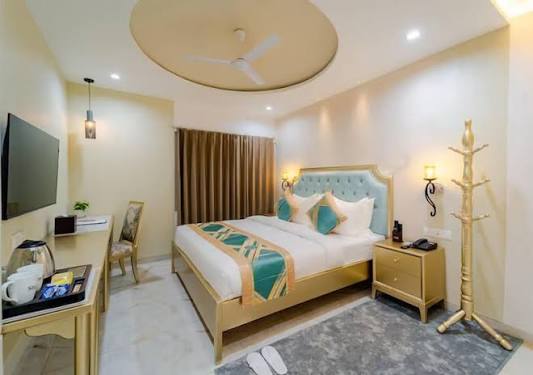
A hotel studio generally combines several functions within a single main room. You sleep, relax, and sometimes cook or eat in the same space, with a separate enclosed bathroom.
Think of it as a room designed to feel more like a small home. Instead of having a separate bedroom and lounge, the furniture divides the space into practical areas.
However, “studio room” is not a universal hotel classification. The label alone does not guarantee a kitchen, a particular floor area, or accommodation for a specific number of guests.
The Typical Studio Room Layout
A common layout includes a bed at one end, a seating area nearby, and a kitchenette along a wall or near the entrance. Some studios also have a dining table that doubles as a workspace.
Larger studios may use shelving, furniture, or a partial partition to distinguish the sleeping area. These divisions can make the room feel more organized, but they do not necessarily create a private bedroom.
For example, two guests could watch television on the sofa while another rests in bed. Everyone would still share the same room, including its noise and lighting.
Why the Bathroom Is Usually Separate
The term “open layout” generally refers to the sleeping and living areas. The bathroom is usually enclosed, although some properties have unusual bathroom designs or partially open vanity areas.
If privacy matters, check the photographs carefully. A separate toilet compartment, an exposed washbasin, and a fully enclosed bathroom provide different experiences.
What Features Does a Hotel Studio Usually Include?
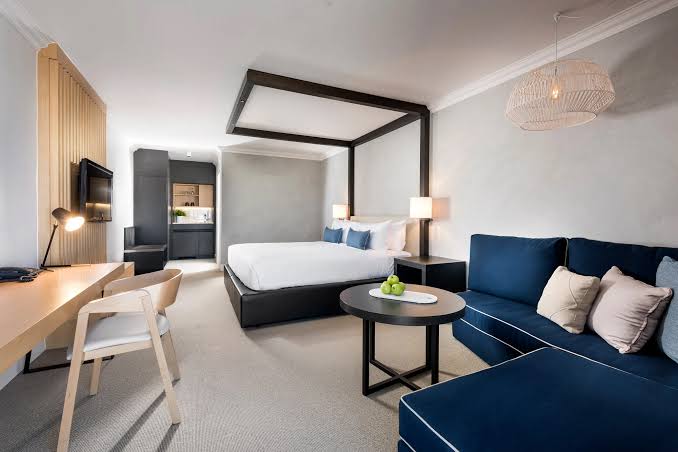
The appeal of a studio comes from its practical amenities. Still, each feature should be confirmed in the description for the exact room category you are booking.
Sleeping Area
Studios may have a double, queen, king, or twin bed arrangement. Some also include a sofa bed or another sleeping option for additional guests.
A studio room does not automatically accommodate a family. A large room may still have a maximum occupancy of two people, while a smaller studio may be approved for more guests.
Check both the guest limit and the bed configuration. A sofa shown in a photograph is not necessarily a sofa bed.
Seating and Living Space
Many studios provide a sofa, armchair, or small lounge area. This gives you somewhere to sit comfortably without using the bed throughout your stay.
The amount of living space varies considerably. Some rooms have a distinct seating zone, while others fit a single chair beside the bed.
Look for photographs showing the complete room. Close shots of furniture can make it difficult to judge how much usable space remains.
Kitchenette or Kitchen Facilities
A kitchenette is a compact food preparation area. Depending on the property, it may include:
A refrigerator
A microwave
A sink
One or more cooking rings
A kettle or coffee maker
Basic cookware, dishes, and cutlery
Some studios have only a microwave and refrigerator, while others include a full kitchen. A kitchenette does not guarantee a stove, oven, or everything needed to cook meals.
A minibar and kettle alone are also different from a useful cooking area. Ask for an equipment list if you plan to prepare food regularly.
Dining and Working Areas
A table can make a studio useful for eating, working, or organizing travel plans. Some hotels provide a dedicated desk, while others expect guests to use a dining counter.
For remote work, check the chair and available sockets as well as the table. A breakfast stool may be comfortable for a quick meal but awkward for several hours of typing.
Storage and Other Amenities
Studios may offer wardrobes, drawers, and cupboards that help during longer stays. Kitchen storage is particularly useful if you intend to buy groceries.
Laundry facilities might be inside the room, shared elsewhere in the building, or available through a paid service. Never assume a studio includes a washing machine simply because it has cooking facilities.
Studio Room vs Standard Room vs Suite
The main difference is how the room organizes sleeping, living, and cooking space. The table below describes common arrangements, although individual hotels may use different names.
| Feature | Standard Hotel Room | Studio Room | One Bedroom Suite | One Bedroom Apartment |
|---|---|---|---|---|
| Main layout | Primarily a sleeping space | Combined sleeping and living space | Bedroom separate from living area | Bedroom separate from living area |
| Bedroom privacy | Usually no separate bedroom | Usually no separate bedroom | Generally greater privacy | Generally greater privacy |
| Cooking facilities | Often limited to a kettle or minibar | Often a kitchenette, but not guaranteed | Varies by property | Usually a kitchen |
| Seating | May have a chair or small sofa | Often includes a seating area | Usually a separate lounge | Usually a separate lounge |
| Dining space | Often limited | May include a table or counter | Depends on the suite | Commonly included |
| Typical appeal | Convenient accommodation for shorter visits | Flexible space for everyday activities | More space and separation | More independent living |
| Main detail to verify | Beds and included amenities | Kitchen equipment and occupancy | Actual room separation | Services and kitchen facilities |
Is a Studio the Same as a Suite?
Not necessarily. A studio commonly has one main open room, while a one bedroom suite generally separates the bedroom from the living area.
However, hotels sometimes use the label “studio suite” for an open layout with additional amenities. The word “suite” alone does not prove that the room has a separate bedroom.
Is a Studio the Same as a Serviced Apartment?
A studio can be one type of serviced apartment, but the terms describe different things. “Studio” describes the layout, while “serviced apartment” refers to accommodation that includes certain hospitality services.
A serviced apartment might be a studio or have several bedrooms. Housekeeping schedules, reception hours, and other services depend on the property.
Who Should Consider Booking a Studio Room?
A studio can suit travelers who want more flexibility in how they spend time indoors. Its value depends on whether you will actually use the extra facilities.
Couples and Solo Travelers
For a couple or solo traveler, a studio can offer a comfortable place to relax between outings. A seating area is useful when you want to read, eat, or watch television without sitting on the bed.
Cooking facilities may also make breakfast or a quiet evening easier. You can keep snacks, drinks, and simple groceries close by.
Business Travelers and Longer Stays
A studio can help establish a routine during an extended visit. Having somewhere to work, eat, and store food can make repeated nights in the same room more comfortable.
However, room layout matters more than the label. A useful desk and quiet location may be more valuable than a kitchenette you never use.
Families and Friends
Some studios work well for families, especially when they offer suitable extra beds and practical dining space. Preparing a quick breakfast can simplify mornings with children.
The main limitation is privacy. Different bedtimes, television noise, and cooking smells affect everyone sharing the open room.
Friends who want separate sleeping spaces may find a one bedroom apartment or two rooms more comfortable. Compare the actual arrangements before deciding.
How to Book the Right Hotel Studio Room
A few checks can prevent the most common disappointments. Focus on the exact room and rate you select rather than the hotel’s general list of facilities.
1. Enter the Correct Guest Details
Include every adult and child in the search, with children’s ages where requested. This helps identify rooms that meet the property’s occupancy rules.
If you need a cot or extra bed, confirm availability and any charge. A request does not always mean the equipment is guaranteed.
2. Read the Full Room Description
Check the floor area, bed types, seating, and cooking equipment. Look for clear wording rather than assuming “studio” means all of these are included.
Also distinguish between in room amenities and shared facilities. A hotel kitchen or laundry room might be elsewhere in the building.
3. Inspect Photos or a Floor Plan
Look for the relationship between the bed, sofa, kitchenette, and bathroom. Consider whether you could move around comfortably when additional beds are in use.
A sofa bed can take up much of the available floor space when opened. That detail matters more during a longer stay.
4. Confirm Essential Kitchen Equipment
If cooking is a priority, ask whether the room has a stove, suitable pans, plates, utensils, and a working refrigerator. Confirm whether missing items can be supplied.
Cooking restrictions also matter. Some properties prohibit personal cooking appliances or allow only the equipment already installed.
5. Check Services and the Total Price
Review housekeeping frequency, linen changes, parking, breakfast, deposits, and any disclosed cleaning charges. These details can change the value of the booking.
Compare the total stay cost, including cancellation terms. A cheaper nightly rate may come with fewer services or less flexibility.
Does a Studio Room Cost More?
A studio may cost more than a standard room because it offers additional space or facilities. However, prices also depend on location, demand, views, room condition, and the booking rate.
There is no fixed studio room premium. At some properties, a basic studio may cost less than a standard room at a more expensive hotel.
To assess value, compare accommodation costs with the expenses you could reasonably reduce. Preparing breakfast may help your budget, but only if you intend to buy groceries and use the kitchen.
Also consider convenience. A slightly higher room price might be worthwhile if the layout makes a weeklong stay substantially more comfortable.
Pro Tips for a More Comfortable Studio Stay
Small details can make a noticeable difference when one room serves several purposes.
Ask about ventilation. Cooking odors can linger near the bed in an open layout.
Check refrigerator size. A small appliance may hold drinks and snacks but little else.
Confirm sofa bed arrangements. Ask whether bedding is included and who prepares it.
Review recent comments about cleanliness. Pay attention to kitchen equipment as well as the bathroom.
Choose groceries after checking the room. Buy food that suits the equipment actually available.
Ask about accessibility features specifically. Room size alone does not confirm step free access or a suitable bathroom.
For longer stays, find out where rubbish should go and how replacement towels are supplied. These everyday arrangements matter when housekeeping is less frequent.
If you expect to work while someone else sleeps, consider a room with genuine separation. An open studio can be comfortable, but it cannot provide the same privacy as a separate bedroom.
Frequently Asked Questions About Hotel Studio Rooms
1. Does every studio room have a kitchen?
No. Many have a kitchenette, but some offer only a seating area or limited food preparation equipment. Check the exact room description and confirm essential appliances before booking.
2. How many people can stay in a hotel studio?
The permitted number depends on the property and room category. Some studios accommodate two guests, while others allow additional occupants using approved beds. Follow the stated occupancy limit.
3. Is a studio room bigger than a standard room?
It can be, but the name does not guarantee extra space. Compare the published floor areas and layouts. A well arranged room may feel more usable than a larger room filled with furniture.
4. Does a studio room have a separate bedroom?
Usually, the bed shares the main space with the living area. If you need an enclosed bedroom, look for a one bedroom suite or apartment and verify the floor plan.
5. Can you cook in a hotel studio?
You can generally use the cooking equipment the property provides, subject to its rules. Check what is installed and avoid bringing appliances unless the hotel explicitly permits them.
6. Is breakfast included with a studio booking?
Breakfast depends on the selected rate, not the room name. A studio with a kitchen may still offer breakfast separately, while another booking may include it. Read the meal plan before paying.
7. Are studio rooms cleaned every day?
Housekeeping varies by property and rate. Some hotels provide daily service, while extended stay accommodation may use a different schedule. Confirm cleaning frequency and whether additional service costs extra.
Final Verdict: Is a Studio Room Right for You?
A studio room in a hotel can be a practical choice when you want sleeping, relaxing, and possibly cooking facilities in one space. It is particularly useful when those amenities support your daily routine.
The best booking decision comes from checking the layout, beds, kitchen equipment, occupancy, and included services. If those details suit your trip, a studio can offer a comfortable balance between a conventional hotel room and apartment accommodation.
Some links on this page are affiliate links. If you book through one we may earn a commission, at no extra cost to you. It never affects our ratings, our rankings, or the price you pay.