How to Find Flights With Free Meals Before Booking
Airline meals can be easy to overlook when comparing flights, but they become much more important when you are spending six, ten, or even fourteen hours in the air.
Airline meals can be easy to overlook when comparing flights, but they become much more important when you are spending six, ten, or even fourteen hours in the air. Buying food onboard can add to your travel costs, while arriving at the airport expecting a complimentary meal only to discover that food is sold separately can be frustrating.
Finding flights with free meals is not as simple as choosing an international or full service airline. Meal policies can vary according to the airline, route, flight duration, cabin, departure time, aircraft, and sometimes the fare you purchase.
A carrier may provide complimentary meals on its long haul international network but operate a buy on board service on shorter routes. Even two flights with the same airline can have different catering.
The safest approach is to check the meal information for your specific flight before booking. Here's how to do it.
What Does a Free Airline Meal Actually Mean?
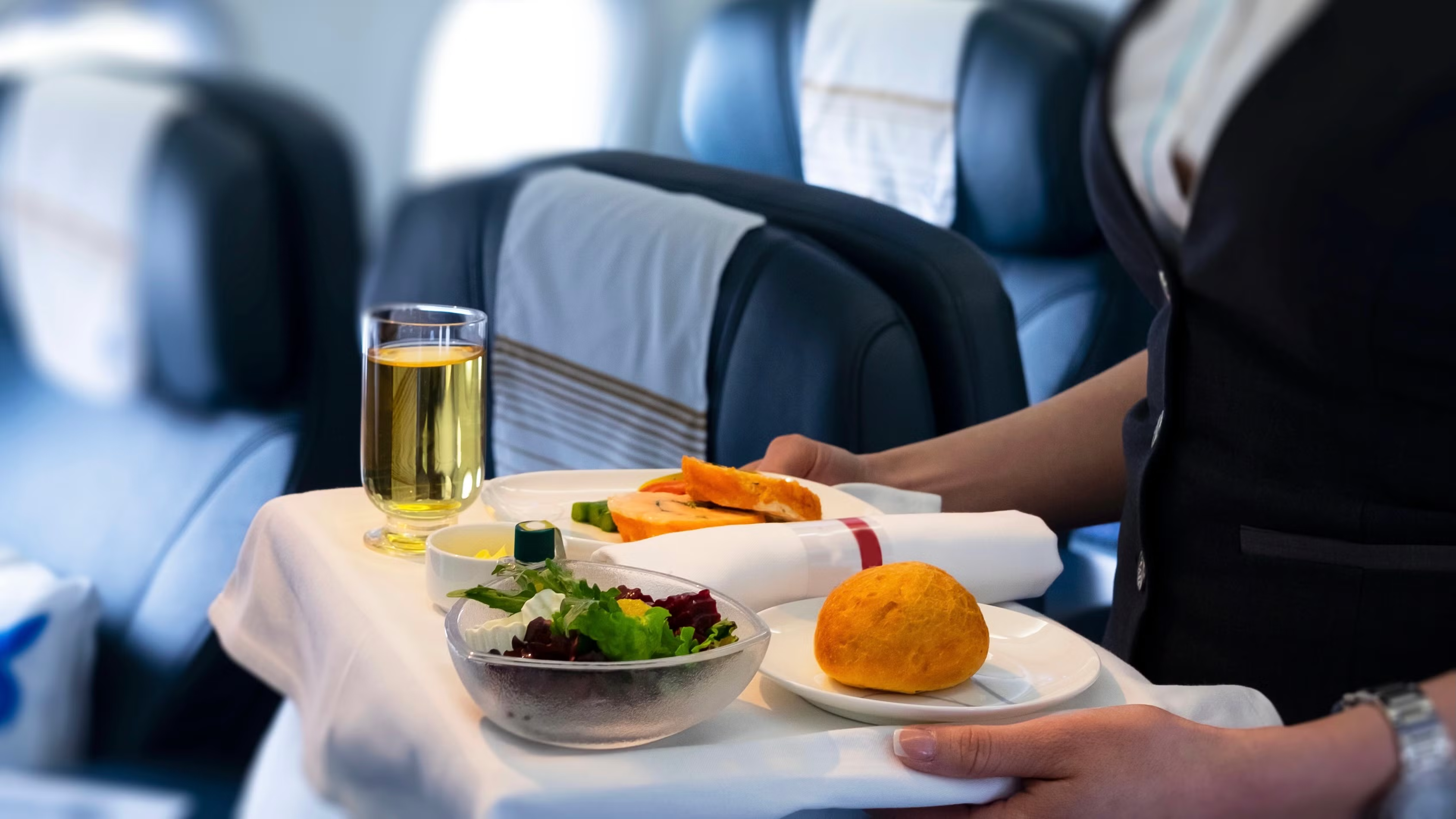
When travelers say "free meal," they usually mean food included in the airfare without a separate onboard purchase.
Technically, the meal is part of the ticket price rather than truly free.
Depending on the flight, complimentary catering could include:
A full hot meal
A lighter meal
Breakfast
A snack
Sandwiches or wraps
Nonalcoholic drinks
Multiple meal services on long flights
Do not assume that "complimentary refreshments" means a complete meal.
A flight offering free water and a small snack is very different from one providing lunch or dinner.
Why Meal Service Varies Between Flights
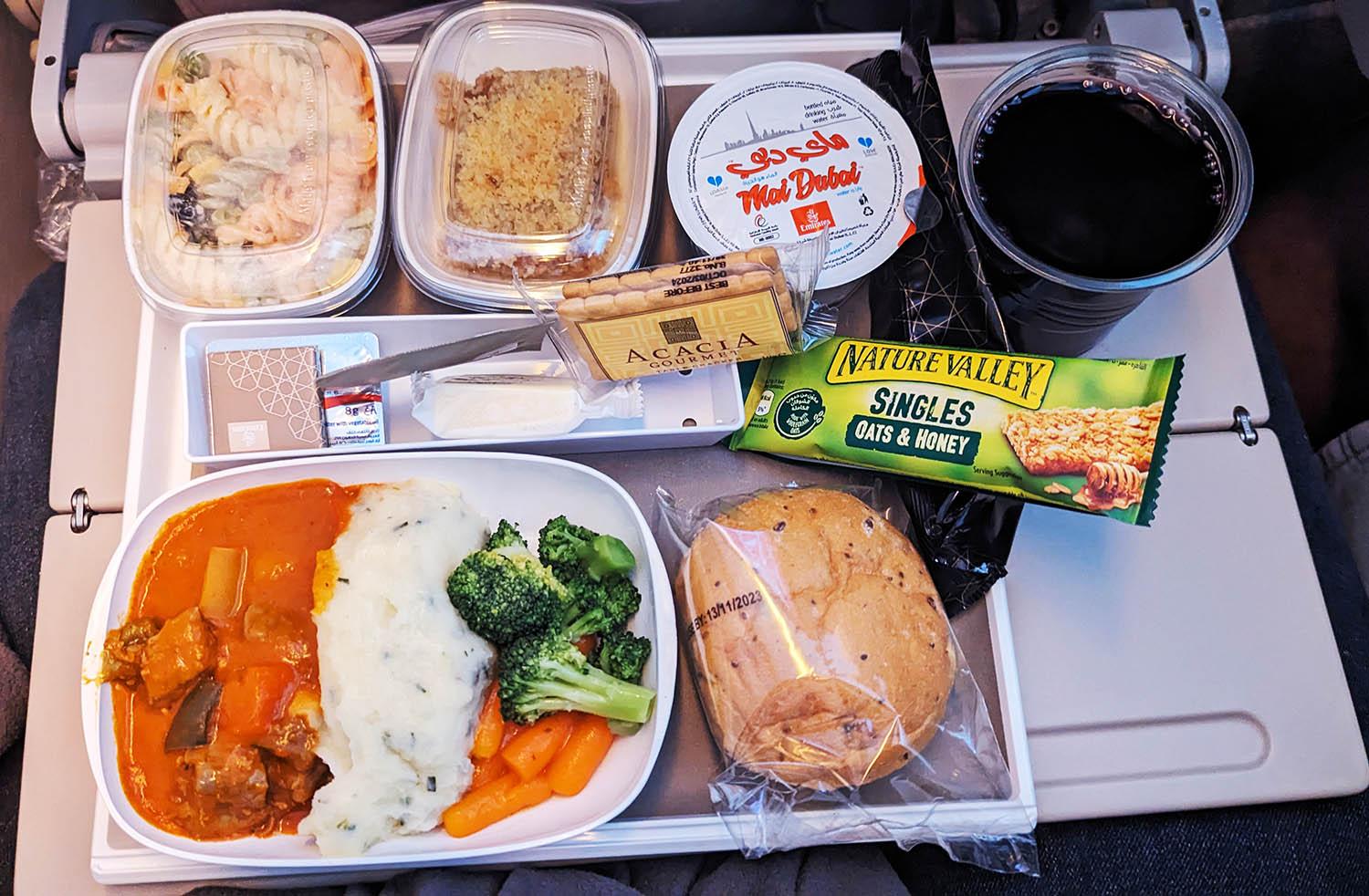
Airlines design catering around the type of service they operate.
A short domestic flight may not be long enough for a complete meal service. A long haul international flight, by comparison, may include dinner followed by breakfast before landing.
Meal availability can depend on several factors:
Flight duration.
Domestic or international route.
Departure time.
Cabin class.
Airline business model.
Route characteristics.
Fare or service type.
This is why broad statements such as "Airline A gives free meals" can be misleading.
Always investigate the individual flight.
Step 1: Check the Flight Details Before Booking
Start by searching for flights normally.
Once you find an itinerary you are considering, expand its detailed information.
Look for sections labeled:
Meals
Food and beverages
Inflight service
Amenities
Onboard services
What's included
Some booking systems show a meal symbol or a short description beside the flight.
You might see wording such as:
Meal included.
Complimentary meal.
Breakfast.
Lunch.
Dinner.
Snack.
Food available for purchase.
No meal service.
The more specific the description, the easier it is to understand what is included.
Step 2: Verify the Information With the Operating Airline
If meal service matters to you, verify what is offered by the airline actually operating the flight.
This is particularly important with codeshares.
Your ticket might display Airline A's flight number but say:
Operated by Airline B
Airline B provides the aircraft, crew, and normally the onboard catering for that flight.
Therefore, researching Airline A's meal policy could produce the wrong answer.
Identify the operating carrier for every flight segment before checking food and beverage information.
Step 3: Look at the Flight Duration
Flight duration is a useful clue, although it does not guarantee a meal.
Long haul flights are generally more likely to include substantial complimentary catering than very short flights, particularly when operated as full service international services.
However, duration alone is not enough.
A five hour flight with one airline could include a meal, while another carrier might sell food onboard.
Even within the same airline, service can differ between markets.
Use flight duration to determine how important catering is to you, but verify the actual meal service separately.
Step 4: Check Whether the Airline Is Full Service or Low Cost
The airline's business model can give you an initial idea of what to expect.
Traditional full service airlines often bundle more onboard services into certain fares, particularly on long haul flights.
Low cost airlines commonly separate the ticket price from optional extras.
Food may therefore be sold individually.
However, these categories are not absolute.
A full service airline may charge for food on some routes, while another airline may include refreshments in situations where you did not expect them.
Treat the business model as a clue, not a guarantee.
Step 5: Check What Your Fare Includes
Airlines increasingly sell multiple fare families within economy class.
You may encounter fares such as:
Basic.
Light.
Standard.
Classic.
Flex.
The names vary considerably.
Meal service is often based primarily on route and cabin, but certain products or fare structures may have different inclusions.
Before paying, open the fare details and look specifically at food and beverage information.
Do not assume that because one passenger receives a meal, every ticket sold on that flight necessarily includes exactly the same benefits.
Step 6: Understand the Difference Between a Meal and a Snack
This distinction matters when planning a long travel day.
An airline may advertise complimentary food but provide only a light snack.
For example, these are very different offerings:
Complimentary snack and water
versus
Complimentary hot meal with beverages
If you will be traveling through lunch or dinner, determine whether the airline provides enough food for your needs.
When the description is vague, consider eating before boarding or bringing suitable food with you, subject to airport and destination restrictions.
Step 7: Check How Many Meals Are Served
On very long flights, asking whether a meal is included is only half the question.
You should also determine approximately how many meal services are planned.
A long haul flight might include a main meal after departure and another service before arrival.
Some flights may also provide snacks between meals.
The exact service can depend on duration, schedule, route, and airline.
This becomes particularly relevant on overnight flights because the timing of meals can influence whether you want to eat onboard or prioritize sleep.
Step 8: Consider Departure Time
Departure time can influence the type of food served.
A morning flight may provide breakfast.
A midday service could offer lunch.
An evening departure may provide dinner.
On overnight flights, a meal may be served after takeoff followed by breakfast or another service before landing.
If sleep is important, consider when meal service is likely to occur.
A complimentary dinner has less value to you if you plan to eat in the airport and sleep immediately after departure.
Step 9: Check Every Segment of a Connecting Trip
Meal service should be checked separately for each flight.
Suppose your itinerary includes:
Flight 1: 90 minutes.
Flight 2: 10 hours.
The first segment might offer only drinks or food for purchase, while the second includes multiple complimentary services.
Do not assume that booking everything on one ticket means catering will be identical across the journey.
Different aircraft and even different operating airlines may be involved.
Review every segment individually.
Step 10: Compare the Total Fare, Not Just the Meal
A complimentary meal is useful, but it should rarely determine your entire booking decision.
Consider this illustrative example:
| Feature | Flight A | Flight B |
|---|---|---|
| Fare | $440 | $480 |
| Meal | Purchase onboard | Included |
| Checked bag | Extra | Included |
| Seat selection | Extra | Included on selected fare |
| Routing | Nonstop | Nonstop |
| Flight time | 8 hours | 8 hours |
| Total cost for your needs | Calculate | Calculate |
Flight B costs more initially, but its included services could make the overall value competitive.
On the other hand, paying $100 more solely to receive an airline meal may make little financial sense when you could simply buy food separately.
Evaluate the entire fare package.
Step 11: Compare Full Service and Low Cost Flights Properly
A low cost airline can still be an excellent choice even when meals are not complimentary.
The important question is how much the complete journey costs after adding everything you need.
Calculate:
Base fare.
Cabin baggage.
Checked baggage.
Seat selection.
Meal.
Other required extras.
Then compare that amount with the full service alternative.
Sometimes the low cost carrier remains significantly cheaper.
In other cases, once baggage, seating, and food are added, the price difference becomes much smaller.
Step 12: Check Whether Food Can Be Preordered
If complimentary meals are unavailable, check whether the airline allows meals to be purchased before departure.
Preordering can be useful because the selection available onboard may differ from advance options.
It also lets you include food in your travel budget before reaching the airport.
Check the ordering deadline carefully.
Some airlines require meal purchases a certain amount of time before departure rather than allowing them during online check in or onboard.
Availability varies by airline and route.
Step 13: Check Special Meal Availability
Travelers with dietary requirements should investigate more than whether meals are free.
Depending on the airline and route, special meal options may be available for particular dietary, religious, or medical preferences.
Options vary significantly.
If you require a special meal, check:
Whether one is available.
Whether it must be requested.
The request deadline.
Whether it applies to every flight segment.
Whether the request is confirmed.
Do not assume that selecting a dietary preference in your passenger profile automatically requests the meal for every journey.
Step 14: Do Not Assume International Means Free Food
One of the most common misconceptions is that every international flight includes a complimentary meal.
It does not.
An international flight could last less than an hour, while another could last fifteen hours.
Low cost airlines also operate international routes.
Instead of asking whether the flight is international, check:
Operating airline.
Flight duration.
Cabin.
Fare.
Published meal service.
Those factors provide a much better indication of what you will receive.
Step 15: Do Not Assume Long Haul Guarantees Free Meals
Long haul flights are commonly associated with included catering, but you should still verify your specific service.
Airline business models continue to differ.
A long flight operated by one carrier might include meals in the fare, while another airline could use a more unbundled model.
Do not make your booking decision based purely on distance.
Check the flight's actual amenities.
Step 16: Consider Airport Food Costs
When comparing meal inclusive and noninclusive flights, remember that the alternative may be buying food at the airport.
Airport meals can add meaningful cost, particularly for families.
Suppose four people are traveling.
Even a modest per person meal expense becomes much larger when multiplied across the group and potentially across several flight segments.
For families, complimentary catering can therefore provide more financial value than it does for a solo traveler.
Still, compare the overall airfare difference before deciding.
Step 17: Bring Your Own Food When Appropriate
If your flight does not include food, bringing suitable snacks or a meal can be another option.
Choose food that is practical to carry and eat onboard.
However, airport security and destination customs or biosecurity rules can restrict certain foods, especially when crossing international borders.
Food that can be carried through security is not necessarily permitted to enter your destination country.
Consume or dispose of restricted items where required.
Step 18: Recheck Before Departure
Airline services and schedules can change.
If catering is important, review your flight information again before travel.
This is particularly useful if:
Your schedule changed.
The operating airline changed.
Your itinerary was rebooked.
A flight segment changed.
You received a major booking update.
An aircraft change alone does not necessarily alter catering, but a broader operational change could affect what you expected.
Keep your meal expectations based on the current itinerary.
Free Meal Flight Comparison Checklist
Before choosing between flights, compare the relevant details:
| Factor | What to Check |
|---|---|
| Operating airline | Who actually provides the service |
| Flight duration | Short, medium or long haul |
| Fare type | What your ticket includes |
| Meal | Included or paid |
| Meal type | Snack, light meal or full meal |
| Number of services | Especially important long haul |
| Drinks | Included or paid |
| Special meals | Availability and request rules |
| Baggage | Included or extra |
| Seat selection | Included or extra |
| Total fare | Final cost for your needs |
This provides a much more useful comparison than simply searching for "airlines with free food."
Common Mistakes When Looking for Free Airline Meals
The biggest mistake is assuming all full service or international flights include meals.
Another is confusing a complimentary snack with a full meal.
Travelers also sometimes research the marketing airline instead of the operating carrier on a codeshare flight.
Do not forget to check each segment of a connecting itinerary.
Finally, avoid choosing a significantly more expensive flight solely because food is included. Calculate the monetary value of the meal alongside baggage, seats, schedule, connections, and total journey time.
Frequently Asked Questions
How do I know if my flight includes a free meal?
Check the flight details, fare inclusions, and onboard service information for your exact flight. Verify the information with the operating airline when necessary.
Do all international flights provide free meals?
No. Meal service depends on the airline, route, duration, cabin, and service model.
Are meals free on long haul flights?
They are commonly included on many long haul services, but this is not universal. Always check your specific flight.
Does basic economy include meals?
It depends on the airline and route. On some flights, passengers receive the same onboard meal service regardless of economy fare family, while other service models may differ.
Are special meals free?
Policies vary. Where special meals are offered as part of complimentary catering, there may not be a separate charge, but availability and request procedures differ.
Can I bring my own food onto a flight?
Often yes, subject to security, airline, customs, and destination restrictions. International travelers should be particularly careful with food import rules.
Is it worth paying more for a flight with meals included?
Sometimes, but compare the complete fare. Baggage, seats, schedule, routing, and flexibility usually have greater financial impact than a single meal.
Final Thoughts
The best way to find flights with free meals is to research the specific flight rather than the airline generally.
Start by identifying the operating carrier and checking the onboard service information for your exact route, date, cabin, and fare. Determine whether "food included" means a genuine meal or simply a snack, and check how many services are provided on longer journeys.
For connecting itineraries, investigate each segment independently.
Most importantly, keep complimentary food in perspective.
A flight with an included meal is not automatically better value than one selling food separately. Calculate the complete trip cost after baggage, seat selection, meals, and other extras, then compare schedule and journey time as well.
When you evaluate meal service, total fare, baggage, seating, and itinerary together, you can find a flight that keeps both your travel budget and your appetite comfortably covered.
Some links on this page are affiliate links. If you book through one we may earn a commission, at no extra cost to you. It never affects our ratings, our rankings, or the price you pay.