How to Identify Fake Travel Booking Confirmations Before You Lose Money
Knowing how to identify fake travel booking confirmations can save you from paying for a nonexistent hotel room, arriving at the airport without a valid ticket, or handing your card details to a scammer.
Knowing how to identify fake travel booking confirmations can save you from paying for a nonexistent hotel room, arriving at the airport without a valid ticket, or handing your card details to a scammer. The most reliable check is to verify the reservation directly with the airline, hotel, or booking platform through contact details you find independently.
A convincing confirmation might include your name, travel dates, a company logo, and a booking reference. Those details make it look authentic, but they do not prove that your reservation exists or that a payment request is legitimate.
This guide explains what to inspect, how to verify flight and hotel bookings, and what to do if you have already clicked a suspicious message.
What Is a Fake Travel Booking Confirmation?
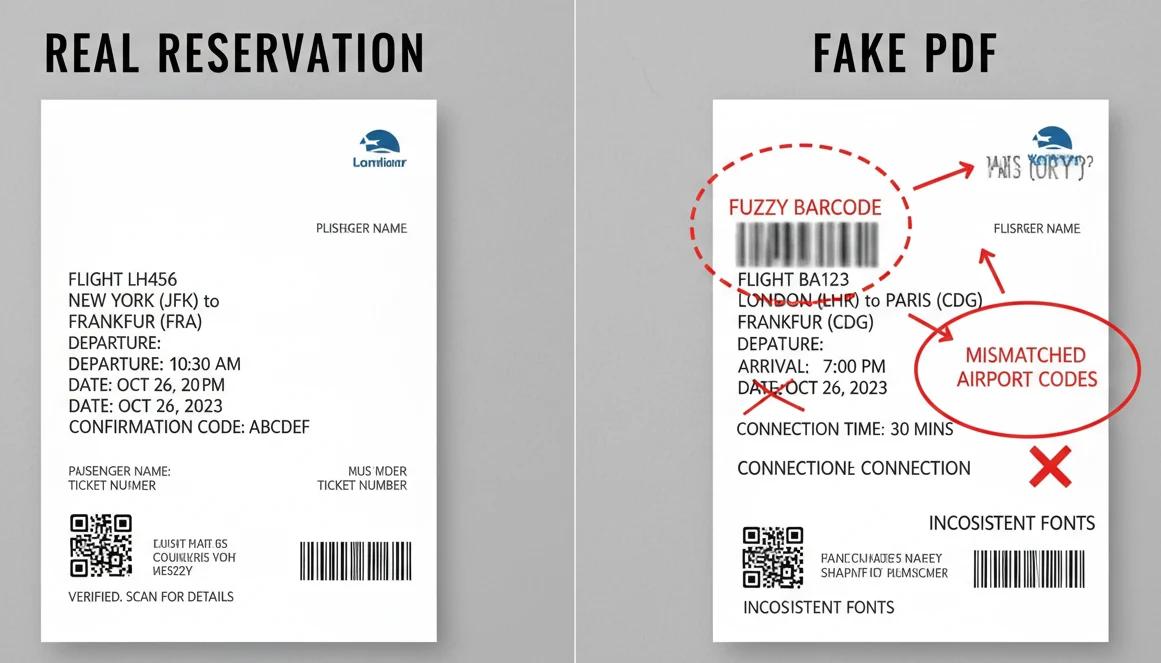
A fake travel booking confirmation is an email, text, document, or online message designed to make you believe a travel reservation is genuine. It may describe a booking that never existed, imitate a real confirmation, or introduce fraudulent payment instructions for a legitimate trip.
There are two main situations to understand. A dishonest seller might take your money and issue a fabricated itinerary, while an impersonator might contact you about a real reservation and request an additional payment.
A genuine booking can be accompanied by a fraudulent message. Verifying your reservation and verifying the sender’s request are separate tasks.
Common Forms of Booking Fraud
Fake confirmations can appear as:
Flight itineraries showing an invented or expired reservation.
Hotel vouchers for accommodation that was never secured.
Messages demanding payment to prevent cancellation.
Refund notifications requesting banking credentials.
Attachments or QR codes directing travelers to imitation websites.
Some are obvious, but others closely copy legitimate companies. Treat appearance as a starting point for inspection, not your final test.
What Should a Genuine Booking Confirmation Include?
A useful confirmation normally identifies the provider, traveler, booked service, dates, and reservation reference. Depending on the booking, it may also show the total price, payment status, cancellation conditions, and contact information.
For flights, look for passenger names, airports, dates, flight numbers, and an airline booking reference. Where the carrier uses electronic ticket numbers, a ticket receipt should contain the relevant ticket information.
For hotels, check the property name, address, arrival and departure dates, room category, guest count, and payment terms. A reservation can legitimately require payment later, so “not yet paid” does not automatically mean “not confirmed.”
There is no universal confirmation layout. Travel agencies, airlines, hotels, and rental companies use different formats, and missing information should prompt verification rather than an immediate accusation.
Warning Signs of a Fake Travel Confirmation
1. The Sender’s Address Looks Wrong
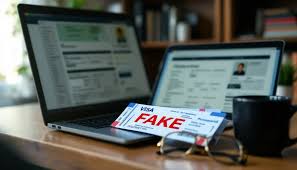
Expand the sender information instead of reading only the display name. A message labeled “Hotel Reservations” could come from an unrelated address.
Look for misspelled company names, extra words, or a reply address that differs unexpectedly from the sender. However, legitimate businesses sometimes use external mailing services, and a plausible address alone does not establish authenticity.
2. The Message Pressures You to Act Immediately
“Pay within 30 minutes or lose your room” is designed to make you react before checking. Similar tactics include threats of ticket cancellation or claims that your card must urgently be verified.
Booking.com warns that phishing messages commonly use urgent requests to resubmit payment information to retain a booking. Its guidance also cautions against bank transfers that differ from the payment policy in your confirmation.
A deadline can be legitimate, particularly for an unpaid reservation. The warning sign is an unexpected demand that you cannot independently verify.
3. Payment Instructions Have Changed
Be cautious if you booked through an established checkout but are suddenly asked to pay an individual, send cryptocurrency, or purchase gift cards.
Some accommodation providers legitimately collect deposits themselves. Confirm that the amount, recipient, and payment method match the original terms before proceeding.
4. Travel Details Do Not Match
Compare the confirmation with what you actually selected. Watch for the wrong airport, different hotel address, incorrect dates, missing passengers, or an unexplained currency change.
A clerical mistake is possible. Still, several inconsistencies combined with an urgent payment request deserve immediate scrutiny.
5. The Document Looks Professional but Cannot Be Verified
Logos, signatures, stamps, and polished PDF layouts are easy to reproduce. A barcode or QR code can also be created without any valid reservation behind it.
The provider’s current reservation record matters more than the document’s design.
Genuine vs Suspicious Booking Confirmations
| What to check | More reassuring | Reason to investigate |
|---|---|---|
| Reservation record | Provider independently confirms the booking | Seller supplies only screenshots |
| Passenger or guest details | Match your intended reservation | Names, dates, or destination differ |
| Flight status | Airline confirms the booking is ready for travel | Reservation exists but ticketing remains unresolved |
| Payment request | Matches the original booking terms | New recipient or unexplained additional charge |
| Contact details | Independently verified business channel | Only a number inside the suspicious message |
| Message wording | Clear explanation consistent with your booking | Threats, secrecy, or extreme urgency |
| Website destination | Verified provider or approved payment service | Unrelated address or imitation login page |
| Booking reference | Provider retrieves the correct reservation | Code is rejected without a credible explanation |
These checks work best together. An unusual email address is a clue; independent verification provides stronger evidence.
How to Verify a Travel Booking Confirmation Step by Step
Step 1: Pause Before Clicking or Paying
Do not use a suspicious payment button, scan its QR code, or download an unexpected attachment. Keep the message while you investigate.
If you have not booked anything, consider whether a family member, employer, or travel coordinator made the reservation. Otherwise, an unsolicited confirmation may be bait to make you contact a fake support service.
Step 2: Open the Provider’s Website or App Independently
Use an app you already trust, a saved bookmark, or a website address you know is correct. Avoid relying on the message’s links.
The FTC recommends contacting a company through a phone number or website known to be genuine rather than using the contact information in a suspicious email.
Be careful with search results, too. Confirm that you have reached the company’s actual website before calling a displayed support number.
Step 3: Retrieve the Reservation
Use the provider’s booking management feature and enter the requested details. For flights, this commonly involves a booking reference and surname.
Check the complete itinerary, including every passenger and connection. Finding one correct flight does not establish that the rest of the trip is correct.
For hotel reservations, open your booking platform account and compare the property, dates, room type, and payment conditions with the message.
Step 4: Confirm Flight Ticketing Separately
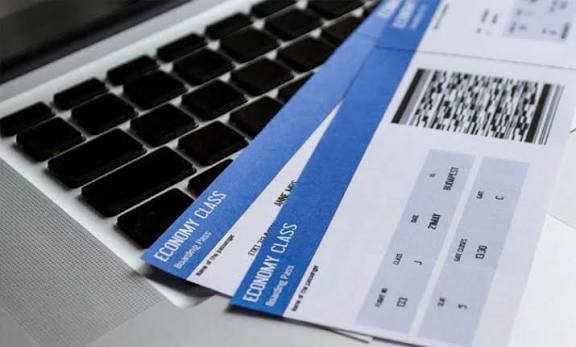
A reservation reference and an electronic ticket number serve different purposes. A booking can exist while payment or ticket issuance is still pending.
For example, Emirates distinguishes its six character booking reference from its 13 character ticket number. Formats vary between providers, so use your airline’s requirements rather than assuming every genuine booking must look identical.
Ask the airline whether each passenger’s booking is currently valid for travel and whether any ticketing action remains outstanding.
Step 5: Contact the Hotel or Travel Supplier
Call the hotel through a number independently obtained from its official website. Ask whether it has your reservation and whether the disputed payment request came from its team.
If the booking was made through an agency, the hotel may need the agency name or supplier reference. A property’s initial inability to locate your booking requires investigation, but does not automatically prove fraud.
For car rentals, tours, and transfers, verify the service date, pickup location, traveler name, and outstanding balance.
Step 6: Compare Payment Records
Check your payment receipt and bank activity against the agreed price. Note the amount, currency, transaction date, and merchant description.
Merchant names can differ from familiar brand names because of payment processors or parent companies. Ask the provider to explain an unfamiliar description rather than assuming it is fraudulent.
A completed payment proves money moved; it does not prove the promised travel service was booked.
Step 7: Request Written Clarification
If something remains unclear, ask the verified provider for a fresh confirmation or a written explanation of the booking status.
Keep that response with your original receipt. Resolve discrepancies before departure, particularly when an agent has promised that ticketing or hotel confirmation will happen later.
Special Checks for Flights Booked Through Travel Agents
An agency order number may differ from the airline’s booking reference. If you cannot retrieve your flight, ask the agency for the reference recognized by the airline.
Partner airlines may also use separate references for the same journey. Make sure you are checking the correct carrier and spelling the passenger’s surname as recorded.
Watch for sellers who repeatedly delay providing verifiable details while demanding more money. “The system is updating” may explain a temporary issue, but it should not become an indefinite excuse.
If the airline confirms a reservation is only being held, establish the payment and ticketing deadline. A genuine temporary hold can expire, leaving an old confirmation that no longer represents an active booking.
Special Checks for Hotel Confirmations
Confirm the Property’s Identity
Check that the hotel name and address match the accommodation you intended to reserve. Similar names can hide a different location or property.
For unfamiliar accommodation, research independent reviews and the business’s contact details. The FTC recommends searching travel companies, hotels, rentals, and agents alongside terms such as “scam,” “review,” or “complaint.”
Check Unexpected Deposit Requests
Compare any new demand with your original payment policy. Ask what the charge covers, when it becomes due, and whether it is refundable.
A legitimate security deposit or prepayment requirement should have a clear explanation. An unexplained request to “validate” your card deserves verification before you enter any details.
Verify Messages About Real Reservations
Accurate travel dates and guest names do not prove that a sender is authorized. Treat unexpected requests involving your real booking with the same care as unfamiliar confirmations.
Open your account independently and contact verified support if necessary. Do not let the sender’s knowledge of your trip substitute for checking the request.
What to Do If You Suspect Booking Fraud
If You Have Not Paid
Stop interacting with the suspicious sender and contact the genuine provider. Report the message through the booking platform’s established support process.
Do not cancel a verified reservation merely because an impersonator threatens cancellation. First establish whether the actual provider requires any action.
If You Have Paid or Shared Card Details
Contact your bank or payment provider promptly. Explain what happened and ask about securing your account, blocking further transactions, and disputing the payment.
The FTC advises people who have paid scammers to contact the relevant payment company and ask whether the transaction can be reversed. Recovery depends on the circumstances and payment method; it is not guaranteed.
Preserve messages, receipts, screenshots, and transaction details. Report the incident to the travel platform and the appropriate fraud reporting authority in your country.
If You Entered a Password
Change the affected password through the genuine service. Change it elsewhere if you reused it, review account activity, and enable multifactor authentication where available.
If you installed software or granted remote access, stop using that interaction and obtain trusted technical assistance. Tell your bank if financial accounts may have been exposed.
Pro Tips for Avoiding Fake Booking Confirmations
Verify soon after purchase. Early checks give you more time to resolve missing reservations.
Keep booking references private. Avoid posting unredacted confirmations or boarding passes publicly.
Save original terms. Keep the payment schedule, cancellation policy, and receipt together.
Check the whole itinerary. Include return flights, connecting services, and every traveler.
Question surprise charges. Ask for a clear explanation through a verified channel.
Remember that a browser padlock indicates an encrypted connection, not that the business is trustworthy. Likewise, perfect grammar and attractive branding offer little protection against a carefully prepared scam.
Frequently Asked Questions
Can a fake confirmation contain a real booking reference?
Yes. A reference can relate to a genuine reservation while the accompanying payment request is fraudulent. Verify both the booking’s current status and the requested action independently.
Does a valid PNR mean my flight is fully ticketed?
Not necessarily. A PNR identifies a reservation record, but payment or ticket issuance may remain outstanding. Ask the airline whether your booking is ready for travel.
Is a confirmation without a ticket number always fake?
No. Hotels do not use airline ticket numbers, and flight documentation varies. For a flight, check the carrier’s requirements and confirm the booking directly.
What if the airline cannot find my booking?
Check the surname, carrier, and reference carefully. Then contact the agency for the airline reference and an explanation; do not pay an additional “verification fee” without independently confirming it.
Are hotel payment links always fraudulent?
No. Some legitimate hotels use external payment services. Verify the recipient, amount, and payment requirement through independently obtained hotel contact details before proceeding.
Can I trust a message because it knows my travel dates?
No. Correct personal details make a message convincing, but do not establish the sender’s authority. Confirm unexpected payment or account requests separately.
Should I cancel my trip if a confirmation looks suspicious?
First determine whether the reservation itself is genuine. A fraudulent message may target an existing booking, so cancelling immediately could create unnecessary fees or disrupt valid travel plans.
Final Verdict
The best way to identify fake travel booking confirmations is to verify the reservation independently and check every unexpected payment request against the original terms.
For flights, confirm current booking and ticketing status with the airline. For hotels, verify the property, stay details, and payment requirements through trusted channels.
Do those checks before sending more money or leaving home. A few careful minutes can prevent an expensive surprise at the airport or reception desk.
Some links on this page are affiliate links. If you book through one we may earn a commission, at no extra cost to you. It never affects our ratings, our rankings, or the price you pay.