If My Bag Is Overweight, Can I Pay at the Airport?
If your bag is overweight, you can usually pay an excess baggage fee at the airport check in counter. But payment does not guarantee the airline will accept it.
If your bag is overweight, you can usually pay an excess baggage fee at the airport check in counter. But payment does not guarantee the airline will accept it. Every carrier sets a maximum weight for each checked bag, and some routes have stricter limits. If your suitcase exceeds the maximum, you will need to remove items, split them into another bag, or make other arrangements.
The best move depends on how heavy the bag is and how much time you have before departure. A bag that is 2 kg over its allowance is usually a straightforward fee decision. A bag that is 10 kg over may cost far more than an extra checked bag, while one above the airline’s maximum may be refused altogether.
Here is how airport overweight baggage charges work, what to do at the counter, and how to avoid paying more than necessary.
The Short Answer: Yes, but Check Two Different Weight Limits
Your ticket’s baggage allowance is the weight included in your fare or the weight you purchased. The maximum weight per bag is the heaviest single suitcase the airline will handle as checked baggage. Those numbers are not necessarily the same.
For example, a ticket might include a 23 kg checked bag while allowing you to check a bag weighing up to 32 kg after paying an overweight fee. Another airline may charge for every kilogram above the weight you booked. Routes and travel classes can change the allowance too.
Air India says passengers can pay for excess baggage at its airport check in counters. Ryanair says it charges an excess weight fee per extra kilogram when a checked bag exceeds its purchased allowance at the desk. These policies illustrate the general answer, but your operating airline’s rules determine your actual charge and maximum weight. Before you leave for the airport, check your booking confirmation for the included allowance, then look up the airline’s excess baggage page for your route. If two airlines appear on your itinerary, check which carrier operates each flight and whose baggage rules apply.
How Airlines Charge for an Overweight Bag
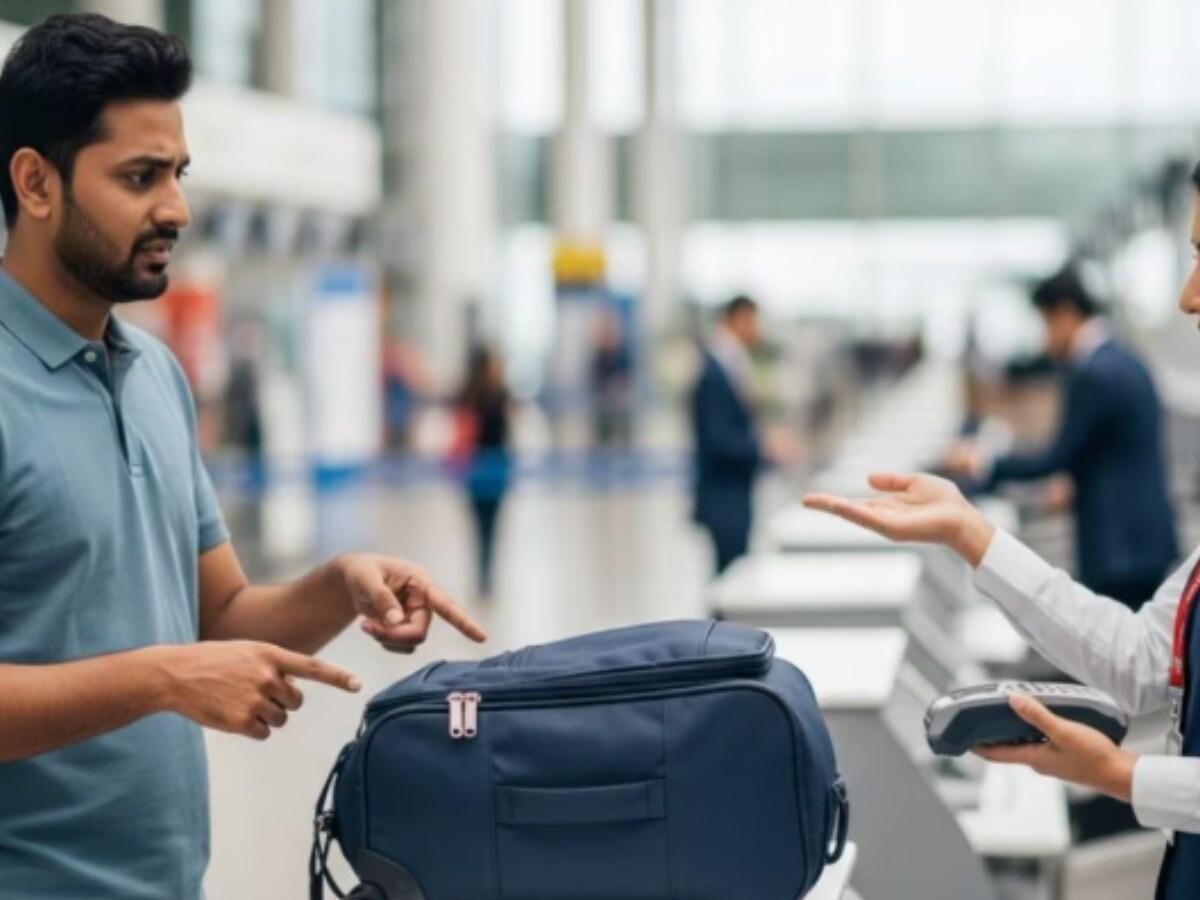
There is no universal airport fee. Airlines commonly use one of two approaches: a fixed charge for a weight band or a charge for each kilogram above your allowance.
Delta, for example, says a bag that is extra, overweight, and oversize can attract separate fees for each issue. American Airlines uses a different approach for a single item that is both overweight and oversize: it applies the higher of those two fees, in addition to any checked bag fee. Never assume one airline’s fee calculation applies to another.
Real Examples of Airport Overweight Fees
These examples show why it pays to check the specific carrier instead of relying on a generic “overweight bag fee” estimate.
The figures are examples from the airlines’ published policies, not a quote for every flight. Delta’s international fees and maximum weights differ by destination, while fees shown in pounds or euros can depend on where a charge is collected. Review the current fee page for your exact itinerary before traveling.
Can You Pay for Extra Weight Online Instead?
Often, yes. If you discover the problem before leaving home, open your reservation in the airline’s app or website and look for Manage Booking, Add Baggage, or Extras. Compare the cost of purchasing more weight with the airport rate.
The options vary. easyJet lets passengers buy extra hold bag weight online in 3 kg increments, up to its 32 kg maximum per bag. It says adding hold luggage online is cheaper than paying at the airport. Air India also offers prepaid excess baggage on eligible bookings and says travelers may save compared with airport charges.
Watch the purchase deadline. Some airlines stop selling prepaid weight a set number of hours before departure, even though they still collect excess baggage charges at the counter.
Air India, for instance, lists a separate advance purchase window for an individual overweight bag. If online purchase is unavailable, do not assume the bag will be accepted; check the maximum per piece and prepare to pay or repack at the airport.
Also check what you are buying. An additional checked bag, additional total weight, and permission for one heavier bag may be different products. If you purchase an extra bag but arrive with just one suitcase above the single bag maximum, the extra bag purchase does not make that suitcase acceptable.
What to Do If Your Bag Is Overweight at the Airport
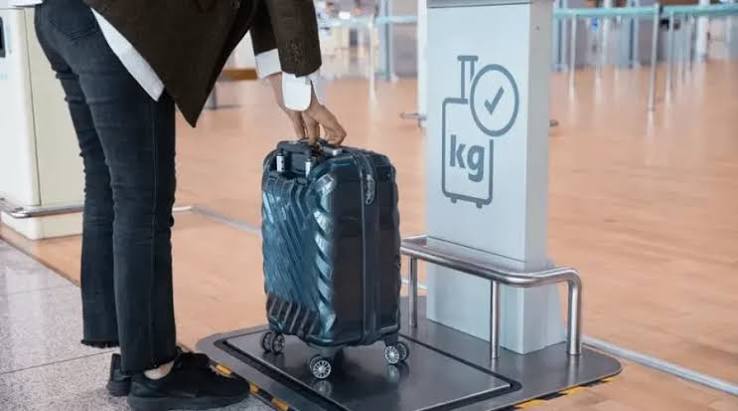
1. Go to your airline’s staffed check in or bag drop counter
Arrive earlier than you normally would. Repacking, paying a charge, and checking the bag can take time, particularly on an international trip or during a busy departure period.
Bring your booking details, identification, and a payment method. If you already purchased extra baggage, have the receipt or confirmation available so the agent can confirm that it appears in your reservation.
2. Ask for the exact weight and charge
Let the airline weigh your suitcase and tell you how far it exceeds your allowance. Ask whether the proposed amount is an overweight fee, an additional bag fee, an oversize fee, or a combination.
If your itinerary has connecting flights, ask whether the charge covers the whole journey and whether you will need to collect and recheck the suitcase along the way. This is particularly useful when you have separate tickets or flights operated by different airlines.
3. Compare your options before paying
If you are only slightly over, paying may be the simplest solution. If the fee is high, ask whether you can take the suitcase away from the counter to repack and return before check in closes.
You may be able to distribute belongings between checked bags, provided each bag meets its own weight limit and your allowance permits it. You could also purchase another checked bag if that works out cheaper. Ask the agent to confirm both prices before deciding.
4. Remove items if the bag exceeds the maximum
An airline’s maximum weight per suitcase is a limit, not a more expensive fee tier you can always purchase. Air India and easyJet both state a 32 kg maximum for a single checked bag. Delta allows heavier bags on some routes, but its limits vary by destination.
Move enough items to another suitable bag to get below the limit, or ask the airline what other arrangements are available. Do not count on a small overage being ignored: the counter scale determines the measured weight, and staff must follow the carrier’s acceptance rules.
5. Pay, keep the receipt, and check the bag tag
Once you accept the charge, use the payment options offered at that airport counter. Keep the receipt, especially if you have another leg on the same booking or need to reconcile travel expenses later.
Before leaving, check that the bag tag shows the correct destination. If you are required to reclaim and recheck the bag during a connection, confirm where that happens and allow enough time.
What If the Overweight Bag Is Carry On Luggage?
Cabin baggage is a separate issue. Paying a checked bag overweight charge does not necessarily let you bring a heavy suitcase into the cabin. Airlines can impose cabin weight, size, and item limits and may require a bag that exceeds them to be checked.
That can mean a different charge from the one you expected, especially with a low cost carrier. If an agent tells you the bag must go in the hold, remove anything you need during the flight and any items that should not be packed in checked baggage. Then ask what allowance and fee apply before handing it over.
A bag may also meet the weight rule but fail the cabin size rule. Check both measurements before travel; squeezing a heavy bag into an overhead bin is not a substitute for meeting the airline’s policy.
Why Your Route and Ticket Matter
The same airline can apply different baggage rules to different journeys. A domestic flight, a long haul international flight, and a short connection may have different fees or restrictions. Your fare type, cabin, and frequent flyer benefits can also change what is included.
For example, American Airlines publishes a general 50 lb or 23 kg checked bag allowance for many routes, while eligible First and Business class free bags can have a 70 lb or 32 kg allowance. Delta’s published overweight table shows that some international routes do not accept bags above 70 lb, even though heavier bags are accepted for a fee on certain other routes.
This is why searching only “airline overweight fee” can lead you to the wrong answer. Check your origin, destination, operating airline, cabin, and the date your ticket was issued where the airline says that date affects baggage rules. Your booking’s baggage details are the best starting point.
Practical Tips to Avoid an Airport Baggage Surprise
Weigh the packed bag at home. Include everything you will add before leaving, such as shoes, toiletries, and gifts. A small luggage scale makes it easier to decide whether to buy extra weight in advance.
Check each suitcase separately. A total allowance does not automatically mean one bag can carry all of it. The maximum weight per piece still applies.
Compare the full price of a second bag. Include any additional bag fee and any overweight charge that would still apply. A second suitcase is useful only if both resulting bags meet the rules.
Leave room for the return trip. Purchases made during travel can push your bag over the limit on the way home. Check whether a prepaid baggage purchase covers both directions or only one.
Keep essentials out of any bag you may need to check. If your cabin bag is too heavy and must go in the hold, you should be able to remove documents, medication, and items needed in flight promptly.
Check dimensions as well as weight. Moving belongings into an unusually large suitcase could solve a weight problem while creating an oversize charge.
Give yourself time to repack. Reaching the desk just before it closes may leave you with no practical option to rearrange bags, even if the airline would otherwise accept them.
One last detail: if you have prepaid for a higher allowance and your bag turns out lighter, do not expect the unused weight to be refunded automatically. Read the conditions attached to the baggage purchase before paying for more than you need.
Frequently Asked Questions
Can I pay for an overweight checked bag at the airport?
Usually, yes, if the bag stays within the airline’s maximum permitted weight and the route allows it. The agent weighs your bag, calculates the applicable fee, and takes payment through the airport’s available methods. Air India and Ryanair explicitly describe airport payment for excess weight in their baggage guidance.
Is it cheaper to pay for extra baggage online or at the airport?
It often is cheaper to buy additional baggage online ahead of travel, but the savings depend on the airline and what you need to purchase. Compare the price for extra weight on one bag with the price for another checked bag. easyJet specifically says adding hold luggage online is cheaper than paying at the airport.
Will the airline accept a bag that is just 1 kg or 1 lb over?
It might accept the bag after charging an excess weight fee, but you should not plan around an unofficial grace allowance. The charge can be per kilogram or based on a weight band, so even a small overage can have a noticeable cost. Repack if you can do so safely and without exceeding another bag’s limit.
Can I pay to check a bag over 32 kg?
Do not assume so. Many carriers set 32 kg as the maximum for a single checked bag, including Air India and easyJet. Delta accepts bags above that weight on some routes for an additional charge, but restricts them on others. Check your particular flight’s rule before arriving with a very heavy suitcase.
What if I cannot afford the overweight baggage fee?
Ask whether you can remove items, redistribute weight into another bag, or purchase an additional checked bag at a lower total cost. You may have to leave some belongings behind if you cannot bring the suitcase within the allowance or pay the required charge. Make that decision before the check in deadline passes.
Can two travelers combine their baggage allowance?
That depends on the airline and booking. Even where a carrier permits some sharing of weight, its maximum weight for one bag still applies. Check the policy for passengers traveling together, then ask the counter agent how it applies to your reservation before relying on a combined allowance.
Do I pay again for an overweight bag on my connecting flight?
It depends on how your flights and baggage are ticketed, whether the bag is checked through, and which carriers operate the journey. Ask the check in agent what the receipt covers and whether you must reclaim and recheck the bag at the connection. Separate tickets deserve particular attention.
Verdict: Paying at the Airport Is Possible, but Repacking May Save You Money
Yes, you can generally pay at the airport if your checked bag exceeds its allowance. The deciding questions are how the airline charges, whether your route accepts an overweight bag, and whether the suitcase remains under the maximum weight per piece.
If you have time before departure, weigh the bag and compare prepaid weight, a second checked bag, and the airport excess baggage fee. If you are already at the counter, ask for the exact charge and maximum before paying. That brief check can turn an expensive surprise into a simple repacking decision.
Some links on this page are affiliate links. If you book through one we may earn a commission, at no extra cost to you. It never affects our ratings, our rankings, or the price you pay.