How to Know Whether Two Flights Are on the Same Ticket
When an itinerary includes two or more flights, it is easy to assume they are all part of the same ticket.
When an itinerary includes two or more flights, it is easy to assume they are all part of the same ticket. After all, you searched for one journey, selected one itinerary, and may have paid for everything in a single transaction.
Unfortunately, that does not always mean the flights are ticketed together.
Online travel agencies and flight search platforms can combine separate flights into one itinerary. These arrangements may involve separate tickets or a self transfer, which can affect baggage handling, check in, connections, and what happens if your first flight is delayed.
Knowing whether two flights are on the same ticket is particularly important when you have a short connection or are traveling internationally.
Fortunately, you do not need to be an airline expert to check. By examining your e ticket numbers, booking confirmation, baggage information, and connection terms, you can usually determine how your itinerary is structured.
What Does "Same Ticket" Actually Mean?
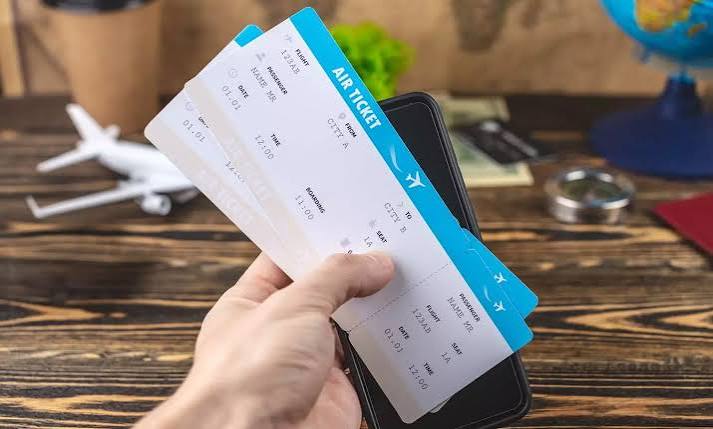
When travelers say two flights are "on the same ticket," they generally mean the flight segments have been issued together as part of a through ticketed journey.
For example:
Flight 1: Los Angeles → Tokyo
Flight 2: Tokyo → Bangkok
If these segments are ticketed together, Tokyo is part of your connected journey rather than the endpoint of one independently purchased trip followed by another.
The alternative might look identical on a flight search page but actually consist of:
Ticket 1: Los Angeles → Tokyo
Ticket 2: Tokyo → Bangkok
You are still physically connecting in Tokyo, but the ticketing arrangement is different.
That difference can become extremely important when something goes wrong.
Same Ticket vs Separate Tickets
Here is a basic comparison:
| Feature | Same Through Ticket | Separate Tickets |
|---|---|---|
| Flights issued as one ticketed journey | Yes | No |
| One purchase required | Often | Could still be one |
| Baggage through checked | Often possible, subject to route | Less certain |
| Separate check in | Usually less likely | May be required |
| Self transfer | Usually no | Possible or likely |
| Missed onward flight due to earlier disruption | Generally handled as a connected journey | May be passenger's responsibility |
| Extra connection buffer | Normal connection planning | Larger buffer advisable |
| Immigration requirements | Route dependent | May be more complicated |
The exact procedures depend on the airlines, airports, countries, and ticket conditions.
1. Check Your E Ticket Number
One of the best places to start is your e ticket receipt.
Airline tickets normally have ticket numbers associated with the passenger's issued transportation.
Look at how your flight segments are shown on the e ticket receipt.
If both flights appear as coupons or segments associated with the same passenger ticket number, that is strong evidence they were issued together as part of the same ticket.
If you have separate ticket numbers covering different portions of the journey, investigate further.
Do not confuse an e ticket number with a booking reference. They are not necessarily the same thing.
2. Understand Ticket Numbers vs Booking References
This distinction causes considerable confusion.
A booking reference, sometimes called a reservation code or PNR, identifies a reservation record.
An e ticket number identifies an issued airline ticket.
They serve different purposes.
You might encounter multiple reservation references because different airlines use different reservation systems, even though your flights are part of the same ticketed journey.
Therefore, seeing two booking references does not automatically mean you have two separate tickets.
Similarly, having everything displayed together on one travel agency confirmation does not automatically prove that you have one airline ticket.
Look at the actual ticket information.
3. Check Your Booking Confirmation Carefully
Your confirmation email or booking document can provide useful clues.
Look for wording such as:
Separate tickets
Self transfer
Separate bookings
Collect and recheck baggage
Check in separately
Connection not protected
Any warning of this type deserves attention.
Some booking platforms combine independently available flights to create routes or prices that would otherwise be unavailable.
The itinerary can still appear as one journey from your origin to destination.
Do not assume that one confirmation page equals one ticket.
4. Check Whether You Received Multiple E Ticket Receipts
After purchasing your flights, see how many actual ticket documents or ticket numbers you received.
Suppose you booked:
Chicago → London → Madrid.
Your documents show both flights under one ticketed journey. That supports the conclusion that they were issued together.
Now imagine you receive one ticket covering Chicago to London and another independent ticket covering London to Madrid.
That is a very different arrangement.
The fact that both tickets were purchased simultaneously does not merge them into one airline ticket.
The issuing structure matters more than how many times your card was charged.
5. Do Not Judge by the Number of Airlines
Two different airlines can absolutely be part of the same ticket.
Airlines frequently cooperate through commercial partnerships, codeshares, alliances, and interline arrangements.
You might fly the first segment with Airline A and the second with Airline B while still holding a connected through ticket.
For example:
Airline A → connecting airport → Airline B
does not automatically equal separate tickets.
Likewise, seeing the same airline brand on both flights does not guarantee that independently purchased reservations are one ticket.
Always check the actual ticketing arrangement.
6. Check the Operating Airline
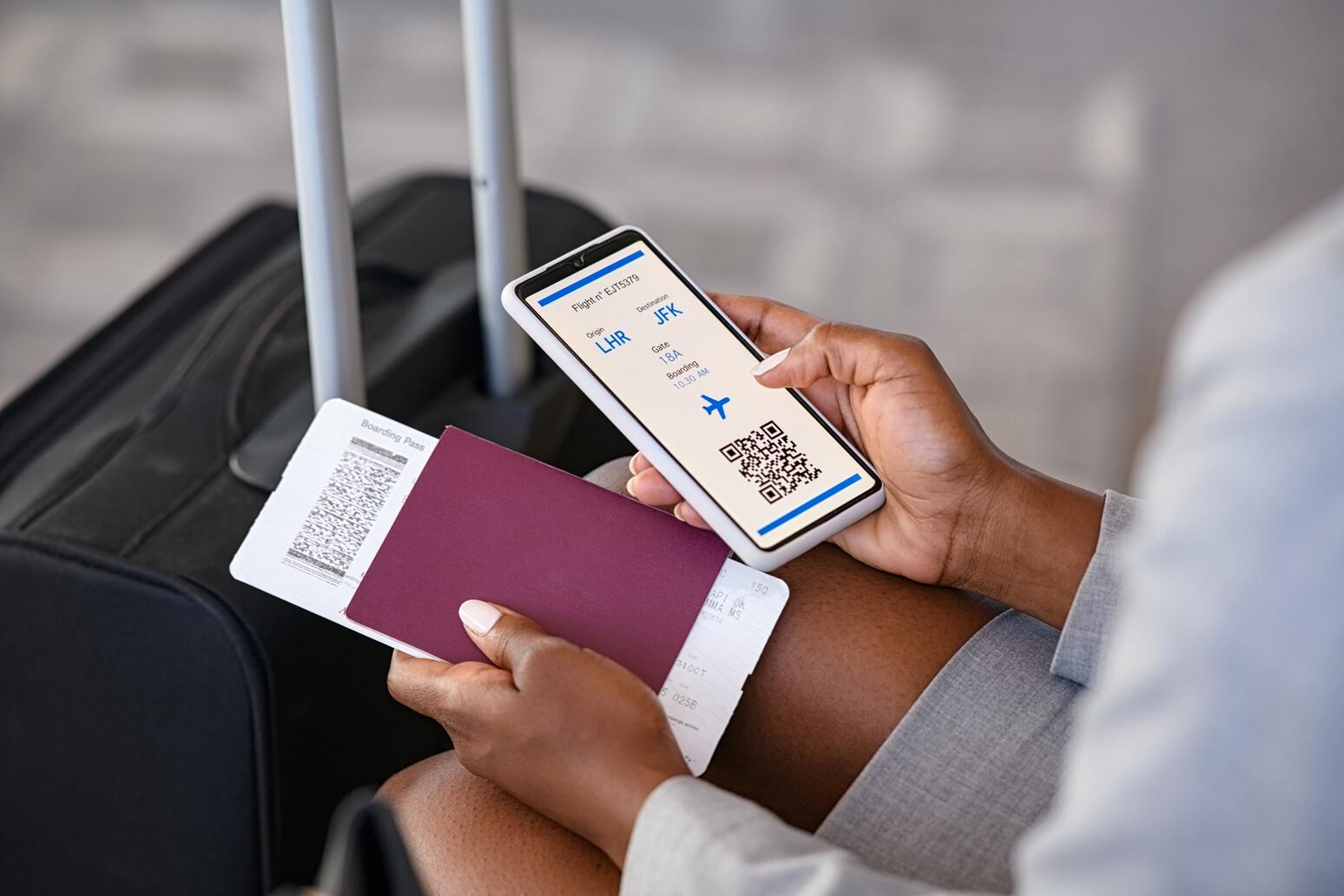
When reviewing the itinerary, distinguish between the airline marketing the flight and the airline actually operating it.
A ticket may display one airline's flight number while stating:
Operated by another airline
This is common with codeshare flights.
A codeshare does not mean the flights are separate tickets.
In fact, codeshare segments are frequently sold as parts of connected itineraries.
The presence of different airline names is therefore not enough to determine ticket status.
Focus on ticket numbers, booking terms, and how the complete journey was issued.
7. Look at the Baggage Information
Baggage handling can provide another useful clue, although it is not definitive by itself.
On many through itineraries, checked luggage can be tagged to your final destination.
Suppose you fly:
Paris → Doha → Singapore.
At Paris, your baggage tag might show Singapore as the final destination.
That indicates your luggage is being handled across the connection.
However, baggage rules and customs procedures vary. Even passengers traveling on one ticket may sometimes have to collect and recheck bags during a connection.
Conversely, airlines may sometimes have arrangements that allow baggage handling across different bookings.
Use baggage information as supporting evidence rather than your only test.
8. Check Whether You Must Check In Again
Another useful question is whether you need to complete an entirely new check in process at the connecting airport.
With a conventional through itinerary, you may receive boarding passes for multiple segments when checking in for the first flight, although this is not guaranteed.
With separate tickets, you may need to check in independently with the next airline.
If your booking specifically instructs you to leave the transfer area, collect luggage, and check in again, that is a strong reason to investigate whether you have separate tickets or a self transfer.
9. Ask What Happens If the First Flight Is Delayed
This is one of the most practical tests.
Imagine your first flight is scheduled to arrive at 2 p.m., while your onward flight departs at 4 p.m.
Your first flight arrives at 4:15 p.m.
What happens?
When the flights form a protected through itinerary, the missed onward connection is generally handled within the context of your ticket and applicable airline procedures.
With two independent tickets, the second airline may have no responsibility for the delay to the first flight.
From its perspective, you may simply have failed to arrive for your booked departure.
Ask the airline or booking provider directly how a missed connection caused by the first flight would be handled.
10. Check for Self Transfer Warnings
A self transfer is one of the clearest situations where you should investigate the ticket structure.
Flight search services may show something like:
Delhi → Kuala Lumpur → Bali
but indicate that the connection is a self transfer.
You may need to collect baggage, enter the connecting country where required, check in for the next flight, pass security again, and reach the new gate yourself.
Some booking services provide their own connection protection products. These should not automatically be considered equivalent to having both flights issued as one airline through ticket.
Read the actual terms.
11. One Payment Does Not Mean One Ticket
This is perhaps the most common misunderstanding.
Suppose a travel website offers a journey for $600.
You enter your card details once and pay $600 once.
It feels like you purchased one ticket.
But the travel company could have used your payment to issue two independent airline tickets.
From your perspective, it was one transaction.
From the airlines' perspective, there may be two separate journeys.
Never use the number of payments as proof that your flights are ticketed together.
12. One Booking Page Does Not Guarantee One Ticket
The same principle applies to websites and apps.
A booking service may display all flights under one trip heading for convenience.
For example:
Your trip: New York → Athens
Flight 1: New York → London
Flight 2: London → Athens
Visually, it looks like one itinerary.
But the underlying flights could still be separately ticketed.
Open the detailed ticket information rather than relying on the way the travel website organizes the trip on screen.
13. Multiple Booking References Do Not Automatically Mean Separate Tickets
The opposite assumption can also cause unnecessary concern.
You might receive one booking reference from the ticketing airline and another reference used by the operating airline.
That does not necessarily mean your journey was issued on separate tickets.
This is why the e ticket receipt is more useful than simply counting reservation codes.
If the documentation remains confusing, contact the airline that issued the ticket and ask whether both flight segments are included on the same through ticket.
14. Check Before Booking When Possible
The best time to investigate ticket structure is before paying.
When comparing itineraries, look for warnings about:
Self transfers
Separate tickets
Baggage recheck
Airport changes
Independent check in
Unprotected connections
If anything is unclear, verify the ticket arrangement before purchasing.
This is particularly important for expensive international journeys where missing an independently booked onward flight could be costly.
A slightly higher fare for a straightforward through itinerary can sometimes be worthwhile.
15. Be Extra Careful With Airport Changes

If your itinerary requires changing airports, investigate it carefully.
Suppose Flight 1 arrives at one airport serving a city while Flight 2 leaves from another.
You may need to:
Complete arrival formalities.
Collect baggage.
Leave the airport.
Arrange ground transportation.
Travel across the city.
Check in again.
Pass security.
Complete departure formalities.
Reach your new gate.
Airport changes are frequently associated with more complex itineraries and require generous transfer time regardless of ticket structure.
Quick Same Ticket Checklist
Before departure, use this checklist:
| Question | What It Tells You |
|---|---|
| Are both segments associated with the same ticket? | Strong evidence of through ticketing |
| Do I have separate ticket documents? | May indicate separate tickets |
| Does the booking say "self transfer"? | Strong warning |
| Does it say "separate tickets"? | Clear indication |
| Must I recheck baggage? | Requires further investigation |
| Must I check in independently? | May indicate self transfer |
| Are there multiple booking references? | Not definitive by itself |
| What happens after a missed connection? | Reveals connection protection |
| Did I pay only once? | Does not prove same ticket |
| Are different airlines involved? | Does not prove separate tickets |
Use several indicators together rather than relying on a single clue.
Frequently Asked Questions
How can I confirm two flights are on the same ticket?
Check your e ticket receipt and ticket numbers. If uncertain, ask the ticket issuing airline or booking provider whether both segments were issued as one through ticket.
Does one booking reference mean one ticket?
Not necessarily. A booking reference identifies a reservation record, while an e ticket number identifies an issued ticket.
Can two different airlines be on the same ticket?
Yes. Airlines can cooperate through codeshare, interline, alliance, and other ticketing arrangements.
Does one payment mean both flights are on the same ticket?
No. A booking website can sell multiple independent tickets within one transaction.
Will my baggage automatically go to my final destination?
Not always. Baggage handling depends on airlines, ticketing arrangements, route, airport procedures, and customs requirements. Confirm at check in.
Are separate tickets the same as a self transfer?
They are closely associated, but the terminology and arrangements can vary. Check what transfer responsibilities the booking places on you.
What should I do if my ticket information is unclear?
Contact the ticket issuing airline or booking provider and ask specifically whether the flight segments are issued together and how a missed connection would be handled.
Final Thoughts
The most reliable way to know whether two flights are on the same ticket is to examine the actual ticketing information, not simply how the itinerary appears on a booking website.
Check your e ticket receipt and ticket numbers. Look for separate ticket or self transfer warnings. Review baggage and check in instructions, and determine what happens if the first flight is delayed enough to make you miss the second.
Do not assume that one payment, one booking website, one itinerary page, or even one reservation reference automatically proves that every flight is on the same ticket.
Likewise, different airlines or multiple booking references do not automatically mean you have separate tickets.
When the documentation remains unclear, verify the arrangement with the airline that issued the ticket or your booking provider before traveling.
Knowing whether your flights are ticketed together allows you to plan the connection properly, understand your baggage responsibilities, and avoid discovering at the connecting airport that what looked like one simple journey is actually two separate trips.
Some links on this page are affiliate links. If you book through one we may earn a commission, at no extra cost to you. It never affects our ratings, our rankings, or the price you pay.