What Happens to Baggage on Connecting Flights?
Wondering what happens to baggage on connecting flights? On many journeys booked as one connecting ticket, the airline transfers your checked luggage to the next aircraft, and you collect it at your final destination.
Wondering what happens to baggage on connecting flights? On many journeys booked as one connecting ticket, the airline transfers your checked luggage to the next aircraft, and you collect it at your final destination. However, separate tickets, customs procedures, airport changes, and certain airline policies can mean you must collect and check your bags again.
The important detail is not simply whether you have a connecting flight. It is where your baggage is checked to and whether your transfer requires you to collect it along the way.
Understanding that difference helps you avoid waiting at the wrong baggage carousel, missing a bag drop deadline, or boarding your next flight while your suitcase remains behind.
How Baggage Transfers Work on Connecting Flights

When you check a suitcase at your departure airport, the airline attaches a baggage tag identifying the bag and its planned route. If your luggage is accepted through to your final destination, this is called through checked baggage.
At the connecting airport, baggage handlers unload your suitcase and route it toward your next flight. Depending on the airport, it may travel through automated sorting systems, on baggage carts, or between terminals.
You normally follow the flight connections signs while your checked luggage follows its own transfer process. You do not need to visit baggage reclaim unless the airline or airport instructs you to do so.
For example, on an eligible Mumbai to Doha to Paris itinerary, your bag may be tagged to Paris at Mumbai. You change aircraft in Doha and collect your suitcase after arriving in Paris.
Automatic transfer does not guarantee that your bag will arrive on the same flight as you. Delays, sorting problems, and tight connections can still interrupt its journey.
When Is Baggage Transferred Automatically?
Connecting Flights on One Ticket
A journey issued as one connecting ticket usually offers the simplest baggage arrangement. Where the airlines and route support through checking, your suitcase is tagged to the final destination.
Nevertheless, you may still need to collect it for customs or another required procedure. A final destination printed on the tag does not cancel an airport’s baggage collection requirements.
Also, buying flights together through a travel website does not necessarily mean they form one connecting ticket. Some websites combine separate bookings and describe them as a self transfer itinerary.
Connecting Flights With Different Airlines
Your luggage can transfer between different airlines when they have the necessary baggage arrangements and your booking meets their policies. You do not always need to fly with the same carrier throughout.
These arrangements are often associated with airline partnerships, but alliance membership alone does not guarantee baggage transfer, particularly on separate tickets.
Check the airline operating your first flight, the onward airline, and your ticket arrangement. The first check in agent can confirm where your bag will actually be accepted.
Domestic Connections
On many domestic connections booked as one journey, checked bags transfer automatically. You usually collect them only after the last flight.
Exceptions include separate bookings, airport changes, and services that do not provide baggage connections. Confirm the arrangement even if both flights operate within the same country.
When Do You Need to Collect and Recheck Your Bags?
Separate Tickets and Self Transfers
With separate tickets, you should plan to collect your suitcase at the end of the first booked journey and check it with the next airline.
Some carriers allow through checking in specific circumstances, but others do not, even when both flights are operated by the same airline. Do not rely on an exception unless the airline confirms it.
A self transfer can involve baggage reclaim, immigration, customs, travel to another terminal, check in, and security screening. Each stage takes time.
Your onward airline’s bag drop deadline also matters. Reaching the airport before departure is insufficient if checked baggage acceptance has already closed.
International Arrivals Requiring Customs Clearance
Some countries require travelers to collect checked luggage at their first arrival airport before continuing domestically. You take your bag through customs and then return it to the airline.
For many international arrivals into the United States, this remains the usual process, even when the baggage tag shows the final destination. Preclearance and designated baggage screening arrangements can create exceptions.
Elsewhere, procedures vary by country, airport, and itinerary. Follow the instructions for your actual arrival rather than assuming all international connections work the same way.
Connections Between Different Airports
If your itinerary requires an airport change, you will generally need to collect your luggage and transport it yourself.
For instance, an arrival at London Heathrow followed by a departure from London Gatwick usually involves taking your suitcase between airports. This is very different from changing terminals within one airport.
Allow time for border formalities, baggage delivery, road or rail travel, and the next airline’s check in deadline.
Overnight Layovers and Stopovers
An overnight connection does not automatically mean your bag will be returned to you. Some airlines keep eligible transfer baggage overnight; others require collection.
A longer stopover may also end the through checking arrangement at the intermediate city. There is no universal duration that determines baggage handling for every airline.
If you need your suitcase overnight, ask before handing it over. Requesting collection does not guarantee that the airline can accommodate it.
Connecting Flight Baggage: Quick Comparison Table
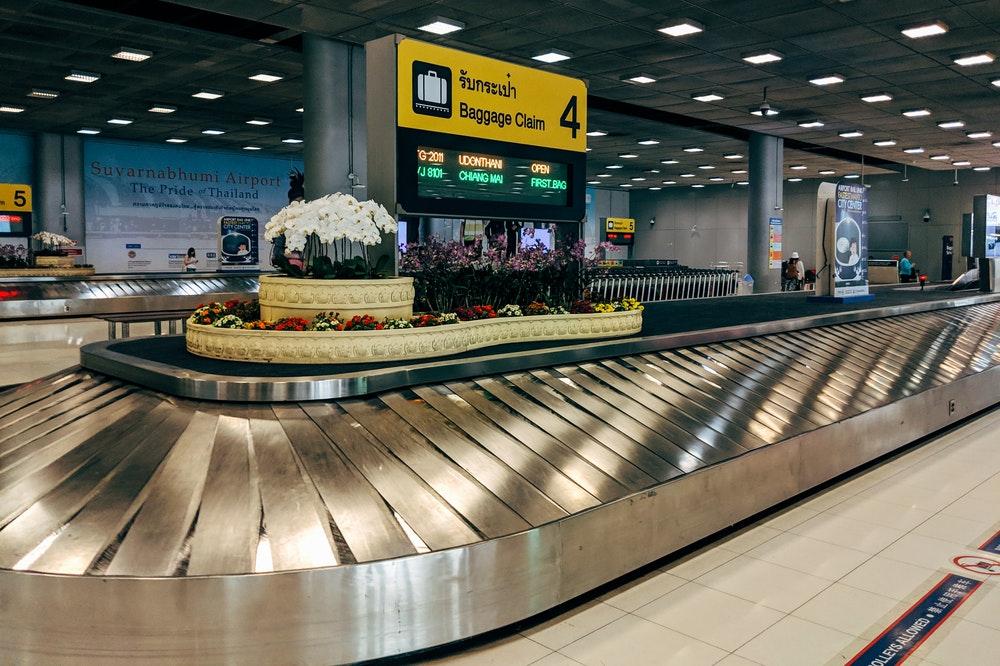
| Connection type | Typical baggage arrangement | What you should confirm |
|---|---|---|
| Domestic flights on one connecting ticket | Usually transferred automatically | Final destination on the baggage tag |
| International flights on an eligible connecting ticket | Often transferred automatically | Transit and customs requirements |
| International arrival followed by a domestic flight | Collection may be required | First arrival airport procedures |
| Different airlines on one ticket | Transfer possible with suitable arrangements | Operating airlines’ baggage policies |
| Separate tickets | Usually collect and recheck | Whether through checking is explicitly permitted |
| Self transfer booking | Passenger usually handles baggage transfer | Immigration access and bag drop deadlines |
| Connection between airports | Usually collect and transport yourself | Transfer time and transport arrangements |
| Overnight layover | Depends on the itinerary and airline | Whether bags are held or returned |
How to Check What Will Happen to Your Baggage
Step 1: Review Your Booking
Look for terms such as “self transfer,” “separate tickets,” or “collect and recheck baggage.” These are important clues that you will manage the transfer yourself.
If the arrangement is unclear, ask whether the flights form one connecting ticket and whether checked luggage can be accepted to the final destination.
Step 2: Check Your Baggage Allowance
Review the allowance shown on your ticket and any restrictions applying to the operating airlines. Do not assume that every flight permits the same number or weight of bags.
For separate bookings, check each ticket independently. A suitcase accepted without extra charges on your first flight may attract a fee on your second.
Step 3: Ask Two Questions at Check In
Ask the agent:
“Which airport is my bag checked to?”
“Do I need to collect it anywhere before that airport?”
These questions address different issues. Your suitcase might be tagged to the final city but still require collection for customs.
Step 4: Read the Baggage Tag
Check the final airport code printed on the tag or receipt before leaving the counter. If you do not recognize the code, ask the agent to identify it.
Keep the baggage receipt and photograph it. Its identification number helps airline staff locate your suitcase if something goes wrong.
Step 5: Follow Transfer Instructions
At the connecting airport, follow the signs and announcements relevant to your journey. If collection is required, retrieve your bag before continuing.
After customs, you may use a transfer baggage belt or need to visit a check in counter. Confirm the correct location rather than placing your suitcase on an unattended belt.
What Happens to Baggage if You Miss Your Connection?
Your bag’s handling depends on where it is when the disruption occurs and what onward travel the airline arranges.
If your inbound flight arrives late, your suitcase might miss the connection with you. It may be held for another departure, but you should ask staff to confirm the new routing.
Alternatively, your bag may reach the original connecting aircraft even though you miss boarding. Security requirements and operational decisions determine whether it travels, is removed, or is held.
Do not assume your baggage has been updated simply because you received a new boarding pass. Give the transfer desk your baggage receipt and ask whether the bag is linked to the replacement flight.
With separate tickets, the first airline may have completed its baggage responsibility by delivering the suitcase to the first ticket’s destination. You still need to collect it and arrange the next check in.
If you are staying overnight after disruption, ask whether baggage can be retrieved. Bags already inside transfer systems may not be immediately accessible.
Can You Make the Connection but Your Bag Miss It?
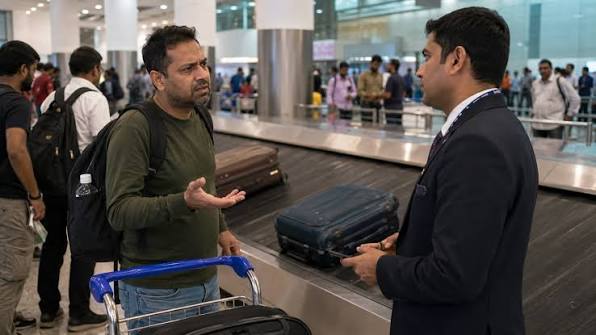
Yes. Passengers and checked luggage move through different processes, so you can board successfully while your suitcase arrives later.
A bag may be delayed because of a short transfer window, late unloading, additional screening, sorting errors, or loading constraints. Walking quickly to your gate cannot eliminate those operational risks.
If your suitcase does not appear at the final destination, check that unloading has finished and confirm the correct carousel. Then contact the airline’s baggage service desk before leaving, where possible.
Provide your baggage receipt, flight details, a description of the suitcase, and your delivery address. Obtain a written report or reference number and confirm how to track updates.
A missing suitcase at the carousel is not automatically a permanently lost bag. Many are delayed and forwarded after the airline locates them.
If you must buy essential replacement items, keep itemized receipts and ask about the applicable reimbursement process. Reporting the delay and submitting an expense claim may be separate steps.
What Happens to Cabin Baggage During a Connection?
You normally carry your cabin bag and personal item off the first aircraft and onto the next. Keep them with you throughout the transfer.
However, the next flight may have different cabin baggage limits or less storage space, especially on a smaller aircraft. A bag accepted in the cabin earlier may need to travel in the hold later.
If staff take your cabin bag at the gate, ask whether you will collect it beside the aircraft, at the connecting airport, or at final baggage reclaim.
Before surrendering it, remove medication, valuables, travel documents, and items prohibited in checked baggage, including power banks and spare lithium batteries. Follow the operating airline’s instructions.
How Much Connection Time Should You Allow With Checked Bags?
There is no single connection time suitable for every itinerary. Automatic transfer on one ticket is usually simpler than collecting luggage and checking it again.
For a self transfer, consider the complete sequence: leaving the aircraft, entering the country if required, waiting for baggage, clearing customs, reaching departures, checking the bag, and passing security.
A two hour gap may look comfortable until immigration queues and slow baggage delivery consume most of it. An airport change adds another substantial variable.
Plan around the bag drop closing time, not just the next flight’s departure time. Allow additional room for delays, particularly when the onward flight is separately ticketed.
Pro Tips for Smoother Baggage Connections
A few practical habits can make a delayed suitcase much less disruptive:
Keep essentials in your cabin bag. Include medication, chargers, basic toiletries, and a change of clothes.
Remove old airline baggage tags. Keep the current routing label clear and visible.
Photograph your suitcase. A recent image helps describe its appearance accurately.
Use clear contact details. Place your name and reachable contact information inside as well as outside.
Save your receipts. Keep baggage identification and any essential purchase receipts together.
If your airline provides baggage tracking, enable it before traveling. A personal tracker can provide additional clues, but its location does not replace the airline’s official tracing process.
For an overnight connection, pack what you need for the evening in hand luggage. This helps even when the airline correctly keeps your suitcase for the onward flight.
Frequently Asked Questions
1. Do I collect my luggage during every connecting flight?
No. On eligible connecting journeys, the airline often transfers it automatically. Collect it when required for customs, separate tickets, an airport change, or another specific instruction.
2. Will my bag transfer if both flights are with the same airline?
Often, if they form an eligible connecting journey. Separate bookings can still require collection and another check in, so the airline name alone does not settle the question.
3. Can baggage transfer between two different airlines?
Yes, when their arrangements and your ticket permit it. Confirm through checking with the first operating airline before departure.
4. Does a final destination baggage tag mean I never collect it earlier?
No. You may still need to collect the suitcase for customs and return it to a transfer belt or airline counter.
5. Do I pay baggage fees again after customs?
Returning an already checked bag after required customs clearance does not normally create a new baggage purchase by itself. Separate tickets or changes to your baggage allowance can produce additional charges.
6. Can I collect my suitcase during a layover?
Ask the airline before initial check in. Intermediate collection depends on its policies and the itinerary, and bags checked through may be inaccessible during transit.
7. What should I do if my connecting flight changes?
Show staff your baggage receipt and confirm the suitcase’s revised routing. Keep the receipt until you have collected the bag at your destination.
Final Summary
Baggage on connecting flights often transfers automatically when your itinerary supports through checking. Separate tickets, customs requirements, airport changes, and some overnight arrangements can require you to collect it yourself.
The most useful check happens at your departure counter: confirm where the bag is tagged and whether you must collect it anywhere along the route. Keep essentials with you, protect your baggage receipt, and reconfirm the routing whenever your flights change.
Some links on this page are affiliate links. If you book through one we may earn a commission, at no extra cost to you. It never affects our ratings, our rankings, or the price you pay.