How to Avoid Tight Flight Connections
A short flight connection can make an itinerary look surprisingly attractive. You spend less time waiting at the airport, reach your destination sooner, and may even find a cheaper ticket.
A short flight connection can make an itinerary look surprisingly attractive. You spend less time waiting at the airport, reach your destination sooner, and may even find a cheaper ticket.
The problem is that a connection that looks efficient on the booking screen can become stressful after even a small delay.
Your first flight lands 20 minutes late. The arrival gate is far from your next departure. You need to pass through security again. Immigration has a queue. Suddenly, a connection that looked perfectly reasonable becomes a race through an unfamiliar airport.
Avoiding tight connections does not mean spending six hours waiting between every flight. The goal is to leave enough time for the transfer procedures your particular journey requires.
This guide explains how to avoid tight flight connections, how to evaluate layover times, and what to consider before booking a connecting itinerary.
What Is a Tight Flight Connection?

A tight connection is a layover that gives you relatively little margin between one flight and the next.
There is no universal number of minutes that automatically makes a connection tight.
A 60 minute connection might be relatively straightforward when both flights use nearby gates and no additional formalities are required. The same 60 minutes can feel extremely risky if you must change terminals, clear immigration, pass security again, or collect baggage.
Your real connection time is also shorter than the number displayed on the itinerary.
| Published Layover | Time That Can Reduce Your Margin |
|---|---|
| 90 minutes | Late arrival |
| 90 minutes | Taxiing to the gate |
| 90 minutes | Leaving the aircraft |
| 90 minutes | Walking between gates |
| 90 minutes | Security or immigration |
| 90 minutes | Boarding closes before departure |
The correct question is therefore not simply, "How long is my layover?"
Ask, "What must I accomplish during this layover?"
Why Tight Connections Can Be Risky
Connecting flights involve more moving parts than nonstop journeys.
Your first flight can be delayed by weather, air traffic restrictions, airport congestion, operational issues, or other disruptions.
Even when the aircraft arrives on schedule, you may still need considerable time to leave it.
Sitting near the back of a large aircraft can add time before you enter the terminal.
Your next gate may then be located in another concourse or terminal.
International connections can introduce immigration, customs, security, and baggage procedures.
A comfortable connection gives you a buffer for these variables.
Step 1: Check the Connection Time Before Booking
Never book a connecting itinerary without examining each layover.
Flight search results often emphasize the total journey duration. A shorter itinerary can appear better simply because it includes a very short connection.
Open the complete itinerary and look at:
Arrival time of the first flight.
Departure time of the next flight.
Connection airport.
Terminal information when available.
Airlines involved.
Whether the itinerary uses one ticket or separate tickets.
A 12 hour journey with a 55 minute connection is not necessarily preferable to a 13 hour journey with a comfortable transfer.
Step 2: Do Not Rely Only on Minimum Connection Time
Airlines and airports use minimum connection times when constructing bookable itineraries.
If a connection is offered on one through itinerary, it may satisfy the applicable minimum required by the booking system.
That does not mean the connection will feel comfortable for every passenger.
Minimum connection time should not automatically become your personal target.
A traveler familiar with an airport and carrying no mobility concerns may be comfortable with a connection that another passenger finds stressful.
Families, older travelers, first time international travelers, and passengers who prefer a relaxed transfer may want additional margin.
Step 3: Understand That Boarding Ends Before Departure

Suppose your first flight arrives at 1 p.m. and the next departs at 2 p.m.
You do not necessarily have a full 60 minutes to reach the next gate.
The onward flight begins boarding before 2 p.m., and the airline can require passengers to be at the gate before the scheduled departure time.
Your usable connection window is therefore smaller than the difference between arrival and departure times.
When evaluating a connection, think about when you realistically need to reach the next gate rather than the aircraft's scheduled departure alone.
Step 4: Allow Time to Leave the First Aircraft
Landing is not the same as standing inside the terminal.
After touching down, the aircraft may need to taxi to its gate.
Once parked, passengers still need to disembark.
If you are sitting near the rear of a large aircraft, it can take additional time before you leave.
Remote stands can introduce buses or other transfer procedures at some airports.
When a connection is extremely tight, these seemingly small delays can consume a significant portion of your available time.
Step 5: Research the Connection Airport
Airport size and layout matter enormously.
A connection at a compact airport can be very different from one at a huge international hub.
Before booking, investigate the transfer process.
Ask whether you may need to:
Change terminals
Take an airport train or shuttle
Pass security again
Clear immigration
Complete customs procedures
Collect baggage
Walk a significant distance
Do not assume gates will be close together simply because both flights use the same airline.
Large airlines can operate across multiple concourses or terminal areas.
Step 6: Be More Careful With International Connections
International transfers can require more time than straightforward domestic connections.
Depending on the airport, country, route, nationality, and itinerary, you may need to complete immigration or security procedures during transit.
In some situations, baggage procedures can also add time.
Before choosing a short international connection, understand exactly what happens at the transfer airport.
Do not rely on assumptions from another country or previous trip.
Transfer procedures can differ substantially between airports.
When additional formalities are involved, extra connection time provides useful protection against queues and unexpected delays.
Step 7: Check Whether You Must Change Terminals
A terminal change can transform a seemingly reasonable connection.
Some terminal transfers require only a short walk.
Others involve trains, buses, security checks, or significant distances.
Occasionally, changing terminals can require leaving one controlled area and entering another.
If your itinerary shows different arrival and departure terminals, investigate the transfer process before booking.
Give yourself more time when transportation between terminals is required.
This becomes even more important when traveling with children, heavy cabin baggage, or limited mobility.
Step 8: Prefer One Ticket When Possible
One of the most important distinctions is whether your connecting flights are issued as one itinerary or purchased separately.
With a through ticket, the flights are connected within the same booking arrangement, and there are generally procedures for handling disrupted onward travel when an earlier flight causes a missed connection, subject to the circumstances and ticket conditions.
Separate tickets create a different situation.
If Flight A is late and you miss independently booked Flight B, the second airline may treat you as a no show.
That can leave you responsible for purchasing another ticket.
The financial consequences can be far greater than the amount originally saved.
Step 9: Give Separate Tickets a Much Larger Buffer
If you intentionally build your own connection using separate tickets, treat it differently from a normal through itinerary.
You may need to:
Enter the connecting country.
Collect checked baggage.
Travel to the departure area.
Check baggage again.
Pass security.
Complete immigration procedures.
Reach the new gate.
You also need protection against delays to your first flight.
For particularly important separate ticket connections, some travelers choose an overnight stop rather than attempting a same day transfer.
The appropriate buffer depends on the route and circumstances, but it should generally reflect the additional risk you are accepting.
Step 10: Check Baggage Procedures
Checked luggage can make connections more complicated.
On many through itineraries, baggage may be tagged to the final destination, although procedures vary by route and airport.
In other situations, passengers may need to collect and recheck their bags during the journey.
Separate tickets make through checked baggage less certain.
Before booking, determine what is expected at the connecting airport.
If you need to wait at baggage claim and then check the suitcase again, a short connection can become impractical.
Remember that baggage check in deadlines for your next flight may also apply.
Step 11: Consider Immigration and Customs
Immigration queues are difficult to predict.
One day you may move through quickly. Another day several international flights may arrive together.
If your connection requires formal entry procedures, build that uncertainty into your schedule.
Customs procedures may also be relevant depending on where baggage is collected and how the itinerary operates.
The safest approach is to research the exact transfer process for your airport and route before purchasing a tight itinerary.
A connection should account for realistic airport procedures, not an ideal situation where every queue is empty.
Step 12: Think About Security Screening
Some connecting passengers need to pass through security again.
That can happen for various reasons depending on the airport and route.
Security queues can range from a few minutes to considerably longer.
A connection that appears comfortable when you imagine walking directly from one gate to another can become tight once another screening process is added.
If security is required during transit, include enough time for both the queue and the walk to your onward gate.
Step 13: Consider Your Seat on the First Flight
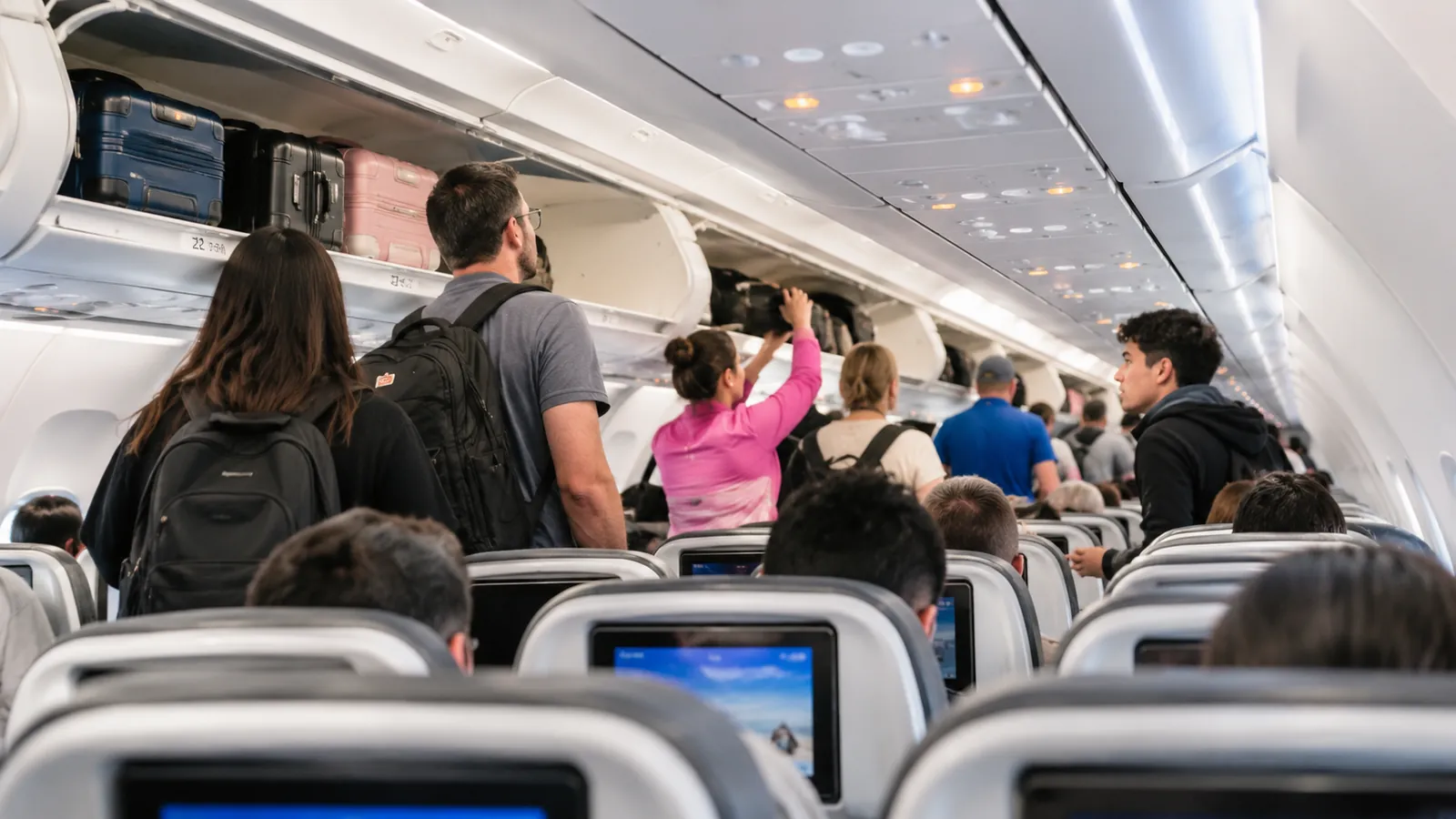
Your seat can matter when the connection is short.
If you sit near the front of the cabin, you may leave the aircraft earlier than passengers seated at the back.
That does not guarantee you will make a tight connection, and it should never be used to compensate for an unreasonable itinerary.
However, when you already have a shorter connection, choosing a seat closer to an exit can potentially reduce disembarkation time.
If seat selection costs extra, decide whether the convenience is worth the price.
Step 14: Avoid the Last Useful Connection When Possible
Consider what happens if you miss your onward flight.
If several later flights operate to your destination, disruption may be easier to manage.
If your connecting flight is the last practical service of the day, missing it can potentially create a much longer delay.
This becomes particularly important when you have commitments after arrival.
When comparing two itineraries with similar prices, look beyond connection length and check what alternatives might exist later in the day.
More recovery options can provide valuable flexibility.
Step 15: Be Extra Careful Before Important Events
If you are flying to catch a cruise, attend a wedding, join a tour, or make an important business meeting, do not build the entire trip around an extremely tight connection.
Even a well planned itinerary can experience disruption.
Instead of trying to remove every possible risk, create a buffer before the event itself.
For something you absolutely cannot miss, arriving at the destination earlier can be more valuable than selecting the fastest possible itinerary.
A slightly longer journey may provide much greater peace of mind.
Common Mistakes With Flight Connections
The most common mistake is assuming that because an itinerary can be booked, the connection will automatically feel comfortable.
Another is forgetting that boarding ends before scheduled departure.
Travelers also underestimate terminal changes, immigration queues, security screening, and the time needed to leave the first aircraft.
A particularly serious mistake is treating separate tickets like a protected through connection.
Finally, avoid choosing an extremely tight connection simply to reduce the total journey by 30 or 40 minutes. The time saved on paper may not justify the additional stress.
Frequently Asked Questions
What is considered a tight flight connection?
There is no universal definition. It depends on the airport, route, terminal changes, immigration, security, baggage procedures, and ticket arrangement.
Is a one hour connection enough?
It can be on some itineraries and inadequate on others. Research the specific airport and transfer procedures.
Should I avoid the minimum connection time?
Not necessarily, but the minimum should not automatically become your personal target. Additional buffer can make the journey more comfortable.
What happens if my first flight is late?
Your options depend partly on whether the flights are on one itinerary or separate tickets, as well as the cause and applicable airline conditions.
Are separate ticket connections risky?
They can carry substantially more risk because the onward airline may not be responsible when an independently booked earlier flight causes you to arrive late.
Do I need more connection time internationally?
Often, especially when immigration, security, terminal changes, or baggage collection are involved. The exact requirements depend on the itinerary.
Is a longer layover always better?
No. Excessively long layovers can unnecessarily extend your journey. The goal is a comfortable buffer rather than the longest possible connection.
Final Thoughts
Avoiding tight flight connections starts before you purchase the ticket.
Do not choose an itinerary simply because it offers the shortest total travel time. Open the flight details and examine what actually happens at the connecting airport.
Check the layover duration, terminal arrangement, immigration procedures, security requirements, baggage handling, and whether your flights are issued together or separately.
Give yourself additional time when traveling internationally, changing terminals, collecting baggage, traveling with children, or building an itinerary from separate tickets.
Also consider what happens if you miss the connection. A slightly longer layover can be particularly valuable when your onward flight has limited alternatives.
The best connection is not necessarily the shortest one. It is the one that gives you enough time to complete the required transfer procedures comfortably while keeping the overall journey practical.
Some links on this page are affiliate links. If you book through one we may earn a commission, at no extra cost to you. It never affects our ratings, our rankings, or the price you pay.