Malaysia Airlines Review
Malaysia Airlines is Malaysia’s full-service flag carrier, with Kuala Lumpur as its main hub, and an alternative for trips between Asia, Australia, Europe and the Middle East.
Malaysia Airlines is Malaysia’s full-service flag carrier, with Kuala Lumpur as its main hub. For travelers heading to Malaysia or connecting between Asia, Australia, Europe, and the Middle East, it offers an alternative to both low-cost airlines and more expensive full-service rivals.
The appeal is straightforward: a connected route through Kuala Lumpur, meals on many flights, and a choice of Economy and premium cabins. But the experience depends heavily on the aircraft, route, and fare you book. A comfortable long-haul flight does not tell you much about a short regional connection, and a cheap headline fare may lose its appeal once you add the baggage or flexibility you need.
This Malaysia Airlines review looks at what you can reasonably expect from booking to arrival. It also covers the issues that matter most when plans go wrong: changes, support, delays, and baggage. Is Malaysia Airlines worth flying? For many travelers, yes, but the itinerary deserves as much attention as the airline name.
Quick Verdict
Overall impression: Malaysia Airlines is a solid full-service choice when its schedule and total fare work in your favor. Its strongest advantage is connecting travelers through Kuala Lumpur while offering more included service than a typical low-cost ticket.
Best for: Travelers visiting Malaysia, passengers connecting across Asia or onward to Australia, and oneworld members who can use their alliance benefits.
Main strengths: A useful Kuala Lumpur hub, friendly onboard service reported by many passengers, meals on relevant routes, and a full-service cabin choice.
Main weaknesses: Cabin features vary by aircraft, the cheapest fares can be restrictive, and customer feedback is less positive when passengers need help after a disruption.
Who should consider it: Travelers who find a sensible connection and are willing to check their fare rules before paying.
Who may prefer another airline: Passengers who can take a similarly priced nonstop flight, need maximum flexibility, or place a high value on fast support during changes and refunds.
Malaysia Airlines Overview
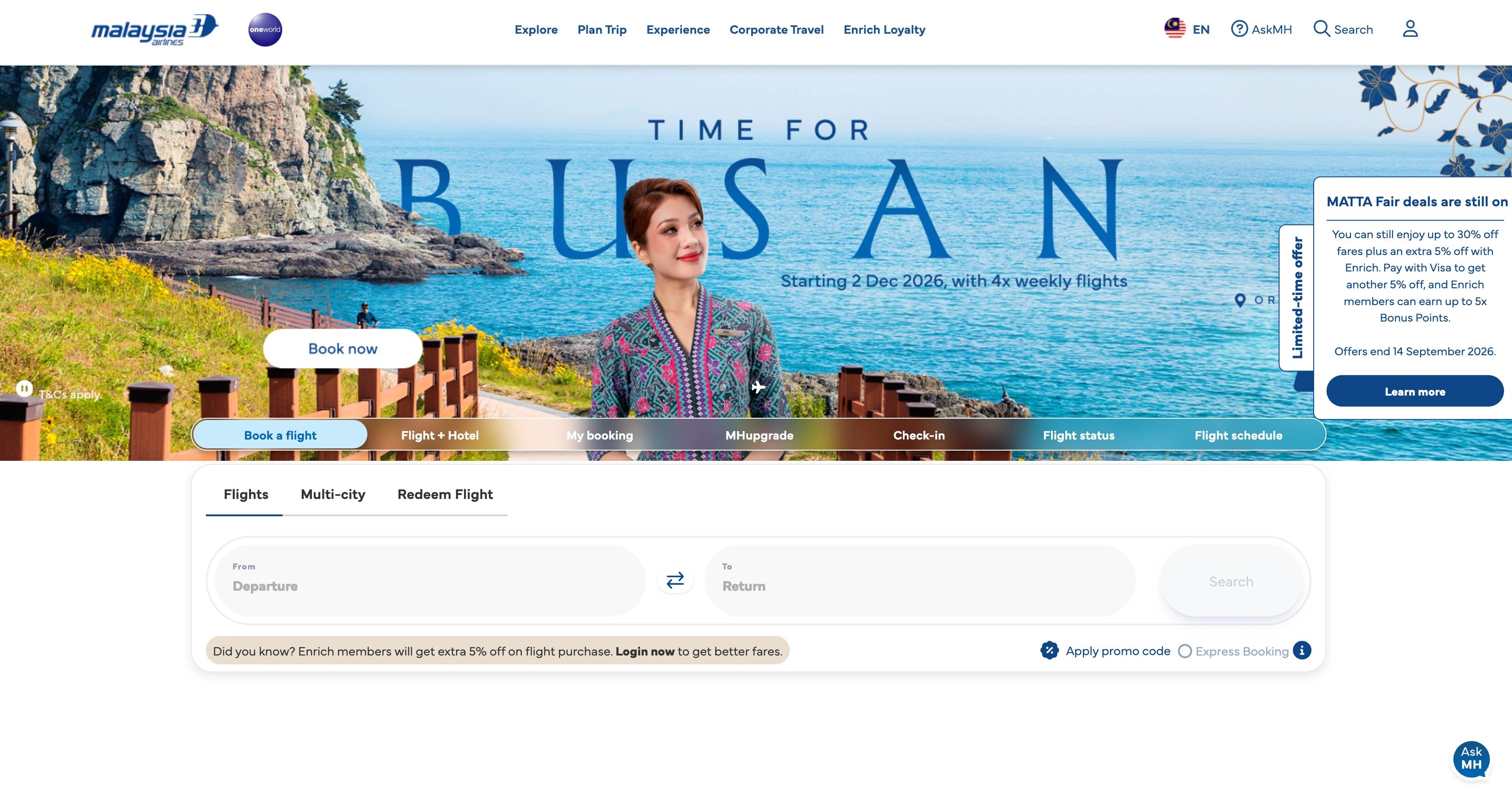
Malaysia Airlines is the national carrier of Malaysia and a member of the oneworld alliance. Its main operation is based at Kuala Lumpur International Airport. From there, the airline serves domestic routes and international markets across Asia, Australia, Europe, and the Middle East. It operates as a full-service airline, so its offer is built around connecting flights, cabin service, and premium travel options rather than the lowest possible base fare.
That network makes the airline especially relevant to travelers who want to visit Malaysia or stop in Kuala Lumpur on a longer trip. It can also work well for journeys between regional cities that would otherwise require a connection with another carrier.
Malaysia Airlines uses different aircraft across short and long routes. Economy and Business Class are its core cabins, while certain long-haul services have offered a higher-end Business Suite product. Seat design and onboard technology are therefore route dependent. Check the aircraft and cabin shown for your specific flights rather than assuming the same product operates throughout the network.
The airline sits between low-cost carriers and premium rivals in a practical sense. You may pay more than a bare-bones fare, but you may also receive services that would cost extra elsewhere. Whether that difference represents good value depends on your baggage needs, connection time, and expectations onboard.
Services and Features
Booking and managing a trip
The Malaysia Airlines website and app let travelers search flights, compare fare options, add services, manage bookings, and check in. The key decision comes before payment: read the conditions attached to the specific fare, particularly for checked baggage, seat selection, changes, and refunds.
Pay close attention to who operates each flight. An itinerary sold by Malaysia Airlines may contain a partner-operated segment, and that flight’s check-in process or onboard experience can differ. If you book through a travel agent, ask how changes would be handled before you buy.
Cabins and seats
Economy Class covers a broad range of flights, from short domestic sectors to long-haul journeys. On a short hop, the practical concerns are seat space and timing. On a long flight, the aircraft, screen, power access, and seat location matter much more.
Business Class offers more space and a more comfortable airport and onboard experience, but the seat itself varies by aircraft. Do not assume every Business Class booking includes the same degree of privacy or a flat bed. Compare the aircraft shown on every sector if you are paying a premium, especially on a connecting itinerary.
Extra-legroom and preferred seats may be available for a charge, depending on the flight and fare. Travelers who care about sitting together should also check seat-selection terms early. Waiting until check-in can leave fewer suitable seats, particularly for families.
Baggage
Baggage is one of the easiest places to misjudge a fare. Malaysia Airlines publishes rules for cabin and checked baggage, but the allowance on your ticket can depend on the cabin, fare, and route. Some journeys use different baggage concepts, so a rule seen for one destination may not apply to another. Your booking confirmation is the right place to confirm what you purchased.
Check both the total allowance and the limit for each individual bag. A generous total allowance does not mean you can put all the weight into one suitcase. If you need extra baggage, compare the cost before travel and confirm that a prepaid option applies to every flight on your itinerary, including partner-operated legs.
Meals, entertainment, and Wi-Fi
Meals are part of the full-service appeal, although what is served depends on flight length, time of day, cabin, and route. A short regional flight will not have the same catering as an overnight long-haul service. If you need a special meal, request it during booking or well before departure, then confirm that the request appears in your reservation.
Entertainment also varies by aircraft. Long-haul travelers should check the aircraft type and avoid assuming that every flight has the same screen, content selection, or charging options.
Malaysia Airlines offers complimentary inflight Wi-Fi on specified aircraft, including its A350 and Boeing 737-8 aircraft and selected A330s. Coverage and performance can vary during a flight. If staying connected is essential for work, treat Wi-Fi as a useful extra rather than a guaranteed substitute for a reliable ground connection.
Airport services and loyalty
Eligible premium passengers and qualifying frequent flyers can access additional airport benefits, subject to their ticket, status, and airport. These may make a long connection more comfortable, but check eligibility for your exact itinerary before factoring lounge access into the ticket’s value.
Malaysia Airlines’ Enrich program is most useful to people who fly the airline regularly or can make use of its oneworld relationships. Occasional travelers should judge a ticket on its immediate price and convenience first. Points are a bonus if they fit an existing travel pattern.
The airline also provides options for passengers who need assistance and for families traveling with children. Request any required service as early as possible and verify the arrangements for each connecting flight, particularly when another airline operates a sector.
Pricing and Value for Money
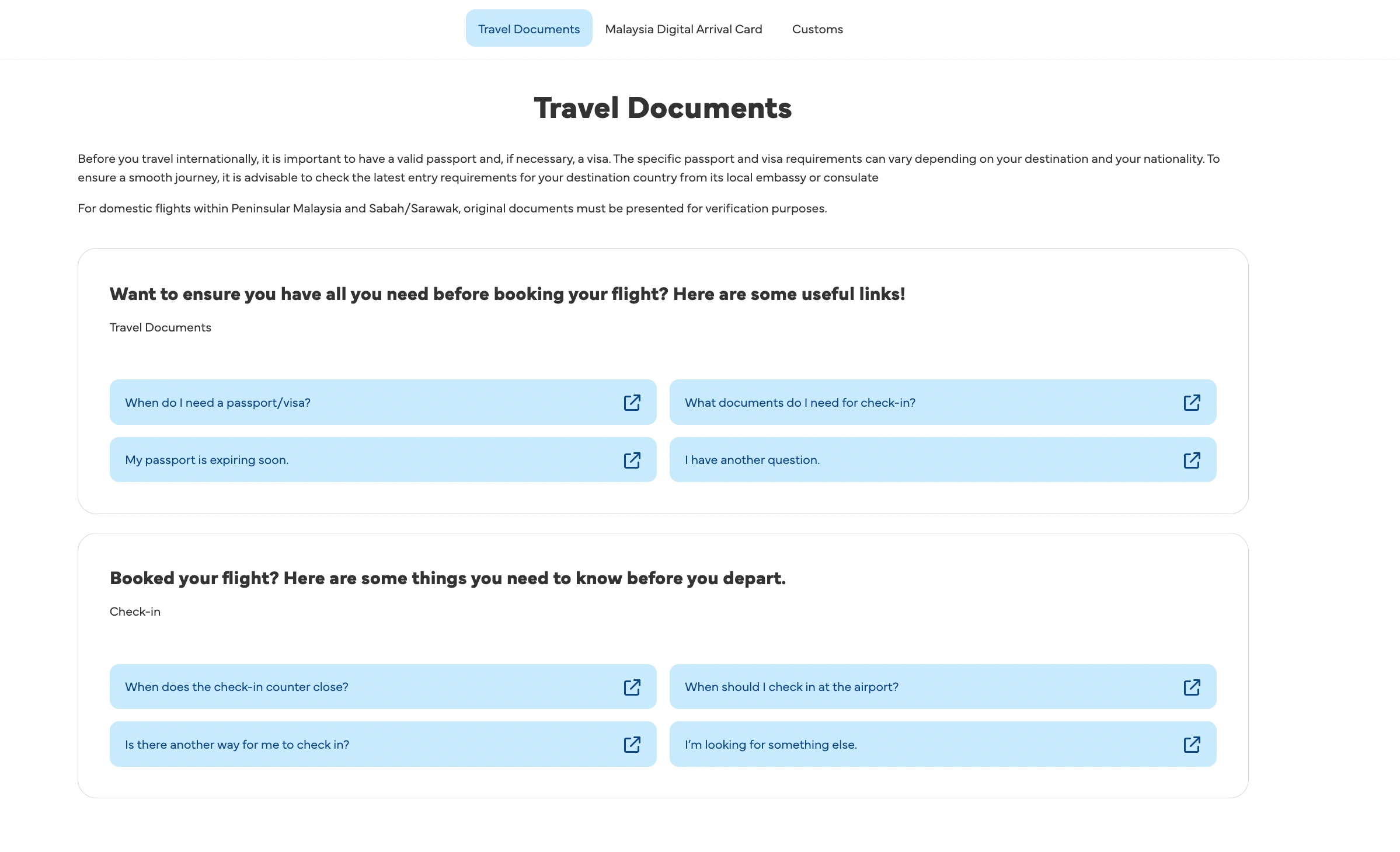
There is no useful “typical” Malaysia Airlines price without a route and date. Fares change with demand, travel season, booking time, cabin, and availability. A sale fare between two major cities may be attractive one week and poor value the next.
The fair comparison is the total trip cost. Put a Malaysia Airlines fare beside a low-cost ticket only after adding the baggage, seat choice, meals, and connection arrangements you actually need. Then compare both against a nonstop full-service option. A cheaper one-stop fare may still be a poor buy if it adds a long layover or cuts into a short holiday.
Watch for differences between fare types. A lower fare may impose tighter rules on changes or refunds, while a more flexible option can cost more upfront. Fees, fare differences on a new flight, and charges for optional services can all affect what you ultimately spend. If your dates are uncertain, calculate that risk before choosing the cheapest option.
Malaysia Airlines often makes the most sense when it offers a convenient Kuala Lumpur connection at a reasonable all-in price. It becomes less persuasive when a nonstop alternative costs only a little more, or when you must pay extra to make the fare suitable for your trip.
User Experience

The booking process is familiar: choose an itinerary, review the fare, enter passenger details, and add any extras. Slow down at the fare comparison and final payment screens. Those are the points where travelers can miss a restriction or assume a service is included when it is not.
Online and mobile check-in can save time. Malaysia Airlines says app check-in is available from 48 hours before departure for eligible flights. That does not remove the need to meet airport document checks, baggage deadlines, or boarding times. International passengers should leave enough time for passport and visa verification, even with a mobile boarding pass.
For a straightforward trip, the main tasks should be manageable through the airline’s digital channels. A disrupted journey is more demanding. A schedule change may require reviewing new connection times, contacting an agent, or resolving a ticket issued through a third party. The official rules determine what options apply, while the speed and clarity of help can vary in practice.
Keep the booking reference, ticket number, and written confirmation of any changes. If a departure moves, check the entire itinerary rather than only the affected flight. A small change to the first leg can make a previously comfortable connection too tight.
Pros and Cons
Pros
Useful connections through Kuala Lumpur: The hub gives travelers a practical way to reach Malaysia and connect between several major regions.
Full-service offering: Meals and other included services can make the total package appealing compared with an unbundled low-cost fare.
Choice of cabins: Economy and Business Class options suit different budgets and journey lengths.
Positive onboard service feedback: Many travelers describe cabin crews as welcoming and helpful.
Oneworld membership: It adds value for travelers who already collect points or hold useful alliance status.
Wi-Fi on specified aircraft: Eligible flights offer another way to stay connected, subject to coverage and performance.
Cons
Inconsistent aircraft experience: Seats, entertainment, and Wi-Fi are not identical across the fleet.
Fare rules need careful reading: The lowest displayed fare may not provide the baggage or flexibility you want.
Safety, Trust, and Reliability
Malaysia Airlines is an established carrier, but a review should separate safety from service quality. A late flight, slow refund, or dated cabin is a valid reason to criticize an airline; none of those experiences alone establishes that a flight is unsafe.
The airline’s history also includes the losses of MH370 and MH17 in 2014. Those tragedies are part of its history and should not be dismissed. At the same time, they do not provide a sound basis for predicting the safety of an individual flight today. Safety questions are best assessed through current regulatory findings and verified reporting, rather than a customer-service rating or an isolated online post.
On reliability, the more useful question for a prospective passenger is how much room the itinerary leaves for a problem. If you are traveling to a wedding, joining a cruise, or attending a fixed-time event, choose a longer connection or arrive a day early. Keep essential medication and a change of clothes in your cabin bag. These precautions are sensible on any connecting airline, and especially valuable when the cost of arriving late is high.
Customer Reviews and Common Complaints
Customer feedback presents a mixed picture. Positive reviews frequently mention polite cabin crew, a pleasant onboard atmosphere, and acceptable value when the fare includes the services a traveler needs. That helps explain why some passengers are happy to use Malaysia Airlines again, particularly when the route through Kuala Lumpur is convenient.
Negative reviews tend to focus on what happens outside a routine flight. Travelers describe frustration with schedule changes, delayed baggage, refund handling, and the effort required to reach effective support. Others point to uneven food or older cabin features. These themes appear across airline review platforms, although complaint sites naturally attract a higher share of passengers whose trips went badly.
Read reviews for the route and aircraft you plan to book when possible. A complaint about a short regional flight may have little bearing on a long-haul cabin, and a single excellent flight does not guarantee a smooth response to a cancellation. The repeated lesson is that the onboard experience can be better than the experience of fixing a problem afterward.
Who Is Malaysia Airlines Best For?
Travelers visiting Malaysia are the clearest fit. The airline’s Kuala Lumpur base and domestic network can make a single booking more convenient than combining unrelated tickets.
Passengers connecting across Asia or to Australia should consider it when the layover is sensible and the total fare compares well with competing one-stop routes. The best itinerary gives you enough time to connect without turning a journey into an unnecessarily long day.
Travelers who value included service may find more value here than in a low-cost fare once they account for their real baggage and meal needs. Oneworld members may also benefit if the booking is eligible for the points and status benefits they use.
Who Should Consider Alternatives?
Choose a nonstop flight if it fits your budget and arrival time matters more than a modest saving. Removing a connection usually makes the journey simpler.
Travelers who expect to change or cancel their plans should compare flexible fares across several airlines. Do not assume a full-service ticket is refundable simply because it costs more than a budget fare.
If a specific seat or premium-cabin feature is the reason for your booking, compare the actual aircraft on every segment. Another carrier may offer a more consistent product on your route. Likewise, if you need dependable help with a complex booking, consider buying directly from the operating airline and paying close attention to recent support feedback.
Tips for Booking Malaysia Airlines
Compare the final price, not the first search result. Add the bags and seats you need before deciding which airline is cheaper.
Read the fare conditions before payment. Check change, cancellation, refund, and no-show rules for your exact ticket.
Inspect every flight segment. Note the operating airline, aircraft, and connection time, particularly on a long itinerary.
Give yourself a connection buffer. Avoid the shortest available layover when a missed onward flight would seriously disrupt your plans.
Confirm your baggage allowance on the ticket. Check both cabin and checked baggage, plus any rule for individual bag weight.
Request special meals and assistance early. Recheck that the request remains attached to your booking after any flight change.
Choose seats before check-in if placement matters. This is especially useful for families and travelers who need an aisle or extra legroom.
Check in early, but arrive with time for document checks. A digital boarding pass does not guarantee you can skip an airport counter on every international trip.
Save booking and payment records. Keep screenshots or emails showing your fare rules, purchased extras, and any later changes.
Final Verdict
Is Malaysia Airlines worth flying? Yes, when it gives you a well-timed route through Kuala Lumpur at a fair total price. Its strongest reason to book is the combination of a useful network and full-service travel. That can work particularly well for passengers visiting Malaysia or connecting onward with baggage and meals already factored into the fare.
The biggest reason to pause is consistency. The cabin can differ from one aircraft to another, and customer feedback suggests that resolving changes or complaints can be harder than completing an ordinary flight. Check the aircraft, connection, baggage, and fare rules before you pay. If those details work for you, Malaysia Airlines is a reasonable choice. If a similarly priced nonstop flight or a more flexible ticket is available, compare it carefully before deciding.
Some links on this page are affiliate links. If you book through one we may earn a commission, at no extra cost to you. It never affects our ratings, our rankings, or the price you pay.