Turkish Airlines vs. Emirates
At first glance, Turkish Airlines and Emirates can look like direct competitors: both are major international airlines with long-haul networks, strong premium cabins and major hub airports.
Introduction
At first glance, Turkish Airlines and Emirates can look like direct competitors. Both are major international airlines with extensive long-haul networks, strong premium cabins, modern aircraft and major hub airports. But they are built around somewhat different geographic strategies.
Turkish Airlines is Turkey's flag carrier and is based at Istanbul Airport. Its biggest structural advantage is geography: Istanbul sits between Europe, Asia, the Middle East and Africa, allowing Turkish Airlines to connect an unusually large number of destinations through a single hub.
Emirates, meanwhile, is based in Dubai and is part of the Emirates Group. Its network is particularly strong for connecting Europe, Asia, Africa, the Middle East and Australia through Dubai.
One important correction before comparing them: these are airlines, not online travel agencies (OTAs). They do not operate like Booking.com, Expedia or Agoda, and therefore concepts such as OTA "listing inventory," hotel "loyalty tiers," and "pay at property" don't apply to their core airline businesses.
TL;DR: Turkish Airlines is particularly compelling when Istanbul provides a convenient connection, especially for travelers combining Europe, Asia, Africa and the Middle East. Emirates is particularly attractive when Dubai is a natural transit point and when travelers place substantial value on its premium-cabin product and onboard experience.
1. Inventory and Global Reach
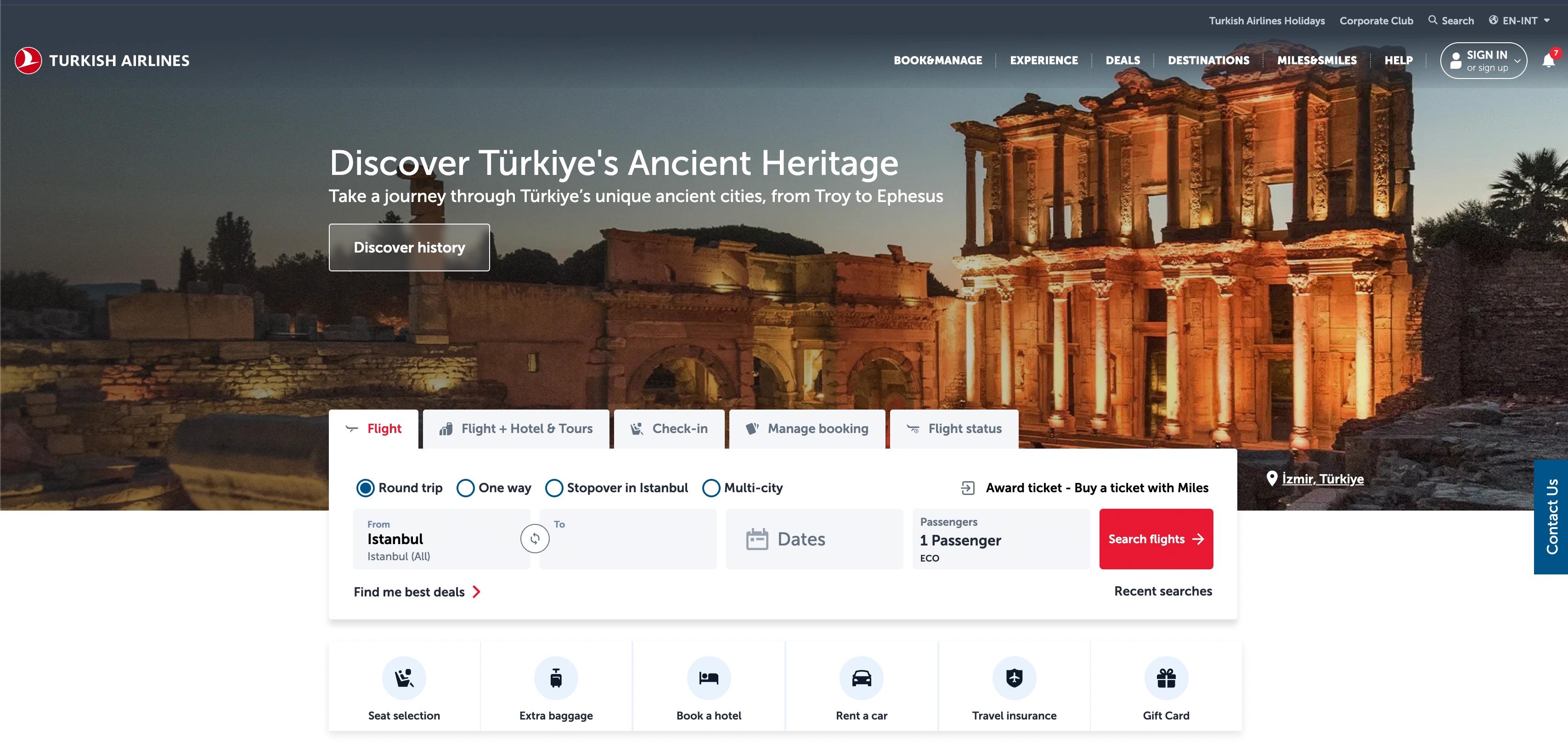
For airlines, "inventory" means flight schedules, seats and destinations, rather than hotel listings.
Turkish Airlines has developed one of the world's broadest international networks. Istanbul's location gives it a powerful connecting position between Western Europe, Eastern Europe, the Middle East, Central Asia, Africa and Asia-Pacific.
This is especially useful for travelers whose origin and destination aren't both major cities. Turkish Airlines has historically used its Istanbul hub to serve numerous secondary cities that might require multiple airlines when traveling through other hubs.
Emirates takes a somewhat different approach. Dubai functions as a huge long-haul connecting hub, with Emirates particularly prominent on routes linking Europe, Africa, Asia, Australia and the Middle East.
Regional comparison
For Europe–Asia journeys, Turkish Airlines can be extremely competitive because Istanbul provides a geographically efficient intermediate point.
For South Asia–Europe/Australia routes, Emirates can be attractive because Dubai is a major connecting point and Emirates has substantial capacity in the region.
Neither airline is primarily a domestic airline. Their core value comes from international connectivity.
Winner depends on geography
If your itinerary naturally passes through Istanbul, Turkish Airlines may provide a shorter or more convenient routing.
If it naturally passes through Dubai, Emirates may offer the better schedule.
Therefore, the airline with the "bigger network" isn't automatically the better choice for an individual itinerary. Connection quality matters more than raw destination count.
2. Pricing and Fee Transparency
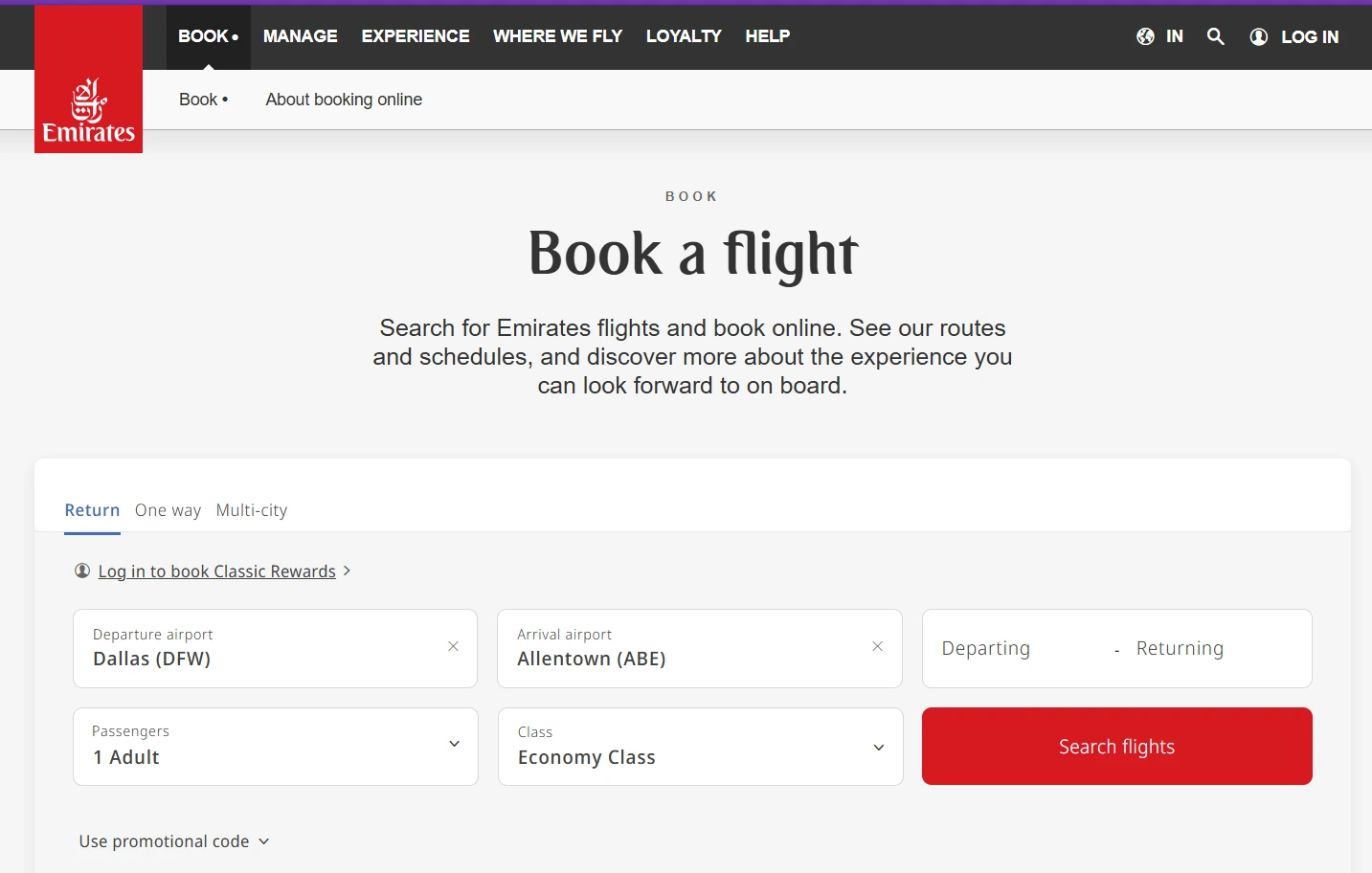
Airline pricing is considerably different from OTA hotel pricing.
When comparing Turkish Airlines and Emirates, travelers should look beyond the headline fare.
A flight displayed at ₹45,000 isn't necessarily equivalent to another flight displayed at ₹45,000. The important variables include:
Checked baggage allowance
Cabin baggage
Seat selection
Ticket change fees
Cancellation conditions
Meal inclusion
Fare flexibility
Taxes and airport charges
Connection time
Both airlines generally show taxes and mandatory charges during the booking process, but optional services can increase the final amount.
Display price vs. final price
Suppose two flights initially appear as:
Turkish Airlines: ₹48,000
Emirates: ₹49,500
The ₹1,500 difference doesn't necessarily mean Turkish Airlines is cheaper.
If one fare includes a more generous baggage allowance or better change conditions, the comparison changes.
Travelers should therefore compare like-for-like fare families.
Best-price considerations
Airlines periodically run promotions and special fares, but travelers shouldn't assume that a "lowest fare" guarantee means the airline will always beat every third-party website.
Third-party agencies may sometimes display promotional or negotiated fares, while the airline website may offer advantages in other areas such as easier servicing and direct communication.
For complicated international trips, booking directly with the airline can also simplify changes and disruption management.
A practical pricing rule
Don't compare:
"Which website shows the lowest number?"
Compare:
Total trip cost + baggage + seat + flexibility + connection quality.
That is a much more meaningful measurement.
3. User Interface and Booking Experience
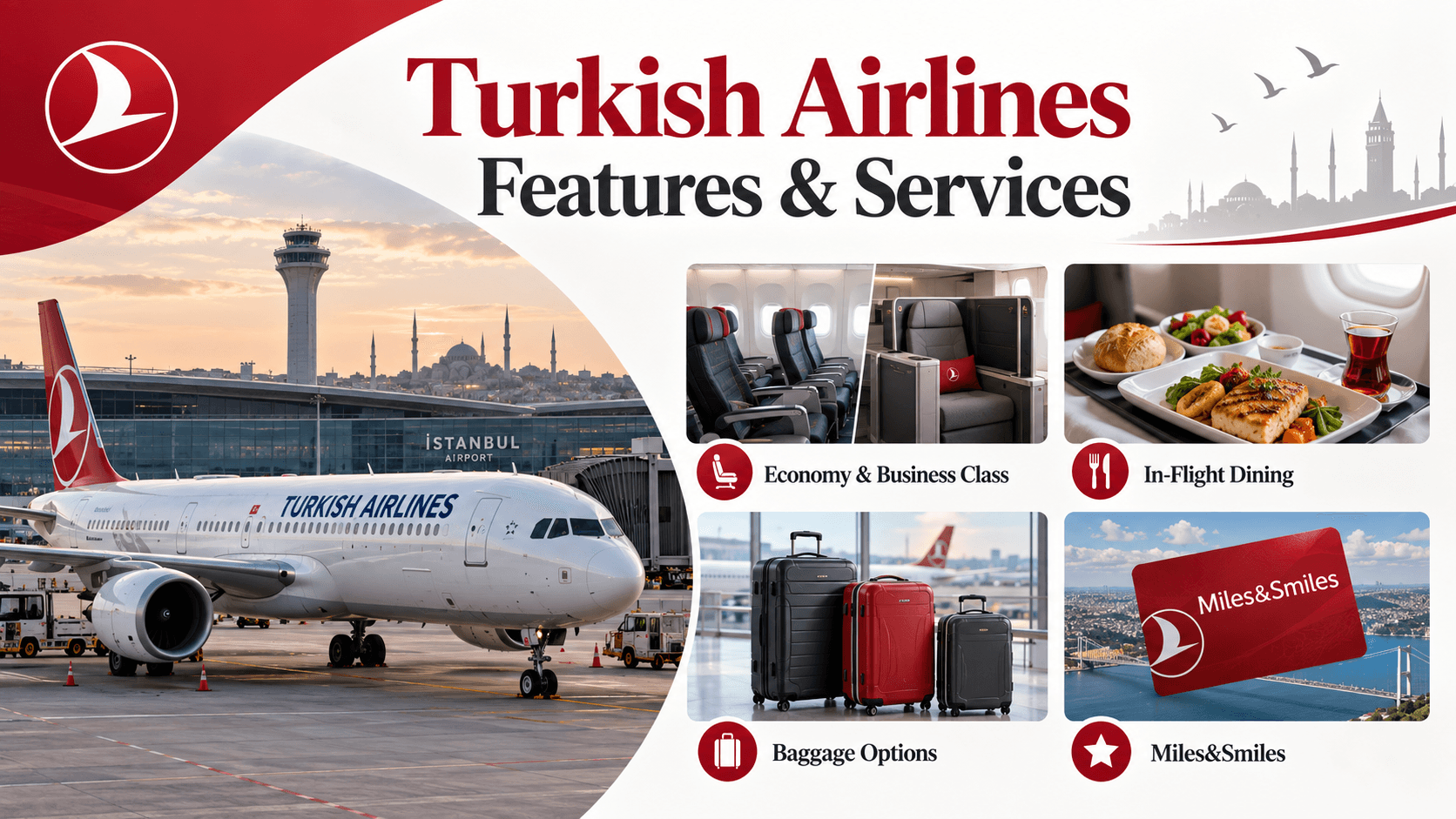
Both Turkish Airlines and Emirates offer dedicated websites and mobile applications.
The basic booking process is similar:
Enter origin and destination.
Select dates.
Choose passengers.
Compare flights.
Select a fare.
Add optional services.
Enter passenger information.
Pay.
Manage the reservation afterward.
Turkish Airlines
Turkish Airlines' website provides extensive international itinerary options and useful tools for managing reservations.
Its enormous network can sometimes make the search experience feel more complex, particularly when there are numerous connecting possibilities.
The airline's Istanbul hub also means that travelers should pay attention to connection times and airport/terminal information.
Emirates
Emirates' interface tends to put substantial emphasis on its cabin products, fare options and onboard experience.
Its booking flow is particularly straightforward when you're already planning to travel through Dubai.
The Emirates ecosystem also integrates naturally with its frequent-flyer program and ancillary services.
Desktop vs. mobile
For complicated international trips, desktop booking remains useful because it's easier to compare multiple dates and fare combinations.
Mobile apps are more convenient after booking, particularly for:
Checking itineraries
Receiving notifications
Managing reservations
Checking flight information
Accessing boarding passes
Overall: both provide mature digital booking experiences, with the better choice largely depending on which airline's network and itinerary you're using.
4. Loyalty Programs: Miles&Smiles vs. Emirates Skywards
This is one of the most important differences for frequent travelers.
Turkish Airlines — Miles&Smiles
Turkish Airlines operates the Miles&Smiles frequent-flyer program.
The program uses tier status to provide additional benefits as members accumulate qualifying activity.
Benefits can include combinations of:
Award-ticket opportunities
Extra baggage
Priority services
Lounge access depending on status and itinerary
Seat-related benefits
Upgrade opportunities
A major advantage of Miles&Smiles is its connection to Star Alliance, giving members access to a broad airline ecosystem.
That matters if you don't always fly Turkish Airlines.
Someone regularly traveling through Europe, Asia or other Star Alliance destinations may be able to build a broader mileage strategy.
Emirates — Emirates Skywards
Emirates operates Emirates Skywards.
Skywards has four principal membership levels:
Blue
Silver
Gold
Platinum
Higher tiers unlock additional benefits and privileges.
Depending on status, benefits can include:
Lounge access
Priority check-in
Priority boarding
Additional baggage
Bonus Skywards Miles
Preferred services
Upgrade-related benefits
Skywards is particularly attractive for travelers who frequently fly Emirates and its broader partner network.
The key difference
Miles&Smiles benefits from the enormous Star Alliance ecosystem.
Skywards is especially compelling if Emirates itself is your primary long-haul airline.
Neither program should be judged solely by the headline discount. Airline loyalty programs are primarily about earning and redeeming miles plus status benefits, rather than the percentage discounts associated with hotel OTA loyalty programs.
5. Cancellation and Refund Policies
This is an area where travelers should pay particularly close attention to the fare conditions, rather than simply the airline name.
Turkish Airlines and Emirates both sell different fare families with different rules.
Depending on the ticket, cancellation may result in:
Full refund
Partial refund
Cancellation fee
Travel credit
No refund
Similarly, changes may be free, restricted or subject to a fare difference and/or fee.
Who handles the cancellation?
If you booked directly with the airline, the airline is generally your primary booking channel.
If you booked through an OTA or travel agency, the agency may need to process the change or refund.
That distinction can become extremely important during disruptions.
For direct bookings, travelers can generally use the airline's Manage Booking tools to review itinerary information and eligible changes.
Important tip
Before purchasing an international ticket, screenshot or save the fare conditions.
Don't rely solely on:
"Refundable"
Instead, check:
Refund penalty
Change penalty
Fare difference
No-show conditions
Baggage
Seat-selection rules
A ₹2,000 cheaper ticket with restrictive conditions can be less valuable than a slightly more expensive flexible fare.
6. Bundling and Extra Services
Here the comparison becomes slightly unusual because neither company is an OTA.
Flights
This is where both companies are strongest.
You can search and purchase international flights directly through their respective booking platforms.
Car rentals
Car-rental services may be available through airline partnerships and travel ecosystems, but neither Turkish Airlines nor Emirates should be viewed primarily as a car-rental marketplace.
Airport transfers
Travelers may find transfer-related services through partners or destination services, but these aren't equivalent to the comprehensive hotel/flight/car ecosystem offered by major OTAs.
Who is better for a one-stop trip?
If your definition of "one-stop shop" means:
flights + hotels + cars + activities + transfers
then a major OTA such as Booking.com or Expedia is structurally better suited to that task.
If your definition is:
international flights + frequent-flyer benefits + flight management
then Turkish Airlines and Emirates are much more relevant.
7. Customer Support and Trust
Both airlines are established international carriers operating large global networks. That gives them a fundamentally different trust profile from small unknown travel websites.
However, airline reviews frequently reflect stressful situations such as:
Flight delays
Cancellations
Baggage problems
Missed connections
Refund delays
Schedule changes
Airport disruptions
Online review scores should therefore be interpreted carefully.
A poor review doesn't necessarily mean the airline is unsafe or unreliable; it may reflect dissatisfaction with customer service during a particular disruption.
For expensive international trips, one useful consideration is who you will have to contact if something goes wrong.
A direct booking with the airline generally eliminates one intermediary.
8. Final Verdict: Who Should Use Which?
There isn't a universal winner because Turkish Airlines and Emirates solve slightly different travel problems.
Budget traveler
Compare the complete fare, including baggage, change conditions and connection time. On some routes Turkish Airlines may be cheaper; on others Emirates may offer the better total value.
Luxury traveler
Emirates is particularly relevant if premium-cabin experience is a major part of the trip. Turkish Airlines is also a major premium international carrier and can be attractive when Istanbul provides the better itinerary.
Business traveler
Look closely at schedule frequency, connection time, lounge access, flexibility and loyalty benefits. A slightly higher fare can be worthwhile if it produces a substantially better schedule.
Solo traveler
Either can work well. For first-time international travelers, however, the simplest itinerary with a comfortable connection may be more important than a small fare difference.
Some links on this page are affiliate links. If you book through one we may earn a commission, at no extra cost to you. It never affects our ratings, our rankings, or the price you pay.