What Is Pay at Property?
Pay at property means you reserve your accommodation now and usually pay the hotel during your stay, rather than paying the full room bill when you book.
You have found a hotel you like, the price fits your budget, and the booking page says “pay at property.” Pay at property means you reserve your accommodation now and usually pay the hotel or accommodation provider during your stay, rather than paying the full room bill when you book.
It sounds straightforward, but a few details deserve attention. You may still need a card to guarantee the reservation, the hotel might place a temporary hold on your funds, and cancellation charges can apply even if you have paid nothing upfront.
Understanding those differences helps you avoid surprises at reception. Here is how pay at property works, what to check before booking, and when it makes sense for your trip.
What Does Pay at Property Mean?
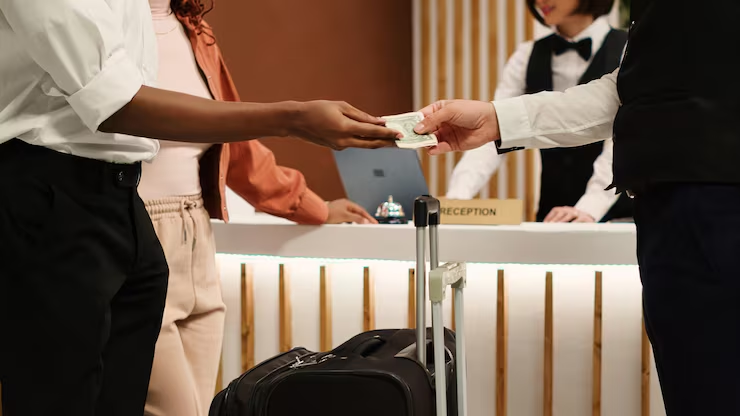
Pay at property is a hotel payment arrangement where the accommodation provider collects payment directly. Depending on the booking conditions, you may settle your room bill at check in, during your stay, or at check out.
Booking.com explains that reservations with payment handled by the property commonly require payment at check in or check out. Your confirmation should tell you who handles payment and describe any applicable payment conditions.
The “property” might be a hotel, guesthouse, hostel, serviced apartment, or another accommodation business. The expression describes the payment arrangement, rather than the quality or category of accommodation.
For example, you might reserve a three night stay for ₹15,000 without paying the room balance immediately. You then pay the accommodation according to the schedule stated in your booking.
The important distinction is that payment timing and cancellation flexibility are separate conditions. A reservation can allow payment at the property while still carrying a cancellation penalty.
How Does Pay at Property Work?

You Reserve Your Room First
You select your dates, room type, number of guests, and preferred rate. If that rate offers pay at property, the booking process should explain when payment becomes due.
Once confirmed, your reservation records the agreed accommodation and booking conditions. Keep the confirmation accessible so you can check the details before arrival.
You May Provide a Payment Guarantee
Even when the room bill is payable later, the booking process may request credit or debit card details. These can help guarantee the reservation and support applicable cancellation or missed arrival charges.
Entering a card does not, by itself, tell you whether the hotel will charge it immediately. Read the payment policy to establish whether the card is being stored, checked, temporarily authorized, or charged.
You Settle the Bill Under the Property’s Rules
At arrival, reception may request payment for the whole stay or confirm that settlement happens at departure. Some properties require payment in stages for longer stays.
Do not assume that “pay at property” means you can always wait until check out. Ask beforehand if the exact timing matters to your budget.
Pay at Property vs Pay Now vs Pay Later
These labels can look similar, but they do not always describe the same arrangement.
“Pay later” does not always mean paying at reception. It can also describe an automatic online charge scheduled before your arrival.
Likewise, “no prepayment required” is more specific about advance payment than a general pay at property label. Read the full conditions instead of relying on the headline.
Can a Pay at Property Booking Require a Deposit?

Yes, some accommodation payment arrangements involve an advance deposit with the remaining balance payable at the property. Expedia Group’s property collect documentation explicitly includes bookings that require a deposit. This is why the payment schedule deserves a separate check. A listing might describe payment at the property while also disclosing that a portion is due earlier.
Three different amounts can appear in your reservation:
Reservation deposit: An advance payment toward securing or paying for your stay.
Card authorization: A temporary hold that checks available funds or guarantees payment.
Security or incidental deposit: An amount held or collected to cover potential additional expenses.
These amounts serve different purposes. Ask whether each one is refundable, counts toward the room bill, or is released separately after departure.
What Is a Card Hold or Preauthorization?
A preauthorization temporarily reserves an amount on your card. It generally appears as a pending transaction and reduces the credit or funds available to spend.
For example, a hotel might authorize an amount associated with your accommodation before arrival. That can feel like a payment because your available balance falls, even though the transaction has not necessarily been settled.
A pending hold and a completed charge are different transactions. Check your banking app and ask the property what it has processed if the status is unclear.
The release time depends on the hotel’s processing and your card issuer. Avoid budgeting on the assumption that every hold disappears immediately after check out.
Debit card users should be particularly attentive because a hold can reduce money available for everyday spending. Confirm the expected amount before arrival if your account balance is tight.
Does Pay at Property Include Free Cancellation?
No. Pay at property does not automatically include free cancellation.
Expedia’s terms explain that a Pay Later reservation can still attract cancellation or missed arrival charges under the property’s booking rules. They also state that payment is typically collected in local currency during the stay, unless another schedule was disclosed when booking.
You need to check two separate questions:
When do I pay for the accommodation?
What do I owe if I cancel or fail to arrive?
A hypothetical booking might allow free cancellation until 6 p.m. two days before arrival, followed by a charge equal to the first night. Another booking might carry a larger penalty.
The exact deadline, applicable time zone, and penalty should appear in your reservation. Having paid nothing yet does not mean you owe nothing if your plans change.
How to Book a Pay at Property Hotel
1. Search for Your Dates and Guest Numbers
Enter your destination, arrival date, departure date, and number of travelers. Use payment filters where available, but inspect the conditions of the actual room rate you choose.
Different rates at the same hotel can have different payment rules.
2. Compare the Complete Stay Price
Check the total for your entire stay rather than focusing only on the nightly headline price. Look for taxes, mandatory property charges, breakfast costs, and other disclosed extras.
Make sure competing rates cover the same room, guest count, and inclusions.
3. Open the Payment and Cancellation Details
Identify whether the reservation requires advance payment, permits a card hold, or sets a payment date. Then review cancellation rules separately.
Take extra care with phrases such as “deposit required,” “partially refundable,” and “payment before arrival.”
4. Confirm Accepted Payment Methods
Check whether the hotel accepts your preferred card type, cash, or other payment method. Acceptance can differ by property, and a method available online may not be accepted at reception.
If you plan to use cash, ask whether a card is still required for a security guarantee.
5. Complete the Booking and Save the Confirmation
Use accurate guest details and a working email address. Save the confirmation, total price, payment schedule, and cancellation deadline.
A screenshot of the selected rate conditions can also help if you later need to clarify what was displayed.
6. Prepare Your Payment Before Arrival
Ensure your card has enough available funds for the room balance and any expected hold. Bring identification and check whether the property requires the cardholder to be present.
For late arrivals, contact the property to confirm reception hours and arrival arrangements.
Advantages and Drawbacks of Pay at Property
Advantages
The clearest benefit is keeping your accommodation money available until the payment date. This can make travel budgeting easier when you book several months ahead.
It can also reduce the need to wait for an accommodation refund if you cancel within an applicable free cancellation period and no payment was collected.
Other useful advantages include:
More time to arrange your travel funds.
Direct access to reception when reviewing the bill.
The possibility of choosing among payment methods accepted by the property.
Less money committed early when the terms require no advance payment.
Drawbacks
You still need sufficient funds when payment becomes due. A delayed bill is easy to overlook when flights, activities, and other travel expenses have already been paid.
Potential drawbacks include card holds, property deposit requirements, and uncertainty about the home currency cost of an overseas stay.
A pay at property rate may also cost more than a prepaid alternative. Compare the actual rates offered, since neither payment option is automatically cheaper.
What Happens When You Arrive?
Reception will usually verify your booking and identification, then explain payment and any deposit requirements. This is the moment to confirm what is being charged and what is merely being held.
Before authorizing a transaction, ask:
Does this amount cover the room bill, a deposit, or both?
Are any mandatory charges still payable?
When is the remaining balance due?
How will unused deposit funds be returned or released?
Keep the payment receipt. If an earlier deposit or payment appears on your records, ask the hotel to show how it has been credited toward the balance.
At departure, review your final bill for accommodation, meals, parking, and other extras you used. Address unexplained items before leaving where possible.
Pro Tips for Avoiding Payment Surprises
Confirm the Currency You Actually Owe
For an overseas booking, distinguish the property’s billing currency from a converted price shown for convenience. Your eventual home currency cost can vary with exchange rates and card fees.
Ask about the available currency choices before approving payment. Compare conversion terms rather than assuming a familiar currency produces a better deal.
Budget Beyond the Room Total
Keep enough available funds for disclosed deposits and any extras you expect to use. A reservation total and a temporary card hold can affect your spending capacity differently.
This matters particularly when several hotels may place holds during the same trip.
Set a Cancellation Reminder
If your booking allows free cancellation, save the deadline in your calendar. Set the reminder early enough to make a decision and complete the cancellation.
Use the booking channel’s cancellation process and retain the confirmation. A message asking about cancellation may not itself cancel the reservation.
Verify Unexpected Payment Requests
An unexpected message demanding immediate payment deserves checking, especially if it conflicts with your confirmation.
Contact the property through contact details already recorded in your reservation, or use the booking platform’s support channel. Confirm what the payment is for before proceeding.
Frequently Asked Questions About Pay at Property
1. Does pay at property mean no payment when booking?
Often, the main room balance is payable later. However, disclosed deposits or temporary card authorizations may still apply, so check the complete payment conditions.
2. Can I pay cash at the hotel?
Only if the property accepts cash for your reservation. Even then, it may require a card or separate deposit as a guarantee, so confirm both requirements before arrival.
3. Will I pay at check in or check out?
That depends on the accommodation’s rules. Some collect the full amount at arrival, while others settle the bill at departure or require payments during longer stays.
4. Can the hotel charge me if I do not arrive?
Yes, if your reservation includes a missed arrival penalty. The fact that you selected pay at property does not remove that obligation.
5. Is pay at property cheaper than paying online?
Not necessarily. Compare the total price, room inclusions, payment conditions, and cancellation flexibility of each available rate before deciding.
6. Can I use a different card when I arrive?
Some properties allow this, but you should confirm beforehand. Cardholder verification requirements can matter, particularly when someone else booked or guaranteed the stay.
7. What if my card expires before my trip?
Contact the property or booking provider to update the guarantee where necessary. Keeping valid payment details can help prevent problems with card checks or required charges.
Verdict: Should You Choose Pay at Property?
Pay at property is a useful choice when you want to reserve accommodation while keeping the room balance available until later. It works especially well when the payment schedule is clear and you have budgeted for the stay and any deposits.
Before confirming, check the amount due, payment timing, accepted methods, card hold policy, and cancellation deadline. Those details determine how flexible and convenient the reservation will actually be.
Choose the rate whose full conditions suit your trip. The payment label is helpful, but the booking terms tell you what to expect when you arrive.
Some links on this page are affiliate links. If you book through one we may earn a commission, at no extra cost to you. It never affects our ratings, our rankings, or the price you pay.