How to Compare Economy Class Seats Between Airlines Before Booking
Economy class may look fairly similar from one airline to another, but the actual seat experience can vary considerably.
Economy class may look fairly similar from one airline to another, but the actual seat experience can vary considerably. Two airlines flying the same route can offer different seat widths, legroom, recline, cabin layouts, entertainment systems, power options, and seat selection policies.
Those differences may seem minor when you are comparing a two hour flight. On a ten or twelve hour journey, they become much more noticeable.
The challenge is that simply comparing airlines is not enough. A single airline may operate several aircraft types, and even two aircraft of the same model can have different cabin configurations. You therefore need to compare the specific aircraft and economy seat used on the flights you are considering.
Here is how to compare economy class seats between airlines before booking.
Why Economy Seats Differ Between Airlines
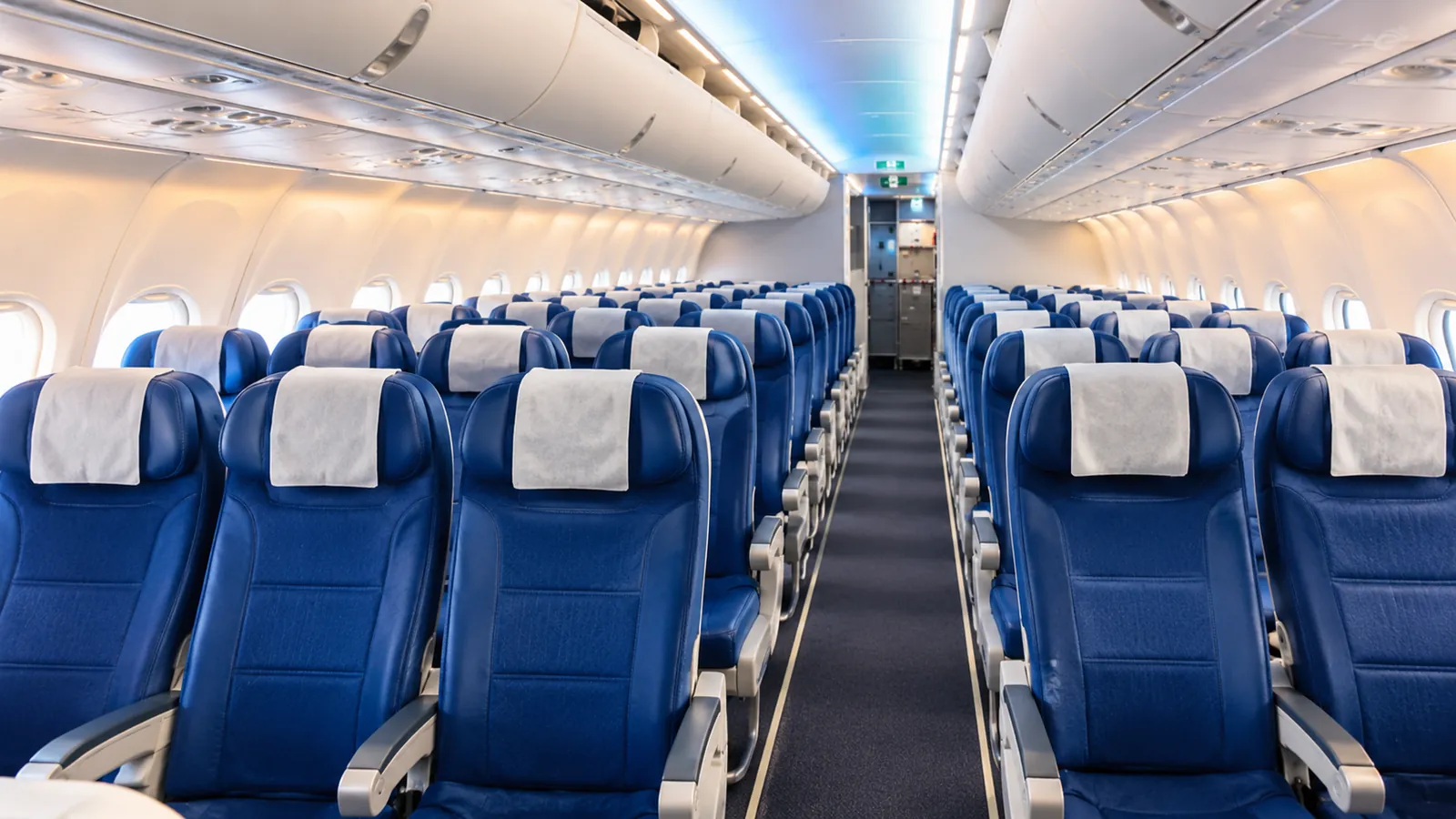
Aircraft manufacturers build airplanes, but airlines decide how most passenger cabins are configured.
That means two airlines operating the same aircraft model do not necessarily provide the same economy experience.
Airlines make decisions about:
Seat manufacturer and design.
Number of seats per row.
Distance between rows.
Seat width.
Recline.
Extra legroom sections.
Entertainment systems.
Power and charging.
Cabin capacity.
An aircraft model is therefore only the starting point. The airline's configuration determines much of what you experience once onboard.
Start With the Exact Flights You Are Comparing
Avoid beginning with a broad question such as, "Which airline has better economy seats?"
Instead, compare the exact flights available for your travel date.
Record:
Operating airline.
Flight number.
Aircraft type.
Aircraft variant.
Flight duration.
Seat map.
Fare type.
This matters because Airline A may have an excellent economy cabin on one aircraft but a different layout on another.
Your goal is not to identify the airline with the best theoretical economy seat. It is to determine which of your available flights offers the seat and itinerary you prefer.
Check the Operating Airline
Codeshare flights can make seat comparisons confusing.
You might buy a ticket carrying Airline A's flight number while the aircraft is actually operated by Airline B.
In that case, Airline B normally provides the aircraft and physical cabin.
Look for wording such as:
Operated by Airline B
Research the operating airline's aircraft and seat configuration rather than relying solely on the airline whose code appears on your ticket.
This simple check can prevent you from researching the wrong seat entirely.
Identify the Aircraft Type
Next, open the detailed information for each flight.
Look for:
Aircraft
Equipment
Plane type
Flight details
You may see aircraft such as an Airbus A350-900, Boeing 787-9, Boeing 777-300ER, Airbus A321neo, or another model.
Write down the exact variant where available.
The aircraft type helps you find the relevant cabin configuration, but do not make your decision based on aircraft model alone.
Compare Seat Pitch
Seat pitch is one of the most commonly discussed economy seat measurements.
It generally refers to the distance from a point on one seat to the same point on the seat in front or behind it.
Travelers often use it as an approximate indicator of personal space.
However, seat pitch is not exactly the same as legroom.
Seat thickness, design, entertainment equipment, and structural elements can influence how much usable space you actually feel around your knees and legs.
When comparing two economy products, seat pitch is useful, but it should be considered alongside seat design and configuration.
Compare Seat Width
Seat width can become especially noticeable on longer journeys.
Even relatively small differences may affect how spacious the seat feels after several hours.
When researching width, make sure you are looking at the correct aircraft and configuration.
An airline may publish different economy seat dimensions across its fleet.
Do not assume:
"Airline A economy seats are X inches wide."
A more accurate comparison is:
"Airline A's economy seat on this particular aircraft is listed at approximately X."
Also remember that measurement methods and individual seat positions can vary.
Compare the Number of Seats Across Each Row
The cabin configuration can tell you a great deal about how the economy cabin is arranged.
Widebody aircraft may use configurations such as:
2 4 2.
3 3 3.
3 4 3.
These numbers describe groups of seats separated by aisles.
For example, a 3 3 3 configuration has three seats, an aisle, three seats, another aisle, and another group of three.
The configuration affects more than cabin capacity.
It determines how many passengers may need to cross other travelers to reach an aisle.
Think About Aisle Access
Suppose you are traveling as a couple.
A cabin containing pairs of seats beside the window can be appealing because you may be able to sit together without sharing that section with a stranger.
For a solo traveler, an aisle seat may be more important.
Families might prefer a group of three or four seats together.
Instead of deciding that one seating configuration is universally better, ask:
Which layout works best for my travel party?
That turns aircraft configuration into a practical booking decision.
Compare Recline
Seat recline is another useful consideration, especially for overnight flights.
Some economy seats offer traditional recline, while others may have different mechanisms or more limited movement.
Exit row seats and seats directly in front of certain structural areas can sometimes have different recline characteristics.
When recline matters, investigate your specific seat rather than relying only on a general cabin description.
Also remember that greater recline does not automatically make every passenger more comfortable, since the seat in front of you may recline as well.
Look at Seat Design
Two seats with similar published measurements can feel surprisingly different.
Modern economy seats can vary in:
Cushioning.
Seatback shape.
Headrest design.
Armrests.
Tray table design.
Storage pockets.
Screen placement.
Seat structure.
Some passengers prefer heavily padded seats, while others appreciate newer designs that create more usable knee space.
Measurements are valuable, but they cannot capture every aspect of comfort.
Compare Headrests
Adjustable headrests are easy to overlook when booking but can matter on long flights.
Some economy seats provide headrests with adjustable side wings that can help support your head while sleeping.
Others have simpler fixed designs.
If you frequently sleep during flights, check whether the economy product you are considering includes an adjustable headrest.
A good travel pillow may still matter, but a supportive headrest can improve the experience.
Check the Seat Map
The seat map is one of your most valuable comparison tools.
It shows how the cabin is actually arranged.
Look at:
Number of economy rows.
Seats per row.
Exit rows.
Extra legroom sections.
Lavatories.
Galleys.
Bassinet locations.
Cabin divisions.
Available seats.
The "best" airline seat on paper does not help much if only middle seats remain.
Always combine seat specifications with actual seat availability.
Compare Standard and Extra Legroom Seats Separately
Many airlines now divide economy into several seating categories.
You might see:
Standard economy.
Preferred seats.
Front cabin seats.
Extra legroom economy.
Exit row seats.
Do not confuse extra legroom economy with premium economy.
An extra legroom seat is often still a regular economy product with additional space or a preferred location.
Premium economy, when offered, is generally a separate cabin with a different seat and broader service package.
When comparing prices, determine exactly what you are buying.
Compare Seat Selection Fees
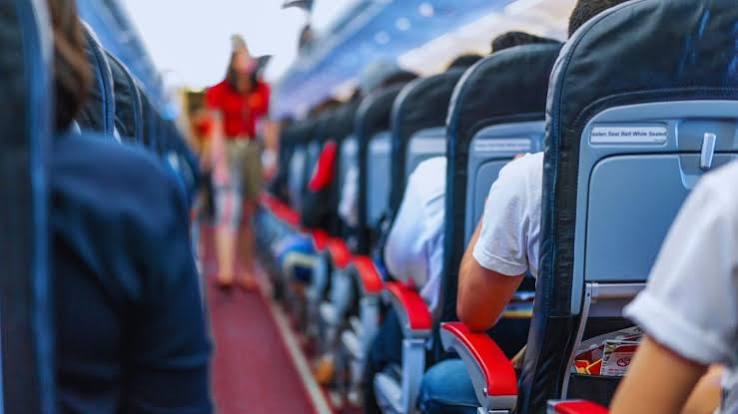
A comfortable seat can become less attractive if selecting it adds a substantial fee.
Suppose Airline A offers a slightly wider economy seat but charges for advance seat selection.
Airline B has a similar seat and includes standard selection in your fare.
The difference should be included in your overall comparison.
Check whether your fare includes:
Standard seat selection.
Window seats.
Aisle seats.
Preferred rows.
Extra legroom seats.
Seat selection policies often depend on fare type rather than simply the airline.
Compare Entertainment Screens
For long haul economy flights, the entertainment system is effectively part of the seat.
Check whether your flight provides:
Seatback screen.
Screen size.
Touchscreen controls.
Remote control.
Headphone connection.
USB charging.
Bluetooth capability where available.
Do not assume every aircraft in an airline's fleet has identical entertainment equipment.
Older and refurbished aircraft may use different systems.
For a short flight, this may barely matter. For twelve hours onboard, it can become much more relevant.
Compare Power and Charging
If you travel with a phone, tablet, laptop, or other electronics, check the charging options at your seat.
Depending on the aircraft and airline, economy may provide:
USB A.
USB C.
AC power.
Shared power outlets.
No individual charging.
Check whether power is available at every seat or only in selected locations.
If you plan to work during the flight, access to reliable seat power may deserve more weight than entertainment.
Compare Storage Around the Seat
Personal storage is often overlooked.
Some economy seats provide a simple seatback pocket, while newer designs may include separate areas for a phone or small personal items.
This is a relatively minor feature, but it can make a long flight more convenient.
Also consider under seat space.
Entertainment boxes or other equipment can sometimes reduce usable storage or foot space around particular seats.
Your exact seat can therefore matter as much as the general cabin design.
Pay Attention to Lavatories and Galleys
A seat with excellent published dimensions can still be undesirable if its location creates additional disturbance.
Seats near lavatories may experience:
Passenger queues.
Doors opening and closing.
Foot traffic.
Light.
Noise.
Seats near galleys can experience crew activity and meal preparation.
Some travelers do not mind these areas, while light sleepers may prefer to stay farther away.
Use the seat map to evaluate location rather than choosing entirely by row number.
Compare Bulkhead Seats Carefully
Bulkhead seats are positioned behind a cabin divider or partition rather than directly behind another passenger seat.
They can offer advantages, but they are not automatically the best economy seats.
Depending on the aircraft, a bulkhead seat may have:
Different legroom.
Fixed armrests.
Tray tables stored in armrests.
Limited under seat storage during certain phases of flight.
Nearby bassinet positions.
Before paying extra for one, check the configuration carefully.
Compare Exit Row Seats Carefully
Exit row seats are popular because they can provide additional leg space.
However, they also come with eligibility and safety requirements, and airlines may restrict who can occupy them.
Some exit seats can have different recline characteristics.
Storage rules may also differ during takeoff and landing.
If you are considering an exit row, compare the actual seat features rather than assuming every exit row provides the same experience.
Consider Window Alignment
Not every "window seat" has a perfectly positioned window.
Aircraft structure and seat configuration can result in some rows having a window that is poorly aligned with the seat or, in certain cases, effectively missing.
This can matter if you specifically want to look outside or lean against the cabin wall.
Check your specific row when window access is important.
Compare Seats More Carefully on Long Haul Flights
The importance of economy seat differences increases with flight duration.
A practical comparison might look like this:
| Feature | Airline A | Airline B |
|---|---|---|
| Aircraft | Type A | Type B |
| Seat pitch | Compare exact flight | Compare exact flight |
| Seat width | Compare exact flight | Compare exact flight |
| Row layout | Check seat map | Check seat map |
| Recline | Check | Check |
| Seatback screen | Check | Check |
| Power | Check | Check |
| Extra legroom | Available? | Available? |
| Seat selection fee | Calculate | Calculate |
| Preferred seat available | Check | Check |
This approach is more useful than simply asking which airline has "better economy."
Do Not Ignore the Overall Itinerary
A better economy seat does not automatically make a better flight.
Imagine Airline A has a seat you slightly prefer but requires a four hour connection.
Airline B has a slightly less attractive seat but flies nonstop.
You need to decide whether a marginal seat improvement is worth adding several hours to the journey.
Compare seat quality alongside:
Total price.
Flight duration.
Schedule.
Connections.
Baggage.
Fare flexibility.
Airport convenience.
The seat is only one part of the trip.
Remember That Aircraft Can Change
Even after carefully comparing seats, the airline can substitute another aircraft.
The replacement may have a different seat configuration.
If you booked a flight partly because of its economy seat, check your reservation again as departure approaches.
Look for:
Aircraft changes.
Seat reassignment.
Different row numbers.
Changed seat map.
Different extra legroom locations.
Aircraft swaps are part of normal airline operations, so avoid treating the originally displayed configuration as an absolute guarantee.
Common Mistakes When Comparing Economy Seats
The biggest mistake is comparing airlines generally instead of comparing specific aircraft.
Another is treating seat pitch as identical to legroom.
Travelers also sometimes focus on aircraft model while ignoring how the airline configured it.
Do not overlook seat location either. A slightly wider seat beside a lavatory may be less appealing to you than a marginally narrower seat in a quieter part of the cabin.
Finally, include seat selection fees in your total airfare comparison.
Frequently Asked Questions
What is the most important economy seat measurement?
There is no single measurement that determines comfort. Seat pitch and width are useful starting points, but seat design, recline, location, and cabin configuration also matter.
Does a larger aircraft mean larger economy seats?
No. Aircraft size does not determine how much personal space an airline provides.
Is seat pitch the same as legroom?
No. Seat pitch is a standardized spacing measurement between seats, while usable legroom is influenced by seat design and other factors.
Are economy seats the same across an airline's fleet?
Not necessarily. Seat dimensions, designs, entertainment, and configurations can vary between aircraft.
Is extra legroom economy the same as premium economy?
Usually not. Extra legroom seating generally remains part of economy, while premium economy is typically a separate cabin and product where offered.
Should I pay extra for a better economy seat?
It depends on flight duration, the price difference, your comfort needs, and the seat offered. Additional space may provide more value on a long haul flight than a short journey.
Can my economy seat change after booking?
Yes. Seat assignments can change, particularly if the airline substitutes a different aircraft or cabin configuration.
Final Thoughts
The best way to compare economy class seats between airlines is to move beyond the airline name and investigate the specific flight, aircraft, cabin configuration, and available seat.
Start with seat pitch and width, but do not stop there. Look at row configuration, recline, seat design, entertainment, charging, seat location, and selection fees.
Then open the seat map and see what you can actually reserve.
For long haul flights, small differences become more meaningful because you will spend many hours in the same seat. For short flights, schedule, price, and convenience may deserve greater priority.
Most importantly, compare the whole journey.
A comfortable economy seat is valuable, but the best booking usually combines a seat you are happy with and an itinerary that works well for your schedule, budget, baggage needs, and overall travel plans.
Some links on this page are affiliate links. If you book through one we may earn a commission, at no extra cost to you. It never affects our ratings, our rankings, or the price you pay.