Why Do Hotels Need a Credit Card at Check-In?
Why do hotels need a credit card at check-in? Usually, the hotel wants a payment guarantee for any unpaid room charges, incidental expenses, or charges permitted under its policies.
Why do hotels need a credit card at check-in? Usually, the hotel wants a payment guarantee for any unpaid room charges, incidental expenses, or charges permitted under its policies. Even when you have paid for your accommodation in advance, the property may still require a card before handing over your room key.
That request can feel confusing, especially when a pending transaction appears larger than your booking total. Understanding the difference between a temporary authorization hold and an actual charge helps you protect your travel budget and avoid surprises at reception.
Why Hotels Ask for Your Credit Card
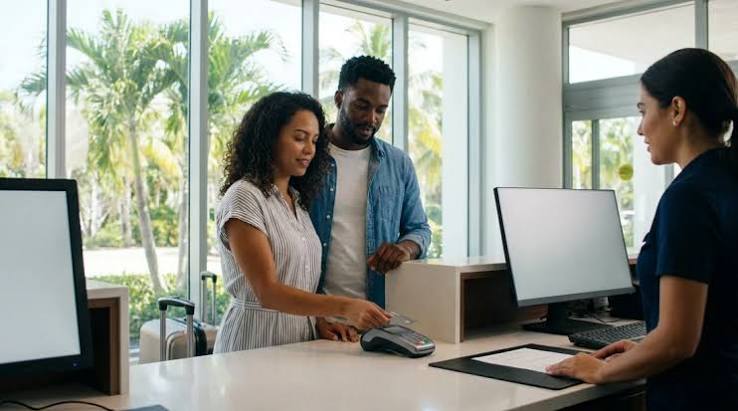
A hotel booking covers your accommodation under a particular rate and set of conditions. Your final bill, however, may include expenses that were not known when you reserved the room.
To Secure Unpaid Accommodation Charges
If you booked a rate payable at the property, the hotel needs to confirm that your payment method can cover the anticipated bill. Its authorization may include accommodation, taxes, applicable fees, and an allowance for incidentals.
Marriott’s digital entry terms describe this type of authorization, while noting that incidental amounts vary by location. The amount reserved on your card can therefore exceed the advertised room price.
To Cover Incidentals
Incidentals are additional expenses you incur during your stay, such as:
Room service and restaurant purchases charged to your room
Minibar items
Parking
Laundry services
Other paid services you authorize
Keeping a payment method on file allows the hotel to settle these expenses with your room account. You can enjoy the convenience of room charging without paying separately after every purchase.
To Provide Security for Certain Additional Charges
Depending on the property’s terms, your card may also secure charges for room damage, smoking violations, or exceptional cleaning. Chase explains that hotel holds can cover potential expenses such as room service or cleaning fees.
Providing a card does not mean every later charge is automatically correct. Read the registration terms, ask about unfamiliar fees, and request an explanation if something appears on your bill that you did not expect.
Why You Need a Card When Your Room Is Already Paid For

Prepaying usually settles the accommodation covered by your booking. It does not necessarily cover everything you might spend at the property.
For example, your prepaid reservation could include the room and breakfast while excluding parking, restaurant purchases, and laundry. The hotel may require a separate card authorization to secure those additional expenses.
Hilton specifically explains that prepaid guests may still face an incidental hold at check-in. A request for your card does not, by itself, mean the hotel is charging you for the room again.
Before authorizing anything, ask reception to confirm that your advance payment appears in the reservation. Then ask which unpaid items the new authorization covers.
The same practical check helps when you booked through a travel website, redeemed points, or received accommodation paid for by an employer. Confirm what the booking covers and what remains your responsibility.
What Is a Hotel Credit Card Hold?
A credit card authorization hold, sometimes called a preauthorization, temporarily reserves part of your available credit. It helps confirm that the card is valid and has sufficient spending capacity.
The hold is different from a completed payment. Your banking app may display it as a pending transaction, but that does not necessarily mean the hotel has collected the money.
A Simple Example
Suppose your prepaid hotel requires an incidental hold of $75 per night. For a three-night stay, it authorizes $225.
If you spend $40 on parking and nothing else, your final additional bill would be $40. The unused authorization should be released through the hotel and card issuer’s processing systems.
These figures are illustrative, not standard hotel rates. Always obtain the property’s actual amount before arrival.
Hold, Deposit, and Charge: What Is the Difference?
Hotels sometimes use “deposit” loosely, so ask whether money will be reserved or collected.
| Payment term | What it means | Effect on your money | What to confirm |
|---|---|---|---|
| Credit card authorization hold | Credit is temporarily reserved | Reduces available credit | Amount and expected release timing |
| Debit card authorization hold | Funds are temporarily reserved | Reduces money available to spend | Required balance and release timing |
| Charged refundable deposit | Money is collected as security | Creates a completed payment | Refund conditions and processing time |
| Advance accommodation payment | You pay for the booked stay beforehand | Settles covered accommodation costs | What remains payable at the hotel |
| Final hotel charge | Payment for your actual bill | Becomes a completed transaction | Whether all listed expenses are correct |
A released hold is not the same as a refund. If the hotel never collected the authorized amount, there may be no separate refund transaction to look for.
How Much Will the Hotel Hold?

There is no universal hotel incidental deposit. The amount depends on the property, room category, length of stay, and payment policy.
For example, Rio Hotel & Casino publishes an incidental credit card authorization of up to $100 per day, with a maximum of $500 depending on room type. Hyatt Regency JFK publishes a $100 incidental authorization per night on credit and debit cards.
These examples show why guessing from a previous hotel stay can be misleading. A property may use a nightly amount, a fixed amount for the entire visit, or another calculation.
Ask these questions before traveling:
Is the authorization charged per night or per stay?
Does it include unpaid accommodation and taxes?
Is there a maximum incidental hold?
Could further authorizations occur during the visit?
For a longer stay, even a modest nightly amount can significantly reduce your available spending money.
Can You Use a Debit Card Instead?
Many hotels accept debit cards, but acceptance depends on the specific property. Hyatt House Manchester, for example, states that a credit or debit card is required for incidentals, while Rio publishes a major credit card requirement.
The important budgeting difference is where the hold falls. A credit card hold reduces your available credit, whereas a debit card hold reduces the bank funds available for everyday spending.
That can matter if you need the same account for meals, transport, or another hotel. Having enough money for the room price may not be enough for the room price plus the required authorization.
If you plan to use debit, ask the hotel to confirm acceptance and the total amount required. Leave a comfortable balance beyond that amount rather than relying on every available rupee, dollar, or pound.
How Long Does the Hold Take to Disappear?
There is no release time that applies to every hotel and bank. Timing depends on the property’s processing, your card issuer, and whether the transaction is an authorization or a collected deposit.
Hilton’s payment FAQ describes release within 72 hours after checkout but warns that the card provider may take longer. Marriott’s digital entry terms describe a hold that may remain for up to five business days after departure.
Treat these as examples of published policies, rather than guarantees for every booking. Ask your hotel and issuer for the timeline relevant to your card.
If a hold remains beyond that period, contact the hotel first to confirm whether it has released the authorization. Then ask your bank to identify the pending transaction and explain what is needed for it to clear.
Can You Check In Without a Credit Card?
Sometimes, but you need the hotel’s agreement before arrival. Paying for accommodation and satisfying the property’s security requirement can be separate matters.
Cash Payments and Deposits
Some properties permit cash or another deposit arrangement. Park Hyatt Kyoto’s published regulations, for example, list cash among accepted payment methods and state that it verifies a credit card or requests a deposit upon arrival.
Other properties are cashless. Hyatt Regency San Antonio Riverwalk states that a credit or debit card remains required at check-in. Ask whether cash is accepted for the security requirement, rather than asking only whether you can pay the room bill in cash.
Prepaid Cards and Digital Wallets
Do not assume that a prepaid card, gift card, or digital wallet can support the required authorization. Ask about the exact payment method you intend to use.
A hotel might accept a method for a purchase while requiring something different to secure the room account. Obtain a written answer when traveling without a conventional payment card.
Can Someone Else Provide the Card?
A parent, partner, or employer may be able to pay, but the hotel can require advance authorization from the cardholder. Simply carrying someone else’s card may not satisfy its payment checks.
Marriott’s guidance requires a formal authorization process for another guest’s expenses and notes that not all hotels accept these arrangements. The authorization should specify whether it covers room and tax, incidentals, or all charges.
Arrange this directly with the property before traveling. A company paying for accommodation does not necessarily mean it has agreed to cover your personal expenses.
How to Handle the Card Requirement at Check-In
1. Confirm the Policy Before Arrival
Contact the actual hotel and ask about accepted cards, the authorization amount, and alternatives. Save its response with your reservation confirmation.
2. Check Your Available Balance
Look at available credit or available bank funds, rather than only your card limit or account balance. Existing pending transactions may already reduce what you can use.
3. Bring Your Identification and Payment Method
Bring the identification required by the property and the card it has agreed to accept. If someone else is paying, confirm that the necessary authorization has been approved.
4. Ask About the Amount Before Authorizing
Use a straightforward question: “Is this a temporary hold or an actual charge, and what does it cover?”
Check that any prepaid accommodation is recognized. If the amount differs from what you were told, resolve that before proceeding.
5. Review the Bill at Checkout
Request an itemized hotel folio and check room charges, taxes, parking, dining, and other purchases. Keep it until the final payment and any pending authorization are resolved.
6. Follow Up on Unexpected Transactions
If both a pending authorization and a final payment appear, ask the hotel and issuer what each entry represents. If two completed charges appear for the same expense, request an investigation.
Pro Tips for Avoiding Payment Surprises
Budget for overlapping holds. If you move between hotels, the first property’s authorization may remain pending when the second requires another one.
Ask about room charging. If you intend to pay separately for meals and services, ask whether disabling room charging changes the deposit requirement; it may not.
Confirm arrangements for every room. When booking several rooms, ask whether each requires its own incidental authorization.
Clarify any payment change at checkout. Before switching from the check-in card to another method, ask how the original hold will be handled.
Keep written confirmation of exceptions. An approved cash deposit or third-party arrangement is easier to explain when you can show the hotel’s instructions.
Frequently Asked Questions
1. Do All Hotels Require a Credit Card at Check-In?
No. Some accept debit cards or approved deposit alternatives, while others specifically require a credit card. Confirm the individual property’s policy before booking.
2. Will the Hotel Charge Me If I Use No Incidentals?
An incidental authorization alone should not become a fee simply because it was placed. However, unpaid accommodation, applicable mandatory fees, or other legitimate expenses may still appear on your final bill.
3. Can I Refuse the Incidental Hold?
You can ask about alternatives, but the hotel may require its approved security arrangement before completing check-in. Discuss this beforehand rather than assuming reception can waive it.
4. Does a Pending Hold Mean I Have Paid Twice?
Not necessarily. A pending authorization and a completed payment can appear together while processing finishes; check their status before treating them as duplicate charges.
5. Can I Use a Different Card From the Booking Card?
Ask the property in advance. Its answer may depend on whether the booking is prepaid, how payment was verified, and any conditions attached to the rate.
6. What Happens If My Card Is Declined?
Ask whether the decline relates to available funds, a security restriction, or an unsupported card. Contact your issuer and discuss another accepted method with reception.
7. Will Avoiding Room Service Eliminate the Hold?
Usually, choosing not to purchase extras does not automatically remove a property’s standard security requirement. Ask whether an alternative arrangement is available.
Final Verdict
Hotels commonly request a credit card at check-in to secure unpaid accommodation and additional expenses. The most useful questions are how much will be authorized, what it covers, and when the unused amount should become available again.
Confirm those details before arrival, especially when using debit, traveling between several hotels, or staying on a prepaid booking. A few clear questions can prevent a routine check-in hold from disrupting your travel budget.
Some links on this page are affiliate links. If you book through one we may earn a commission, at no extra cost to you. It never affects our ratings, our rankings, or the price you pay.