How to Compare Airlines Before Booking
Comparing airlines before booking a flight involves much more than finding the lowest fare on the screen.
Comparing airlines before booking a flight involves much more than finding the lowest fare on the screen. Two flights traveling between the same cities can offer very different value once you consider baggage, seat selection, airports, schedules, connections, ticket flexibility, and onboard comfort.
A $300 ticket can easily cost more than a $360 alternative after you add a checked bag, preferred seat, and transportation from a distant airport.
That is why experienced travelers compare the complete journey, not simply the base airfare.
The right airline depends on your particular trip. A budget carrier may be ideal for a two hour journey with a backpack, while a full service airline with a convenient connection may make far more sense for a long international trip.
This guide explains exactly how to compare airlines before booking so you can choose based on real value rather than an attractive headline price.
Why You Should Compare Airlines Before Booking

Airlines compete using different business models.
Some offer inexpensive base fares and charge separately for extras. Others include baggage, meals, entertainment, or other services within certain fares.
Even two full service airlines can provide significantly different schedules, connection times, baggage allowances, and fare conditions.
Here are the main factors worth comparing.
| Factor | What to Compare |
|---|---|
| Fare | Final price rather than base price |
| Baggage | Cabin and checked allowances |
| Schedule | Departure and arrival times |
| Route | Nonstop versus connecting |
| Airports | Location and transfer costs |
| Seats | Selection fees and comfort |
| Flexibility | Change and cancellation rules |
| Connections | Duration and complexity |
| Onboard service | Meals, entertainment, WiFi |
| Loyalty | Miles, points, and eligible benefits |
Your goal is not necessarily to identify which airline provides the most features. It is to determine which provides the features you actually need at a reasonable total cost.
Step 1: Search the Same Route Across Multiple Airlines
Start by identifying the airlines serving your route.
Do not immediately book the first reasonable fare you find. Compare several options using identical dates, passenger numbers, and cabin classes.
Small differences in the search criteria can produce misleading comparisons.
For example, make sure you are comparing economy with economy rather than one airline's basic economy fare against another airline's standard economy fare.
Once you identify several suitable flights, create a shortlist of two or three options and investigate them more carefully.
Step 2: Compare the Final Ticket Price
The first price displayed during a flight search may not represent what you eventually pay.
Imagine two airlines:
| Expense | Airline A | Airline B |
|---|---|---|
| Base fare | $250 | $320 |
| Cabin bag | $30 | Included |
| Checked bag | $45 | Included |
| Seat selection | $20 | Included |
| Total | $345 | $320 |
These are illustrative prices, but the lesson is important.
Airline A initially appears $70 cheaper. Once the services you need are added, Airline B becomes cheaper.
Before booking, continue far enough through the booking process to understand what is included and what costs extra.
Step 3: Compare Fare Types Carefully

Do not assume every economy ticket provides the same conditions.
Airlines increasingly divide economy into several fare categories.
Depending on the carrier, these could include a restrictive basic fare, standard economy, and more flexible options.
The exact names vary.
A basic fare might restrict:
Seat selection.
Checked baggage.
Changes.
Refunds.
Upgrades.
Loyalty benefits.
A more expensive economy fare may include some of these features.
Instead of automatically choosing the lowest category, compare the difference between fares.
If the standard fare costs $40 more but includes the checked baggage you would otherwise purchase for $50, paying more upfront may actually save money.
Step 4: Compare Baggage Allowances
Baggage is one of the most important airline comparison factors because policies vary substantially.
Check both cabin and checked baggage.
For cabin baggage, compare the permitted dimensions, weight, number of items, and whether a personal item is included.
For checked luggage, check whether your fare includes a bag and what weight or piece restrictions apply.
Pay particular attention when flying several airlines on one trip.
An outbound carrier may allow your cabin suitcase while another airline on the return journey may impose a lower weight limit.
Never assume that because a flight is international, checked baggage is automatically included.
Step 5: Compare Nonstop and Connecting Flights
A nonstop flight is often more convenient, but it may cost more.
Consider the value of the time you save.
Suppose your options are:
Airline A: $600, nonstop, 9 hours.
Airline B: $520, one connection, 14 hours.
The connecting itinerary saves $80 but adds five hours and another flight.
That does not automatically make either option better.
A budget focused traveler may prefer the saving. Someone traveling with children or arriving before an important event may value the nonstop itinerary much more.
Connections also introduce additional opportunities for delays and baggage complications.
Compare convenience as well as cost.
Step 6: Examine Connection Times
If you need a connecting flight, do not focus solely on total journey duration.
Look at the individual connection.
A very short connection can create stress, especially at a large unfamiliar airport.
You may need to change terminals, clear security, pass immigration, or walk a considerable distance.
At the opposite extreme, an eight hour layover may make a cheap itinerary unattractive.
Look for a connection that provides a reasonable buffer without unnecessarily extending your journey.
Also determine whether the flights are on one itinerary or separate tickets.
Separate tickets can involve additional risk if the first flight is delayed and you miss the next departure.
Step 7: Compare Departure and Arrival Times
Flight schedules can affect both convenience and total trip cost.
A 6 a.m. departure may require you to leave your hotel at 3 a.m.
A flight arriving after midnight may force you to take a taxi because public transportation has stopped operating.
Before selecting a cheaper flight, calculate what the schedule means outside the aircraft.
Ask yourself:
Can I reach the departure airport conveniently?
Will public transportation operate when I land?
Can I check into my accommodation at that hour?
Will I lose most of a vacation day?
The cheapest schedule is not always the cheapest trip.
Step 8: Check the Departure and Arrival Airports
Always check airport names carefully.
Some destinations are served by multiple airports, including secondary airports located considerable distances from the city.
A low cost airline may offer a fare that looks significantly cheaper while using a distant airport.
Research the cost and duration of reaching your accommodation from each airport.
A $40 airfare saving can disappear quickly if one airport requires a $60 transfer while another has inexpensive direct public transportation.
Airport convenience becomes particularly important when you have an early departure or late arrival.
Step 9: Compare Seat Comfort
For a short flight, seat differences may not matter much.
For a long haul journey, they can significantly affect your experience.
Compare factors such as:
Seat pitch or legroom.
Seat width.
Recline.
Cabin layout.
Availability of extra legroom seats.
Power outlets.
Entertainment systems.
Do not judge seat comfort solely by the airline's overall reputation.
The same carrier may operate several aircraft types, each with different seating configurations.
If comfort matters, investigate the aircraft scheduled for your route while remembering that airlines can occasionally change aircraft.
Step 10: Compare Seat Selection Policies
Some airlines allow certain passengers to select seats without additional payment, while others charge for advance selection depending on the fare.
This becomes particularly important for couples, families, groups, and travelers who strongly prefer aisle or window seats.
Compare the cost of selecting the seat you actually want.
A cheaper airline that charges every passenger for seat selection may become less attractive for a family of four.
Also remember that paying for seat selection generally means selecting a particular seat under the airline's conditions. Operational requirements can sometimes result in seat changes.
Step 11: Compare Change Policies
Travel plans do not always remain fixed.
Before purchasing a ticket, determine what happens if you need to move your trip.
Check whether changes are permitted and whether a fee applies.
Even when an airline advertises no change fee, you may still have to pay the fare difference if your new flight costs more.
Basic fares can also have different conditions from standard or flexible fares.
If you are booking months ahead and your plans are uncertain, paying slightly more for meaningful flexibility may be worthwhile.
Step 12: Compare Cancellation and Refund Rules
Changeability and refundability are different.
A ticket may allow changes but still be nonrefundable.
Check what happens if you voluntarily cancel.
Depending on the ticket conditions, you could receive a refund to the original payment method, travel credit, partial value after applicable charges, or no usable value.
Also examine any deadlines and restrictions attached to credits.
Do not assume that an expensive ticket is automatically refundable.
Read the conditions of the specific fare.
Step 13: Compare Onboard Services
Onboard services matter most on longer flights.
Depending on the airline, route, aircraft, cabin, and fare, you may receive different combinations of meals, snacks, entertainment, WiFi, power access, pillows, blankets, or other amenities.
A two hour flight may not justify paying substantially more for additional service.
A 13 hour overnight flight is different.
If two airlines have similar fares and schedules, onboard comfort can become a useful deciding factor.
Just make sure you compare what is actually provided on your route rather than assuming every flight operated by an airline offers identical service.
Step 14: Compare Low Cost and Full Service Airlines Fairly
Low cost carriers are not automatically worse value, and full service airlines are not automatically better value.
The correct comparison depends on what you need.
A traveler carrying only a backpack might benefit from an inexpensive low cost fare without paying for unnecessary services.
A traveler with two checked bags may discover that a full service option costs less after extras are included.
The same principle applies to meals, seats, and flexibility.
Build the ticket you actually need on both airlines and compare the resulting totals.
Step 15: Compare Frequent Flyer Benefits
If you fly regularly, loyalty benefits can change the value calculation.
Depending on your status, membership, airline partnership, and fare, you might receive benefits such as baggage allowance, preferred seating, priority services, lounge access, or additional points.
However, do not let loyalty completely override practicality.
Earning additional miles rarely compensates for an extremely inconvenient itinerary unless those benefits have meaningful value to you.
Compare what you will genuinely receive rather than the theoretical benefits of membership.
Step 16: Check the Operating Airline
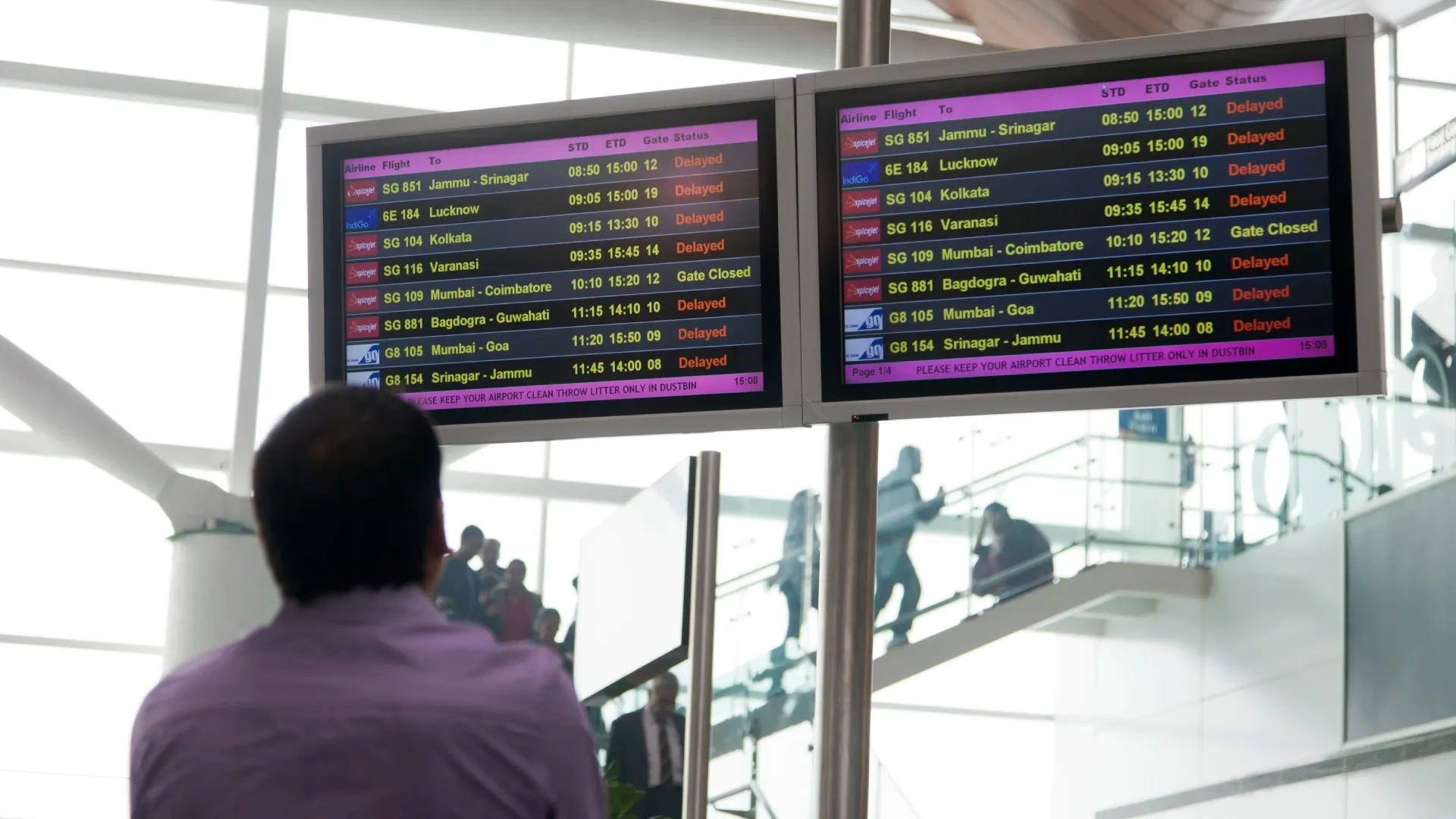
The airline selling your ticket may not operate every flight.
Airlines often cooperate through codeshares and partnerships.
For example, your ticket might display Airline A's flight number while the aircraft and crew are provided by Airline B.
Check the operating carrier for each segment.
This helps you understand which aircraft, seating configuration, and onboard product you are more likely to experience.
It can also help you understand check in and baggage procedures for a multi airline itinerary.
Step 17: Consider Reliability and Disruption Risk
No airline operates every flight perfectly on time.
Weather, air traffic restrictions, airport congestion, technical problems, and operational issues can all create delays.
If timing is particularly important, investigate recent performance relevant to your route using reliable current information.
But also protect yourself through itinerary design.
If you must attend a wedding, cruise, business meeting, or another fixed event, arriving with a reasonable buffer may be more useful than relying entirely on an airline's historical performance.
Step 18: Compare Customer Support and Booking Management
Customer service may seem unimportant until something goes wrong.
Consider how easily you can manage the reservation.
Can you select seats online?
Can you add baggage?
Can eligible flights be changed digitally?
Is flight information easy to access?
What support options exist during disruptions?
Good self service tools can make a meaningful difference, particularly during schedule changes or cancellations.
A Simple Airline Comparison Method
After researching your options, create your own final comparison.
| Category | Airline A | Airline B | Airline C |
|---|---|---|---|
| Final fare | Compare | Compare | Compare |
| Baggage | Compare | Compare | Compare |
| Schedule | Compare | Compare | Compare |
| Nonstop | Yes/No | Yes/No | Yes/No |
| Airport | Compare | Compare | Compare |
| Seat cost | Compare | Compare | Compare |
| Flexibility | Compare | Compare | Compare |
| Connection | Compare | Compare | Compare |
| Onboard service | Compare | Compare | Compare |
Then prioritize the categories that matter for your particular journey.
For a weekend trip, schedule and price may dominate.
For a long international journey, baggage, comfort, connections, and flexibility may deserve much more attention.
Common Mistakes When Comparing Airlines
The biggest mistake is comparing base fares instead of final prices.
Travelers also forget to compare airports, baggage rules, fare restrictions, and connection quality.
Another common error is assuming every flight from the same airline provides an identical experience. Aircraft and services can vary by route.
Avoid comparing airlines purely through online ratings as well. Reviews can provide useful context, but individual experiences do not necessarily represent what will happen on your particular flight.
Finally, be cautious about extremely cheap itineraries involving separate tickets. Understand who is responsible if a delay causes you to miss the next flight.
Frequently Asked Questions
What is the most important thing to compare between airlines?
Start with the total price for the services you need, then compare schedule, route, baggage, airports, flexibility, and connections.
Should I always choose the cheapest airline?
No. A lower base fare can become more expensive after adding baggage, seats, and airport transportation.
Is a nonstop flight better than a connecting flight?
Nonstop flights generally reduce travel time and connection complexity, but they may cost more. The value depends on the price difference and your priorities.
How do I compare airline baggage policies?
Check the rules attached to your specific fare, including cabin bag dimensions and weight, personal items, checked baggage, and additional bag charges.
Are full service airlines always more expensive?
Not necessarily. Once baggage, seats, and other extras are added to a cheaper fare, a full service option can sometimes be competitively priced.
Should I compare aircraft types?
For longer flights, yes. Different aircraft and configurations can provide different seating, entertainment, and comfort.
Is a flexible ticket worth paying more for?
It can be if your plans may change. Compare the additional cost with the exact change and cancellation benefits provided.
Final Thoughts
Learning how to compare airlines before booking is really about comparing value rather than price.
Start with identical travel dates and cabin classes. Then calculate what each flight actually costs after adding the baggage, seats, and services you need.
Next, compare the journey itself.
Look at departure times, arrival times, airports, nonstop options, connections, seat comfort, flexibility, and onboard services.
For a short flight with minimal luggage, the cheapest basic fare may provide everything you need. For a long international journey, paying more for a nonstop flight, better schedule, useful baggage allowance, or greater flexibility may provide much better value.
The best airline is therefore not automatically the cheapest, most famous, or most luxurious.
It is the one that gives you the right combination of price, convenience, comfort, and flexibility for your specific trip.
Some links on this page are affiliate links. If you book through one we may earn a commission, at no extra cost to you. It never affects our ratings, our rankings, or the price you pay.