What Are Protected Connecting Flights?
Protected connecting flights are flights booked as a connected journey where the airline generally arranges onward travel if a disruption to an earlier flight causes you to miss your connection.
Protected connecting flights are flights booked as a connected journey where the airline generally arranges onward travel if a disruption to an earlier flight causes you to miss your connection. Usually, this means booking the flights together on a single through ticket, rather than buying each flight separately.
That protection can make a major difference. Instead of searching for an expensive replacement ticket yourself, you have an airline responsible for helping you continue to your final destination.
However, “protected” does not mean every expense is covered or that your next plane will wait. Understanding the booking arrangement, the cause of the missed connection, and the applicable conditions helps you know what to expect.
What Does a Protected Connection Actually Mean?
A protected connection links your flights as parts of one journey for ticketing and disruption handling.
For example, imagine booking Delhi to Paris via Dubai on one through ticket. If your Delhi flight arrives too late for the Paris departure, the airline will generally arrange an alternative connection without charging you for a replacement flight.
The key benefit is responsibility for onward travel when a covered disruption breaks the connection. Your journey does not simply end at the transfer airport because the original departure has been missed.
Protection can also exist when different airlines operate the flights, provided they are sold under an appropriate connected ticketing arrangement. You do not necessarily need to fly with the same airline throughout.
Does “Protected” Have One Universal Definition?
No. Booking websites sometimes use “protected connection” to describe their own connection guarantee rather than an airline protected through ticket.
These products may cover separately ticketed flights under a commercial agreement with the booking platform. Their benefits, exclusions, and claims procedures can differ considerably from airline protection.
Always establish who provides the protection: the airline, the booking platform, or an insurer.
Protected Connecting Flights vs Self Transfer Flights
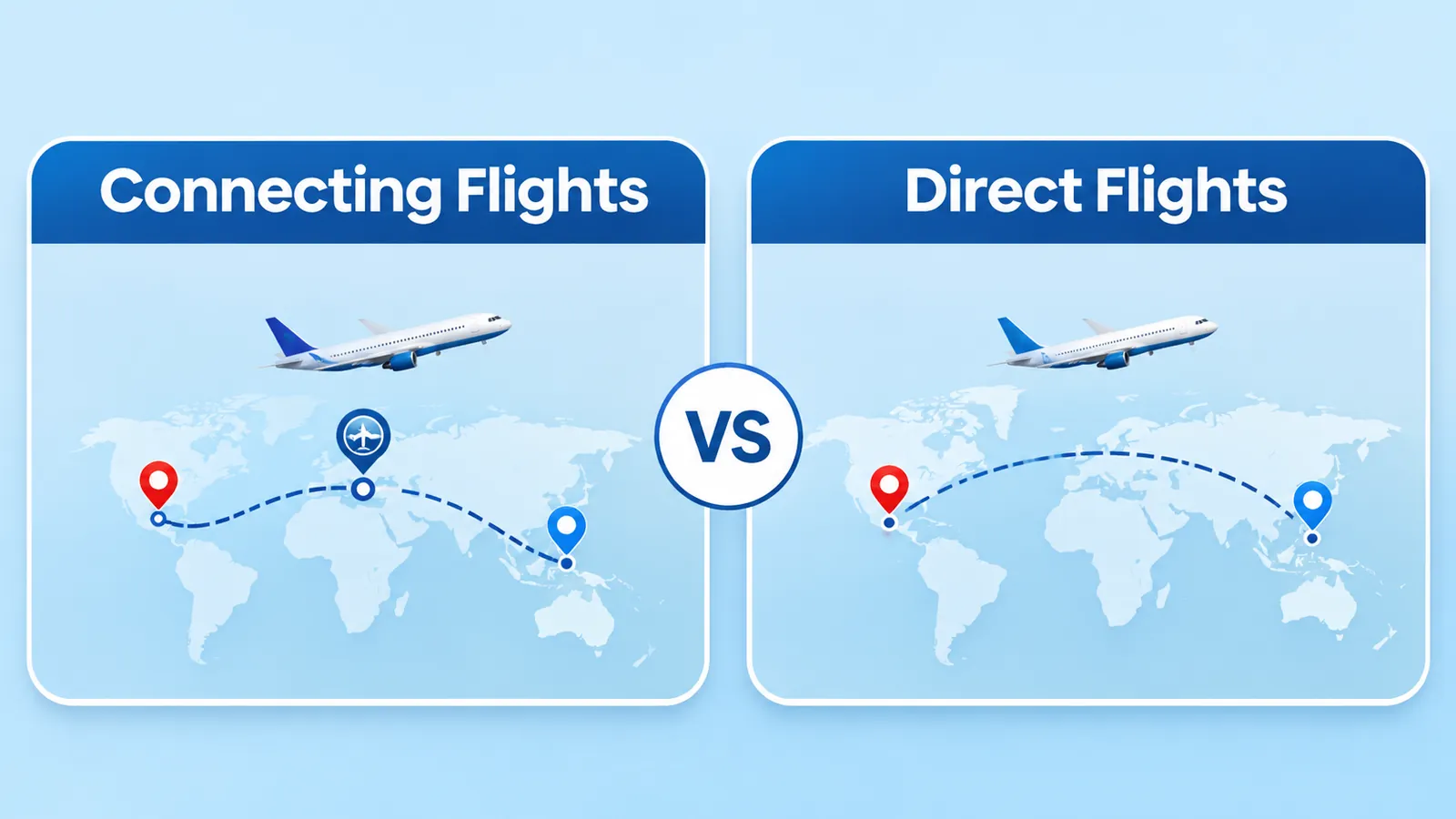
A self transfer usually involves separate tickets that you combine into your own itinerary.
For example, you might buy one ticket from Manchester to Rome and another from Rome to Athens. Even if the flights appear together in a booking website’s search results, the airlines may treat them as unrelated journeys.
If the Manchester flight arrives late, the airline operating Rome to Athens generally has no obligation to replace your missed flight for free.
| Booking feature | Airline protected connection | Separate tickets without a guarantee | Separate tickets with platform protection |
|---|---|---|---|
| Journey arrangement | Connected through ticket | Independent flight contracts | Independent tickets with additional protection |
| Missed connection after an earlier disruption | Airline generally arranges onward travel | Usually your responsibility | Assistance depends on the provider’s terms |
| Replacement flight cost | Generally covered for an eligible disruption | Usually paid by you | Subject to benefits and limits |
| Checked baggage | Often checked through, with exceptions | May require collection and another bag drop | Often requires a self transfer |
| Main support contact | Airline, sometimes with agent involvement | Each airline handles its own flight | Usually the protection provider |
| Meals and hotels | Depend on policy and applicable law | No automatic coverage for the broken connection | Only as specified in the guarantee |
| Main booking check | Confirm through ticket protection | Allow substantial transfer time | Read exclusions and contact requirements |
A lower fare can still be worth considering, but compare the financial consequences of a missed connection alongside the ticket price.
How to Tell Whether Your Connection Is Protected
The strongest evidence is confirmation that your flights form one through ticket and that the airline will handle a connection missed because of an earlier flight disruption.
A single payment, itinerary email, or booking reference is useful information, but none should be treated as conclusive proof on its own.
Check the Ticketing Arrangement
Look at your booking confirmation and electronic ticket receipt. Establish whether the flights are ticketed as a connected journey or issued as independent tickets.
Partner airlines may generate different reservation references for the same protected journey. Conversely, an agency can display separately ticketed flights under one customer booking reference.
The underlying ticket arrangement matters more than how the itinerary looks on screen.
Look for Self Transfer Warnings
Pay attention to wording such as:
Self transfer
Separate tickets
Collect and recheck baggage
Connection guarantee
Disruption protection available for purchase
These terms should prompt further questions. Collecting baggage does not automatically mean a connection is unprotected, but an explicit separate ticket warning is particularly important.
Ask a Specific Question
Before paying, ask:
“If my first flight is delayed and I miss the next flight, will the airline rebook me to my final destination without an additional fare?”
If the seller says its own guarantee applies, request the terms and identify how you must contact it during a disruption.
What Happens If You Miss a Protected Connection?

If an earlier flight disruption causes the missed connection, the airline will generally arrange alternative onward travel under its conditions and applicable passenger rights.
You may receive a new booking automatically through the airline’s app, email, or text message. Otherwise, visit the transfer desk or contact the airline.
Rebooking Depends on Available Seats
Your replacement journey could involve a later departure, a different connection, or an overnight wait.
“Next available flight” does not necessarily mean the next plane leaving for your destination. That flight may be full, or the airline may need to arrange travel within its own network or permitted partner options.
Tell staff about urgent circumstances, but understand that protection does not guarantee arrival at your original time.
The Connecting Aircraft Usually Will Not Wait
Airlines sometimes hold flights for connecting passengers when operationally practical, but you cannot rely on this.
Departure slots, crew limits, and other passengers’ connections influence the decision. Protection mainly provides a recovery arrangement after the connection fails.
Remaining Flights Need Attention
Ask the airline to confirm that the rest of your itinerary remains active, including your return flight.
Do not independently skip a segment or buy a substitute journey without discussing the consequences. Missing a booked flight can affect later segments under the ticket conditions.
Are Hotels, Meals, and Compensation Included?

Rebooking, assistance, and cash compensation are separate benefits. Having a protected connection does not automatically entitle you to all three.
Meals and Accommodation
Hotel rooms, meals, and transport may be provided depending on the disruption, airline policy, and applicable law.
Some passenger rights systems require care in qualifying circumstances even when the disruption results from events outside the airline’s control. Elsewhere, assistance can depend more heavily on the carrier’s commitments.
Before arranging accommodation yourself, ask what the airline provides and whether independently purchased expenses will be reimbursed. Keep itemized receipts.
Cash Compensation
A missed connection does not automatically produce a compensation payment.
For journeys covered by EU passenger rights rules, qualifying connections under a single reservation may support a compensation claim when arrival at the final destination is delayed by at least three hours. Eligibility also depends on the circumstances, including whether extraordinary circumstances caused the disruption.
Other jurisdictions have different rules. Assess your actual route and disruption rather than assuming a European compensation rule applies worldwide.
When Protection May Not Apply
Connection protection is strongest when an earlier flight disruption prevents you from completing the booked transfer.
It generally does not provide unconditional coverage for every reason you might miss a departure.
You Reach the Gate Too Late
If you spend too long shopping, remain in a lounge, or overlook boarding announcements, free rebooking may not be available.
A boarding pass does not keep the gate open. Follow the boarding deadline, which is earlier than the scheduled departure time.
Your Travel Documents Are Incomplete
A protected ticket does not replace a passport, transit visa, entry permission, or other required documentation.
Check requirements for the transfer country as well as your destination, particularly when changing airports or passing through immigration.
You Change the Journey Yourself
Voluntarily changing a flight, leaving the airport, or skipping a segment can affect protection.
Platform guarantees can have additional exclusions and approval requirements. Read those conditions before making alternative arrangements.
Does Checked Baggage Transfer Automatically?
On many protected itineraries, checked baggage is tagged through to the final destination. This can make the transfer considerably easier.
However, baggage handling and connection protection are different issues. A protected itinerary can still require you to collect and recheck your bags.
Collection may be necessary because of customs procedures, an airport change, or a particular airline arrangement.
At check in, ask:
What destination appears on my baggage tag?
Must I collect the bag during the connection?
If I am rebooked, where will my bag go?
After a missed connection, confirm baggage arrangements before leaving the transfer area. Keep baggage receipts accessible throughout the journey.
How Much Time Should You Allow Between Flights?
Protected connections usually need to meet the applicable minimum connection time when issued.
This is a scheduling threshold for a particular connection, not a promise that every traveler will transfer comfortably or that delays will not occur.
Transfer requirements vary with terminals, airlines, security screening, immigration, and baggage collection. A simple domestic connection is different from an international arrival followed by a domestic departure.
Choose additional breathing room when traveling with children, requesting mobility assistance, or passing through an unfamiliar airport.
Also consider the consequence of missing the flight. A short connection before the final departure of the day can create a much longer delay than a similar connection on a frequently served route.
How to Book Protected Connecting Flights
Step 1: Search for the Complete Journey
Search from your starting airport to your final destination in one request.
This makes it easier to find through ticket options, although some websites also display self transfer combinations. Review each result carefully.
Step 2: Check Every Flight Segment
Confirm the operating airlines, transfer airports, terminals where available, and connection duration.
Watch for airport changes within the same city. These introduce ground transport, entry requirements, and additional timing considerations.
Step 3: Confirm Who Handles Disruption
Establish whether the airline protects the connection or whether a booking platform supplies a separate guarantee.
For platform protection, examine replacement travel limits, refund forms, contact deadlines, and approval requirements.
Step 4: Compare the Full Cost
Include baggage fees, protection charges, airport transfers, and any planned overnight accommodation.
A slightly more expensive through ticket may offer better value if a missed connection would otherwise require a costly replacement fare.
Step 5: Save Your Documents
Keep the ticket receipt, booking confirmation, protection terms, and support details available offline.
Check the itinerary again after any schedule change. A previously reasonable transfer can become impractical if arrival or departure times move.
What to Do When Your Connection Is at Risk
Act promptly when the first flight is delayed.
Check the airline’s app for updated flight times and rebooking messages.
Tell airline staff that you have an onward connection.
Follow transfer instructions after landing and go directly toward your gate.
Contact the transfer desk if the flight has departed or boarding is closed.
Confirm your replacement itinerary, baggage arrangements, and remaining flights.
Ask about assistance if you face a lengthy or overnight wait.
Keep records of notifications, receipts, and the eventual arrival time.
If a booking platform supplies the protection, contact it as required before purchasing replacement travel. Spending first and requesting reimbursement later can conflict with its terms.
Pro Tips for a Smoother Protected Connection
Choose routes with backup departures. More onward flights can mean more recovery options, although seats are never guaranteed.
Keep essentials in your cabin bag. Carry medication, chargers, travel documents, and a change of clothing in case checked baggage becomes temporarily inaccessible.
Request assistance early. Travelers who need support should arrange it before departure and allow extra transfer time.
Check the gate before taking a break. Terminal changes and long walks can consume more time than expected.
Build a buffer before important events. Connection protection can arrange onward travel, but it cannot restore a missed wedding, cruise departure, or business appointment.
Frequently Asked Questions
1. Are all connecting flights protected?
No. Flights bought separately are generally independent journeys unless a specific airline arrangement or additional guarantee provides protection.
2. Can different airlines provide a protected connection?
Yes. Different operating airlines can participate in a connected through ticket. Confirm the ticket arrangement and disruption handling before booking.
3. Does one booking reference prove protection?
No. Agencies can group separate tickets under one reference, while partner airlines may use different references for one protected journey.
4. Will I pay for a replacement flight after an airline delay?
For an eligible missed connection on a protected itinerary, the airline generally arranges replacement travel without an additional fare. Separate tickets may leave that cost with you.
5. Does bad weather remove connection protection?
Not automatically. Rebooking, care, and compensation have different conditions. Weather can prevent cash compensation while onward travel assistance still applies.
6. Is a booking website’s guarantee the same as airline protection?
No. It is a separate product with its own terms. Benefits may involve replacement travel, credit, or refund assistance rather than the airline’s through ticket arrangements.
7. Do protected flights eliminate the need for travel insurance?
No. Travel insurance may cover other eligible losses, such as medical emergencies or trip interruption. Check its exclusions and avoid assuming it covers every missed connection.
Final Verdict: Verify the Protection Before Paying
Protected connecting flights can reduce the cost and uncertainty of a disrupted journey by giving you an airline responsible for arranging onward travel after an eligible missed connection.
Confirm the through ticket arrangement, allow realistic transfer time, and understand who provides assistance. Those checks matter more than a reassuring label beside the fare.
Some links on this page are affiliate links. If you book through one we may earn a commission, at no extra cost to you. It never affects our ratings, our rankings, or the price you pay.