What Is a Short Layover?
A short layover is a brief wait between connecting flights, leaving you limited time to get from your arrival gate to your next departure gate.
A short layover is a brief wait between connecting flights, leaving you limited time to get from your arrival gate to your next departure gate. It can make your journey faster, but it can also turn a small flight delay into a missed connection.
The question most travelers really want answered is simple: Will I have enough time to catch my next flight? That depends on the airport, your booking, terminal changes, border checks, and whether you need to collect luggage.
This guide explains how short layovers work, how to judge a tight connection before booking, and what to do when time is running out.
What Counts as a Short Layover?

There is no universal time limit that defines a short layover. A 45 minute connection might be manageable at a compact airport, while 90 minutes could feel rushed at a large international hub.
As a practical guide, travelers often consider a domestic connection under an hour short. An international connection under 90 minutes deserves closer inspection, especially when immigration, security screening, or a terminal transfer is involved.
These are planning guidelines, not official airport requirements. The actual transfer process matters more than the number alone.
For example, changing planes within one concourse is very different from collecting luggage, entering a country, and checking in again.
How Is Layover Time Calculated?
Your scheduled layover is the interval between the first flight’s scheduled arrival and the next flight’s scheduled departure.
However, you cannot use that entire interval to reach the next gate. Leaving the aircraft takes time, and boarding closes before the next flight departs.
Suppose your first flight arrives at 10:00 a.m. and your connection leaves at 11:00 a.m. If you exit the aircraft at 10:15 and the next gate closes at 10:40, you have just 25 minutes to complete the transfer.
Always check the onward airline’s boarding deadline.
Short Layover vs Long Layover
A short layover reduces your total travel time. A longer layover creates more room for delays and airport procedures, although it also means more waiting.
| Connection situation | How a short layover feels | Main concern | Sensible planning approach |
|---|---|---|---|
| Domestic flights within one concourse | Often straightforward | Late arrival or distant gate | Check the official connection requirement and add a buffer |
| Domestic flights requiring terminal changes | Potentially rushed | Walking, trains, or shuttle buses | Allow extra transfer time |
| International flights with an airside transfer | Sometimes manageable | Security checks and gate distance | Confirm the airport’s transfer process |
| International arrival followed by a domestic flight | Often more demanding | Immigration, customs, and possible baggage collection | Choose a larger time buffer |
| Flights booked on separate tickets | Greater financial risk | Check in deadlines and limited connection protection | Avoid a tight transfer |
| Connection involving different airports | Usually unsuitable for a brief layover | Road travel and fresh departure procedures | Allow several hours and check transport arrangements |
A short layover is useful when the transfer is simple and the consequences of missing it are manageable.
A longer connection becomes more valuable when you face several unpredictable steps.
What Is Minimum Connection Time?

Minimum connection time, often shortened to MCT, is the minimum scheduled interval used for a particular flight connection.
It can vary according to the airport, airlines, terminals, and whether the journey is domestic or international. One airport may have several different minimums.
A connecting itinerary sold by an airline generally needs to meet the applicable requirement. However, meeting that requirement does not guarantee a relaxed transfer or protection from every delay.
Think of it as a scheduling minimum. Your comfortable connection time may be longer, especially if you travel with children, need assistance, or are unfamiliar with the airport.
Before paying, check that the itinerary is a recognized connecting journey rather than a collection of separately ticketed flights.
Is a 30, 45, or 60 Minute Layover Enough?
Is a 30 Minute Layover Enough?
A 30 minute connection leaves very little room for problems. It may be offered for specific domestic transfers, but that does not make it a comfortable choice for every traveler.
Even a brief arrival delay or slow disembarkation can consume much of the available time. Only consider it after confirming that the airline permits that specific connection and understanding the transfer route.
Is a 45 Minute Layover Enough?
A 45 minute layover can work for a straightforward domestic connection, particularly when both flights use nearby gates.
It becomes less appealing when you need to change terminals, pass through security, or wait for assistance. A seat near the back of a large aircraft can also reduce your usable transfer time.
Is a 60 Minute Layover Enough?
An hour gives you more room, but 60 minutes is not automatically enough for an international connection.
A simple airside transfer might work, while immigration, baggage collection, or a terminal change could make the same interval impractical. Check the exact airport procedures before relying on it.
For an unfamiliar airport, choosing extra time is often worth a slightly longer journey.
What Makes a Short Layover Risky?
Arrival Delays and Slow Disembarkation
Weather, congestion, and operational problems can delay your arrival. Sometimes the aircraft lands promptly but waits for an available gate.
You also need time to leave the plane. Sitting near the front may help, but it cannot compensate for a seriously delayed flight.
Terminal Changes and Security Checks
Large airports can involve long walks, underground trains, or shuttle buses between terminals. Two gates that appear close on a map may require a complicated route.
Some connecting passengers must also pass through security again. Check whether your route remains within the secure departure area or requires you to exit and reenter.
Immigration, Customs, and Travel Documents
Some transfers require entry into the connecting country, even if your final destination is elsewhere. Others allow eligible passengers to remain in an international transit area.
A short layover does not remove passport or visa requirements. Confirm the rules for your nationality and route, including any requirements created by changing airports or collecting baggage.
Limited Replacement Flights
Missing an hourly domestic service may cause a modest delay. Missing the last flight of the evening or a service operating only a few times weekly can disrupt your entire trip.
When comparing connections, look beyond the scheduled arrival time. Consider what happens if the transfer fails.
One Ticket vs Separate Tickets
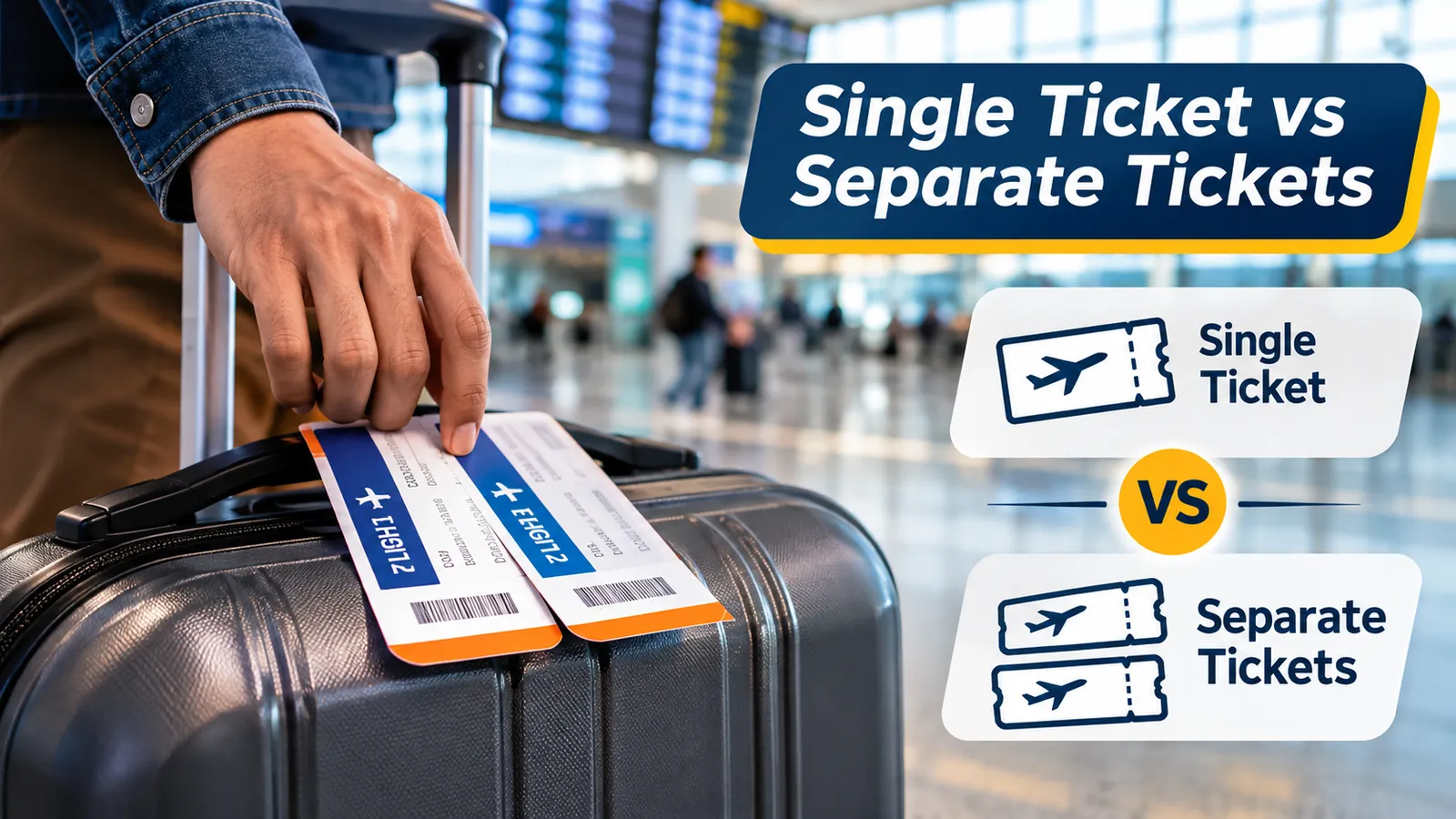
This distinction can matter more than whether your layover lasts 50 or 80 minutes.
Connecting Flights on One Ticket
When flights form a protected connecting journey, the airline generally assists with rebooking if a delay to the incoming flight causes you to miss the onward service.
The replacement flight depends on availability and applicable conditions. Meals, accommodation, or other assistance depend on the circumstances, airline policy, and relevant passenger rights.
A protected connection reduces the financial risk, although it cannot prevent lost time.
Flights on Separate Tickets
With separate tickets, the second airline may treat you as a passenger who failed to arrive before its deadline. You could need to pay for a replacement flight.
You may also have to collect luggage and check it in again. Some airlines offer exceptions or baggage arrangements, but you should confirm these rather than assume them.
One checkout or booking reference does not always prove that a connection is protected. Look for terms such as “self transfer” and read the seller’s connection conditions.
What Happens to Checked Baggage?
For many connecting journeys, checked baggage is tagged through to the final destination. Ask the check in agent to confirm this and inspect the destination printed on your baggage receipt.
However, certain routes require passengers to collect bags for customs processing and then hand them back for the onward flight. Separate tickets and airport changes can also require baggage collection.
If collection is necessary, your layover must cover:
Leaving the aircraft and completing arrival procedures.
Waiting for baggage and passing customs.
Reaching the onward check in or baggage drop area.
Meeting baggage acceptance deadlines.
Clearing security and reaching the departure gate.
Traveling with cabin baggage can simplify a transfer, but it does not eliminate immigration or security requirements.
How to Handle a Short Layover Step by Step
1. Check the Transfer Before Booking
Confirm the airport, terminals, ticket arrangement, and expected arrival procedures. Make sure the itinerary does not involve different airports with similar city names.
Choose more time if you need baggage collection, border checks, or special assistance.
2. Prepare Before Your First Flight
Check in for both flights when possible and save your boarding passes offline. Download the airline’s app and review the airport map.
Keep passports and other required documents accessible. Pack essentials so you can move through the airport without repeatedly opening your luggage.
3. Monitor Your Connection
Check the onward flight’s status and gate when information becomes available. Gate assignments can change, so recheck after landing.
If your incoming flight is delayed, tell the cabin crew that you have a tight connection. They may provide guidance, but they cannot guarantee priority disembarkation or a held departure.
4. Follow the Correct Transfer Route
After leaving the aircraft, follow signs for flight connections or transfers unless your itinerary requires arrivals and baggage collection.
Head toward the next gate before stopping for food or shopping. If directions are unclear, ask airport staff immediately.
5. Get Help When the Connection Looks Impossible
Contact the airline through its app, transfer desk, or customer service channel. Ask whether you can still board or need rebooking.
Do not assume the next flight will wait, even when several passengers share your connection.
What If You Miss Your Connecting Flight?
If an incoming delay causes you to miss a protected connection, contact the airline handling your journey. You may already have a replacement itinerary in the airline app.
Confirm your new departure time, boarding pass, and baggage arrangements. If the new flight leaves the next day, ask what assistance is available.
For separate tickets, contact the onward airline immediately to discuss your options. Avoid simply abandoning the booking, because missing one flight can affect later segments under the ticket’s rules.
Keep receipts for necessary expenses and check any relevant travel insurance coverage. Reimbursement depends on the circumstances and policy terms.
Pro Tips for Choosing a Better Connection
Look for later flights to your destination. A connection with several backup departures offers more flexibility than the day’s final service.
Compare the consequences of delay. If you are joining a cruise, attending a wedding, or catching another separately booked flight, a larger buffer is especially valuable.
Request assistance early. Travelers who need mobility support should confirm arrangements in advance and allow time for assisted transfers.
Recheck after schedule changes. An airline changing either flight can shorten a previously comfortable layover.
Evaluate savings realistically. A cheaper itinerary may lose its appeal if it creates a substantial chance of an overnight interruption.
Frequently Asked Questions
1. Can I Leave the Airport During a Short Layover?
Usually, it is impractical. Leaving may require immigration, transport, and another security check, all while meeting the onward boarding deadline.
Stay within the appropriate transfer area unless you have ample time and the required entry documents.
2. Will the Airline Wait If My First Flight Is Delayed?
Sometimes airlines hold departures briefly for connecting passengers, but this is an operational decision. Never plan your journey around the assumption that the aircraft will wait.
3. Can I Make a Short International Connection Without a Visa?
Possibly, depending on your nationality, destination, airport, and transfer arrangements. Some travelers need transit permission even when they remain airside.
Check the requirements for your exact itinerary before booking.
4. Can My Luggage Miss the Connection Even If I Make It?
Yes. Passenger movement and baggage handling follow different processes, so you might board while your suitcase arrives on a later flight.
Carry medication, essential documents, and basic overnight items in your cabin bag.
5. Should I Book a Short Layover With Children?
A larger buffer is usually more comfortable. Toilets, slower walking, and organizing belongings can make a tight transfer stressful.
Consider both your children’s needs and the airport layout.
6. Can I Ask for a Longer Connection After Booking?
Yes, but the available options depend on your ticket conditions and any relevant schedule change. A voluntary change may involve a fare difference or fee.
Contact the airline or booking agent before departure.
7. Does Booking With the Same Airline Guarantee Protection?
No. Two independently purchased flights with the same airline may still be separate tickets.
Confirm that your flights form a protected connecting itinerary and ask how missed connections are handled.
Final Verdict: Is a Short Layover Worth It?
A short layover can be convenient when your transfer is straightforward, your flights form a protected connection, and you have realistic backup options.
Choose more time when immigration, baggage collection, terminal changes, or separate tickets complicate the journey. The best connection gives you enough room to complete the actual transfer, with a buffer suited to your travel plans.
Some links on this page are affiliate links. If you book through one we may earn a commission, at no extra cost to you. It never affects our ratings, our rankings, or the price you pay.